NASA Names International Crew for SpaceX Crew-14 Mission
Two NASA astronauts will fly with crew members from Japan and Russia on a long-duration International Space Station expedition targeted for no earlier than spring 2027. The flight will combine routine crew rotation with research supporting future lunar and Mars missions.
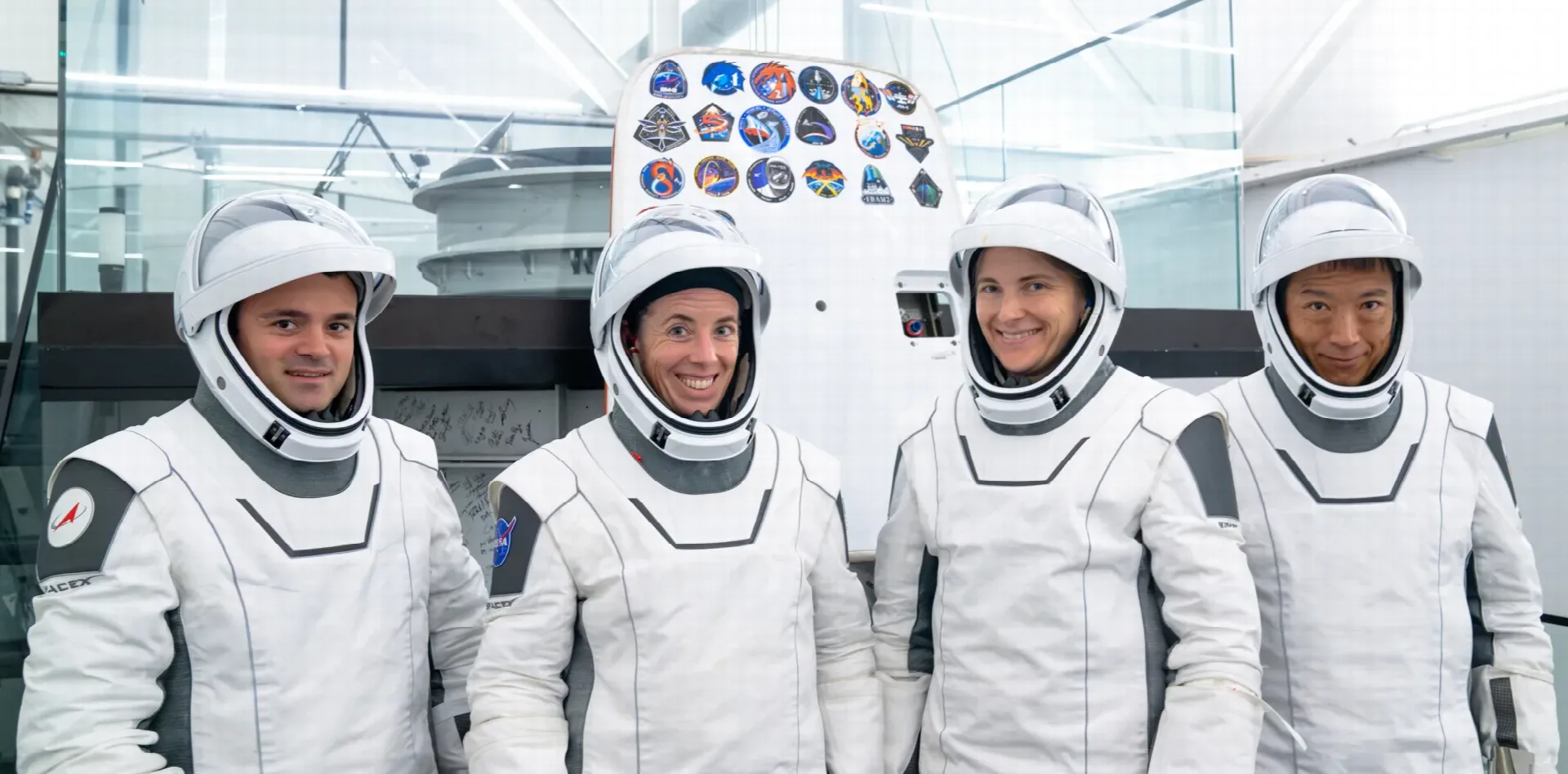
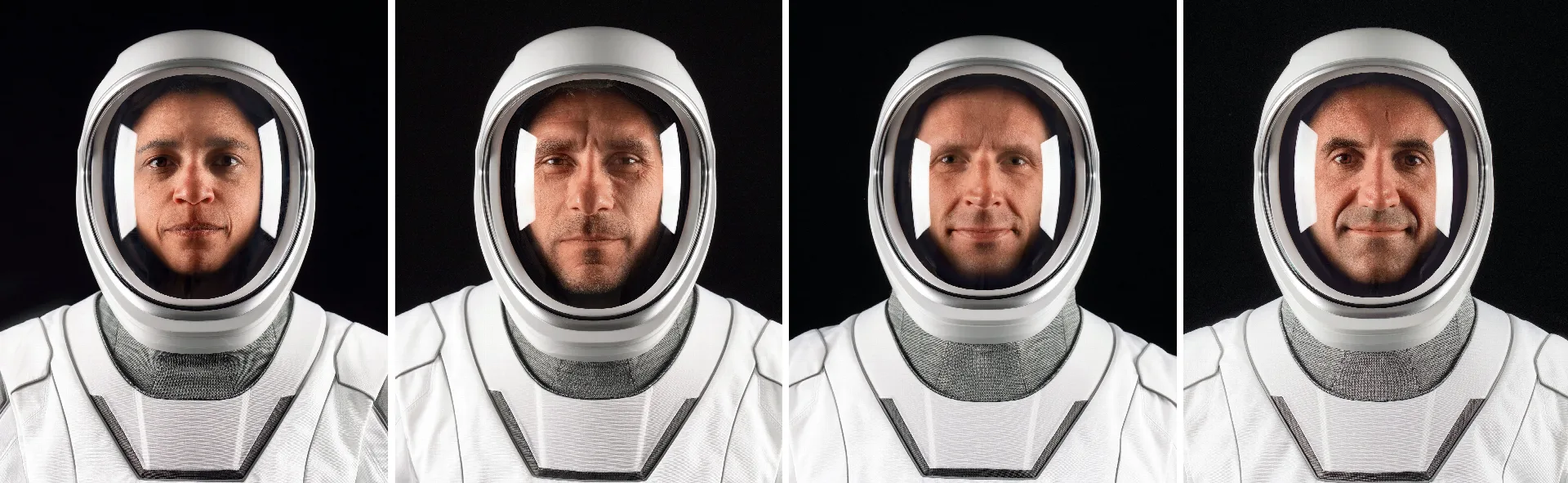
NASA has assigned four space travelers from three agencies to SpaceX Crew-14, a long-duration mission to the International Space Station targeted to launch no earlier than spring 2027. NASA astronaut Kayla Barron will command the spacecraft, fellow NASA astronaut Chris Birch will serve as pilot, and JAXA astronaut Makoto Suwa and Roscosmos cosmonaut Arutyun Kiviryan will fly as mission specialists.
NASA announced the assignments on Thursday, September 24, 2026. Once their spacecraft docks with the orbital laboratory, the four crew members are expected to become part of Expeditions 75 and 76, joining an established international team responsible for station maintenance, scientific work and round-the-clock operations.
The flight will be NASA’s 14th operational commercial crew rotation with SpaceX under the agency’s Low Earth Orbit Program. That count reflects how commercial transportation has moved from a development project into a recurring element of US human spaceflight, allowing NASA to purchase rides to orbit while focusing more of its resources on exploration systems, research and mission oversight.
Crew-14 also illustrates the continuing interdependence of the International Space Station partnership. Although geopolitical relations on Earth remain complicated, astronauts and cosmonauts still train for integrated operations in which every person must understand emergency procedures, vehicle systems and the responsibilities of colleagues from other agencies. Mixed crews also help ensure that both the US and Russian segments retain experienced personnel during scheduled handovers.
Barron is the only member of the newly assigned team who has previously flown in space. She launched on Crew-3 in 2021 and spent 177 days in orbit during Expeditions 66 and 67. Her first mission included two spacewalks, as well as work as the lead robotics operator for another extravehicular activity, giving her direct experience with some of the station’s most demanding operations.
Her background combines engineering and military leadership. Barron graduated from the US Naval Academy with a systems engineering degree, earned a master’s degree in nuclear engineering from the University of Cambridge and qualified as a submarine warfare officer. She deployed three times aboard the ballistic-missile submarine USS Maine before joining NASA’s astronaut corps in 2017. More recently, she has supported technologies and operational concepts associated with Artemis.
Birch will make her first trip to space as Crew-14’s pilot. Selected by NASA in 2021, she studied mathematics, biochemistry and molecular biophysics at the University of Arizona before earning a doctorate in biological engineering from the Massachusetts Institute of Technology. She later taught bioengineering at the University of California, Riverside, and scientific writing and communication at the California Institute of Technology.
Her path to the astronaut corps also included elite sport. Birch competed as a track cyclist on the US National Team and was selected for the Olympic Long Team ahead of the Tokyo Games. At NASA, she has worked as a capsule communicator, supported station crews and Artemis II operations, served as crew lead for Expedition 72 and represented astronaut interests in development and operational planning for the Orion spacecraft.
Suwa, another first-time flier, brings experience that differs markedly from the traditional military-test-pilot route. Before JAXA selected him as an astronaut candidate in 2023, he spent almost a decade with the World Bank Group. His earlier work included service in Rwanda as a Japan Overseas Cooperation Volunteer and a position with the United Nations World Meteorological Organization.
With a doctorate in geosciences from Princeton University, Suwa could contribute a particularly broad perspective to Earth-observation research and environmental investigations conducted from orbit. He completed basic astronaut training and received certification in 2024. His selection for Crew-14 gives JAXA another opportunity to build operational experience among a newer generation of astronauts while maintaining Japan’s active role in station science.
Kiviryan will likewise be making his first journey to the station. After attending the Saint Petersburg Suvorov Military School, he studied at Baltic State Technical University and graduated in 2015 as an engineer specializing in rocket science. He also trained in operating computer-controlled machinery, joined the Gagarin Cosmonaut Training Center corps in 2021 and has served as a test cosmonaut since 2023.
During their expedition, the crew will conduct investigations and technology demonstrations designed to produce benefits on Earth and reduce uncertainty around missions farther from the planet. Research in microgravity can reveal biological and physical processes obscured by gravity, while long-duration operations test life-support hardware, human performance and maintenance practices. Those lessons are central to Artemis planning and to the far more demanding prospect of eventual Mars expeditions.
The assignment comes after more than 25 years of continuous human presence aboard the station. In that period, the complex has evolved from a major construction project into a mature laboratory and a proving ground for commercial services in low Earth orbit. Crew-14 will therefore serve two goals at once: keeping the existing outpost productive and helping shape the systems, partnerships and operational culture needed after the ISS era.