
ISS Crew Balances Spacewalk Planning, Robotics and Science
Expedition 75 prepared for an external solar-array installation while handling robotic hardware and configuring instruments for plant, storm and Earth-observation research.
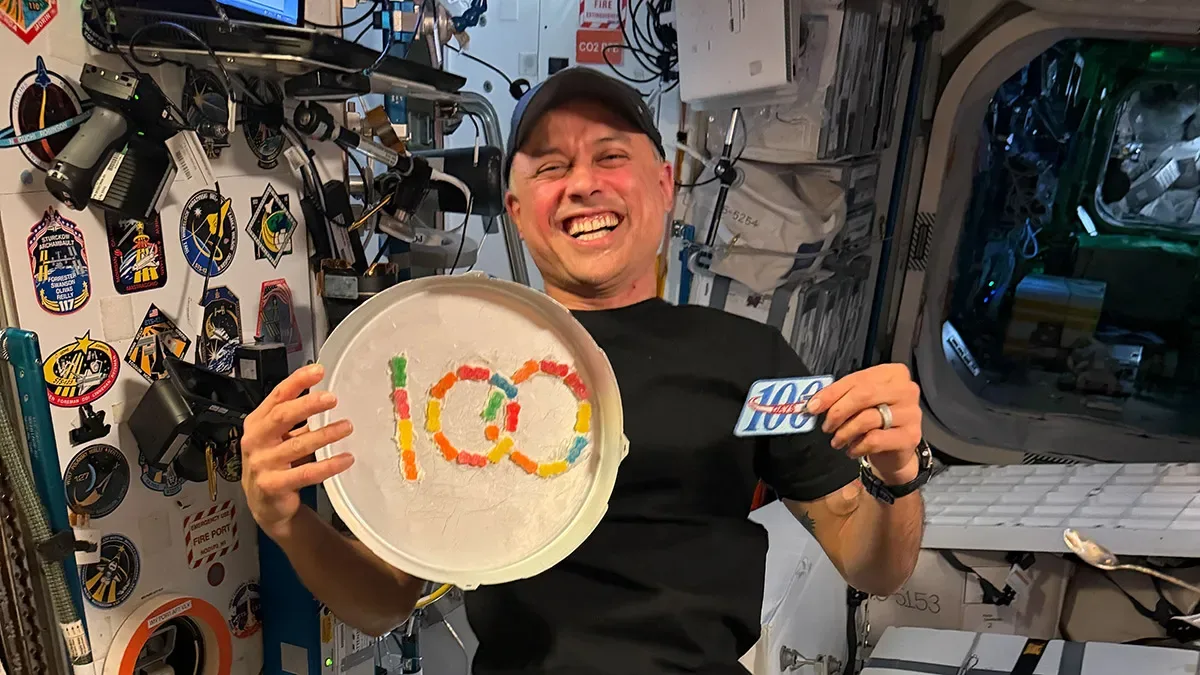
The Expedition 75 crew aboard the International Space Station devoted a busy operational period to three closely connected areas: preparations for a spacewalk, work involving robotic systems, and the continued setup of scientific investigations. At the center of the schedule was a planned installation intended to support the orbital laboratory’s power infrastructure.
NASA Blogs reported the crew’s activities on Tuesday, October 27. NASA astronauts Anil Menon and Canadian Space Agency astronaut Joshua Kutryk were preparing for a spacewalk scheduled to begin Thursday, October 29, at 8 a.m. EDT, with NASA+ coverage due to start at 6:30 a.m.
Menon and Kutryk worked together inside the Quest airlock, the staging area used for U.S.-segment spacewalks. Their immediate task was to organize the tools needed to install a roll-out solar array on the port-side truss of the station, an external structure that carries major power and thermal-control equipment.
The astronauts also prepared compact procedural references for use outside the station. They printed the planned steps and placed them in small checklist books designed to be worn on their spacesuit cuffs. The arrangement gives spacewalkers direct access to the sequence of tasks while their movement and visibility are constrained by their suits.
The operation depended on support from inside the complex as well as work outside it. NASA flight engineers Jessica Watkins and Luke Delaney were assigned to help Menon and Kutryk enter and exit their spacesuits, manage airlock-related duties and operate Canadarm2 during the external installation.
NASA’s post says Watkins and Delaney each spent an hour on Wednesday reviewing the spacewalk tasks and configuring Quest for spacesuit operations. That reference creates a timing inconsistency because the entry itself was published on Tuesday, October 27, while the Wednesday immediately following was October 28. The source does not clarify whether the wording referred to a planned activity or contained a scheduling error.
Watkins and Delaney also handled a failed Canadarm2 wrist joint that had been replaced during a June 30 spacewalk. They photographed the component for inspection, covered it with protective wrapping to seal sensitive sections, and placed it aboard a SpaceX Dragon cargo vehicle.
The joint was slated to return to Earth in November. Recovering removed orbital hardware can permit examination under terrestrial conditions, but the NASA account did not provide a diagnosis of the failure or state what investigators might ultimately conclude from the component.
Watkins separately prepared a specialized high-speed camera for research inside the European Columbus laboratory. The instrument can record the electrical activity of thunderstorms at rates of up to 100,000 frames per second, allowing extremely brief atmospheric events to be captured in far greater temporal detail than conventional imaging permits.
In the Japanese Kibo laboratory, Delaney installed a camera and connected a computer inside the Life Science Glovebox. The associated investigation seeks ways to prevent plant diseases in space while also contributing to efforts to improve spacecraft life-support systems, linking biological research with the practical demands of long-duration missions.
Robotics activity extended to the station’s Russian segment. Roscosmos flight engineer Sergey Teteryatnikov operated the European Robotic Arm from the Nauka science module to conduct a visual inspection of the Earth-facing docking port on the Rassvet module.
Station commander Pyotr Dubrov and flight engineer Anna Kikina, meanwhile, installed Earth-observation equipment intended to collect imagery at multiple wavelengths. The targets included islands in the southern Pacific and Atlantic oceans and the Patagonia region of South America. Together, the assignments illustrate how maintenance, mission preparation and research proceed in parallel aboard the station rather than as isolated blocks of work.