Perseids 2026: NASA prepares for a moonless meteor night
The Perseid meteor shower will crest overnight from August 12 into August 13 under unusually favorable dark-sky conditions. NASA plans a livestream featuring meteor specialists, ground cameras and views associated with the International Space Station.
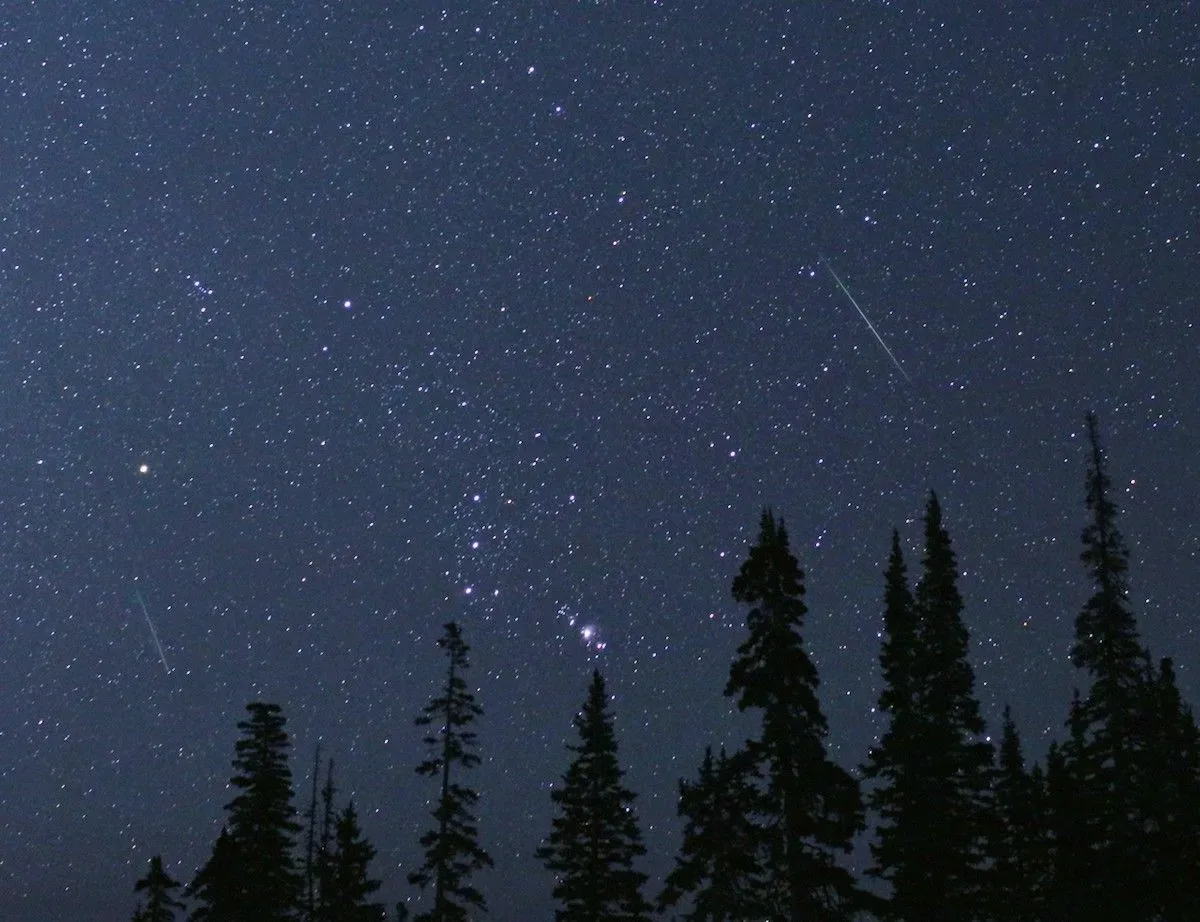
The Perseids are building toward their annual peak, offering skywatchers one of the most accessible celestial events of the northern summer. Maximum activity is expected during the night of August 12 and the early hours of August 13, when a new Moon should keep natural background light to a minimum.
NASA Blogs reported the viewing plans on Wednesday, August 5. The agency will open a YouTube meteor watch party at midnight Eastern Time on August 13, combining live camera feeds with expert conversations and answers to audience questions.
Much of the ground coverage will come from Marshall Space Flight Center and its Automated Lunar and Meteor Observatory, known as ALaMO. The facility is marking 20 years of discovery, illustrating how automated cameras have become useful both for sustained scientific monitoring and for public access to events that unfold after ordinary working hours.
NASA also intends to share sky views from the International Space Station. Orbital imagery can add a striking perspective, but viewers should not expect it to replace the experience of looking upward from a dark site: camera sensitivity, field of view, clouds and the station’s rapidly changing position all shape what a feed can capture.
Under excellent conditions, the shower may produce 50 to 100 meteors an hour near its peak. That figure is best understood as an upper-range expectation rather than a promise for every backyard. A city observer may count far fewer because haze and artificial light erase faint streaks before the eye can register them.
The phenomenon begins with comet 109P/Swift–Tuttle, whose repeated passages through the inner solar system leave a broad trail of dust and small debris. Each August, Earth crosses part of that stream. Incoming grains collide with the upper atmosphere at high speed, producing glowing paths as they heat and excite the surrounding air.
Despite the familiar expression shooting star, the flashes are not stars moving across space. Most are caused by particles far smaller than the objects their brilliance might suggest. Their speed and the rapid release of energy allow even modest grains to create a visible line across a large portion of the sky.
The shower’s name comes from Perseus because its meteors appear to diverge from a point in that constellation. This radiant is a perspective effect, not the physical location of the particles’ origin. Observers therefore do not need to stare directly at Perseus; longer trails can often be noticed some distance away from it.
The Perseids have been recorded for more than two millennia and remain popular because they return reliably, occur during relatively mild weather and can generate fireballs. These unusually bright meteors may leave luminous trains that persist after the main flash, sometimes giving observers enough time to point them out to companions.
For unaided viewing, a broad and unobstructed horizon is more valuable than optical equipment. Binoculars and telescopes magnify a tiny section of sky and can make it easier to miss fast, unpredictable streaks. A reclining chair or blanket allows the observer to watch a wide area without repeatedly straining the neck.
Dark adaptation is equally important. The eyes generally need 20 to 30 minutes away from bright light to become more sensitive, while a brief glance at a white phone display can reverse much of that progress. A dim red screen, warm clothing and patience can materially improve a session lasting several hours.
The quoted hourly rate will also change through the night as the radiant rises and Earth turns into the particle stream. Local weather remains the largest immediate uncertainty, and viewers outside the US Eastern time zone should convert the webcast schedule carefully. The astronomical peak and the start of a broadcast are related parts of the event, but they are not necessarily the same instant.
Those unable to observe on the main night still have options. Perseid activity extends from early July through late August, with lower but potentially rewarding rates on either side of the maximum. This broad window, together with the new Moon at the peak, gives the 2026 return particular appeal for first-time observers, photographers and long-running meteor monitoring programs.