
ISS Crew Balances Spacewalk Preparations With Human and Plant Research
Two astronauts are readying suits and tools for solar-array work outside the station, while Expedition 75 continues studies of crop biology and respiratory health in microgravity.
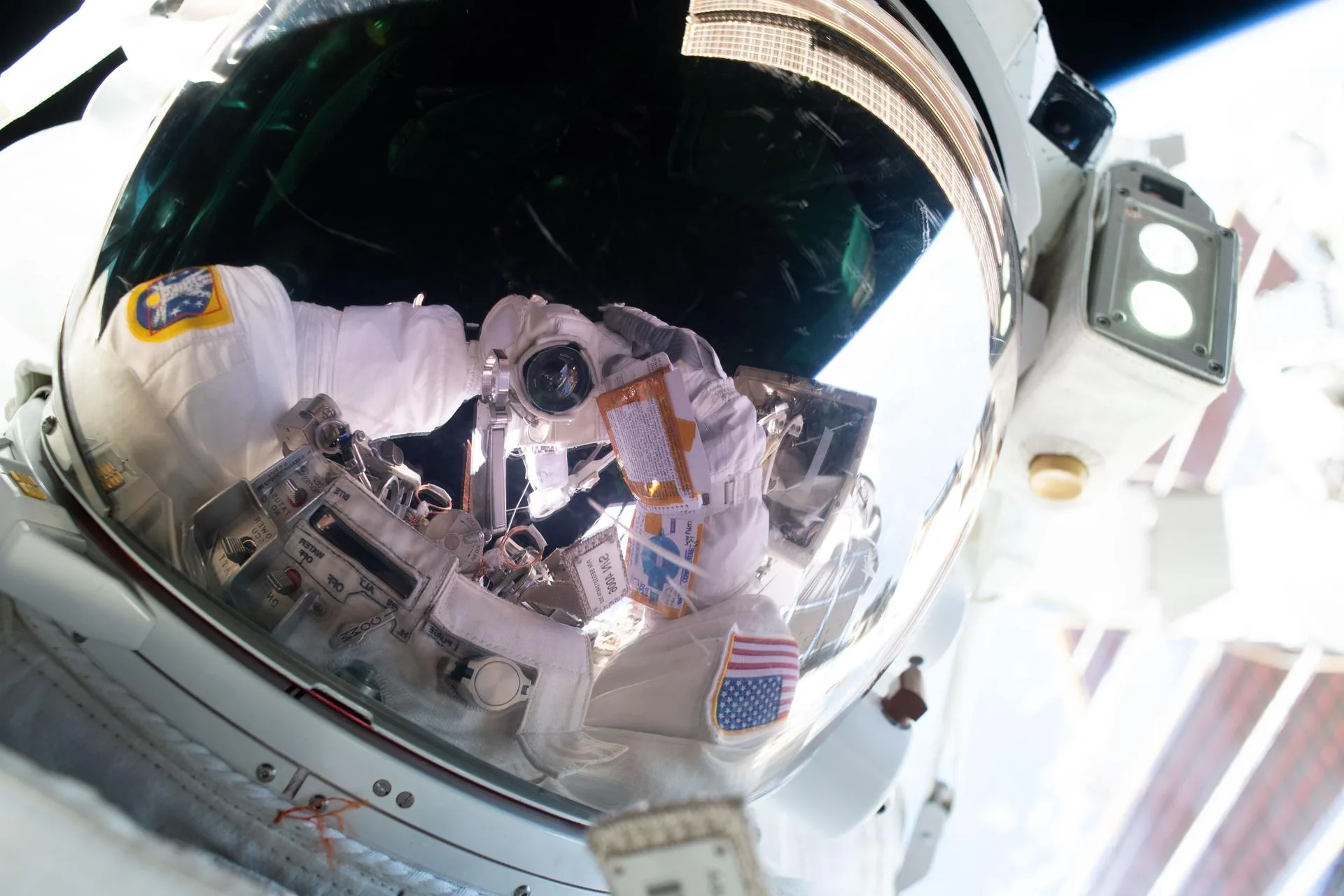
Expedition 75 has entered an intensive preparation period for two spacewalks intended to advance a yearslong upgrade of the International Space Station’s electrical system. NASA Blogs reported the crew’s schedule on Wednesday, October 21.
NASA flight engineer Anil Menon and Canadian Space Agency astronaut Joshua Kutryk are assigned to leave the Quest airlock on October 29 and November 5. During the two excursions, they are expected to install a pair of roll-out solar arrays on the station’s truss structure.
The arrays form part of a broader effort to strengthen the orbiting laboratory’s power-generating capacity. NASA says completion of the installation campaign can increase that capacity by as much as 30%, providing additional electrical resources for station systems and its wide range of research equipment.
On October 21, Menon and Kutryk worked inside Quest to organize the tools needed outside the station. They inspected safety tethers and cleaned their spacesuit helmets, addressing equipment that will be essential as they move along the exterior structure and carry out the power upgrade.
They later configured two suits with communications units, medical-monitoring hardware and other components. A fit verification was planned for October 22 to check both astronaut comfort and the operation of the integrated systems before the first excursion.
Fit checks are more than a routine sizing exercise. The human body changes during extended exposure to microgravity, so equipment adjusted on Earth may require confirmation or refinement after an astronaut has spent time in orbit. The review is designed to ensure the suit remains workable throughout a demanding period outside the spacecraft.
Jessica Watkins and Luke Delaney, also NASA flight engineers, reviewed how they will help Menon and Kutryk enter and leave the suits. All four astronauts studied procedures for translating around the station, retrieving the folded arrays and positioning them for installation.
NASA+ plans to begin coverage of the October 29 spacewalk at 6:30 a.m. EDT, ahead of an 8 a.m. scheduled start. Coverage for the November 5 excursion is set for 6:45 a.m. EST, with the spacewalk due to begin at 8:10 a.m. The different time labels reflect the published broadcast schedule for the two dates.
Despite the concentration required for spacewalk readiness, routine science continued across the station. Menon processed green algae and cultured tobacco-cell samples for the Plant Cell Division investigation in the Japanese Kibo laboratory module.
That experiment examines plant biology with an eye toward growing crops beyond Earth. Understanding how cells divide and develop in altered gravity conditions may support future attempts to produce food on the lunar or Martian surface, reducing the degree to which distant crews would depend exclusively on supplies launched from Earth.
On the Russian segment, cosmonauts Pyotr Dubrov and Anna Kikina took turns wearing an acoustic sensor around their necks while performing rapid exhalations. The instrument captured detailed airway sounds that are to be transmitted to Earth so researchers can study how life in microgravity affects breathing.
The rest of the schedule illustrated the station’s constant overlap of science and maintenance. Dubrov replaced electronics on an exercise cycle, while Kikina reorganized cargo and docking equipment aboard the Progress 96 spacecraft. Sergey Teteryatnikov serviced life-support and communications hardware, collected air samples for analysis of the cabin environment and completed a computerized hearing test. Together, the assignments connected immediate operational needs with longer-term questions about power, food production and human health in space.