Artemis III enters a tightly linked phase of hardware and crew preparation
NASA has begun installing four veteran RS-25 engines in the Artemis III SLS core stage while booster assembly, Orion testing, and crew simulations advance in parallel. The work illustrates how the mission’s schedule depends on multiple systems reaching readiness together.
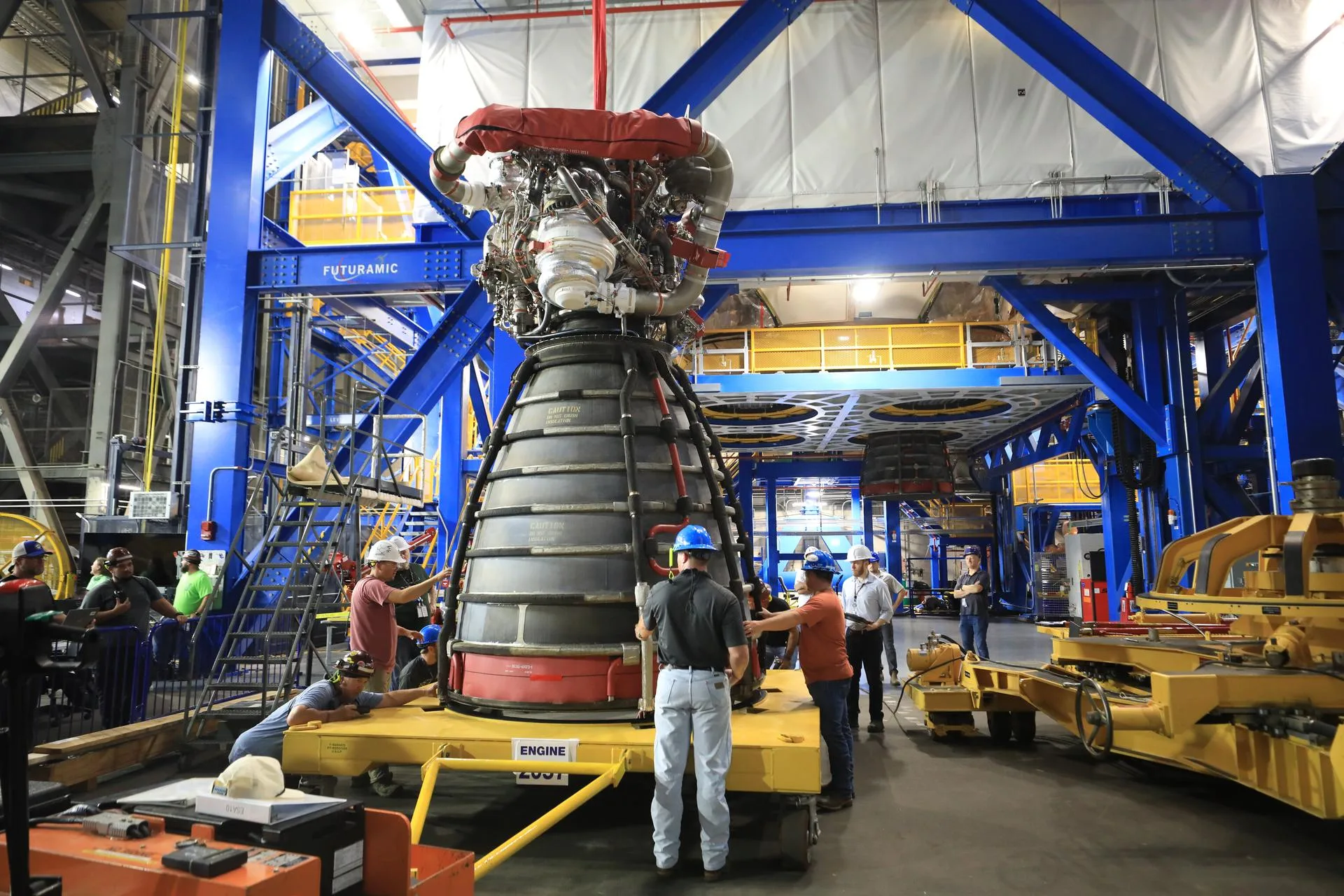
Artemis III is moving from the production of major components into an increasingly interconnected campaign of assembly, testing, and human preparation. At Kennedy Space Center in Florida, technicians have started installing the four RS-25 engines in the core stage of the Space Launch System rocket assigned to carry the crew next year.
NASA Blogs reports the development on Thursday, August 27. The installation work itself began on August 24 inside High Bay 2 of the Vehicle Assembly Building, the enormous facility where the launch vehicle’s principal elements are brought together before rollout.
The milestone follows the earlier mating of the engine section to the upper four-fifths of the core stage. Mounting the engines is not a stand-alone mechanical task: teams must connect propulsion lines, electrical networks, instrumentation, and control hardware throughout the stage, then verify that those systems operate correctly across their interfaces.
Each RS-25 weighs roughly 7,700 pounds and can generate nearly 500,000 pounds of thrust. All four sit at the base of the SLS core stage inside an engine section designed to endure severe heat, vibration, pressure, and acoustic loads. Its structural and protective functions are essential because launch conditions expose the engines and nearby equipment to rapidly changing extremes.
Once SLS lifts off, the four liquid-fueled engines are expected to fire continuously for more than eight minutes. They draw propellant from the core stage’s two large tanks at a combined rate of about 1,500 gallons per second. Alongside the twin solid rocket boosters, their sustained output provides the energy needed to accelerate the vehicle through ascent.
The Artemis III engine set consists of E2054, E2057, E2048, and E2052. All have histories in the Space Shuttle program, giving the hardware an unusual bridge between NASA’s previous human-spaceflight system and its current exploration architecture. Serial-number records allow engineers to trace missions, operating time, inspections, and modifications associated with each unit.
Engine E2048 carries especially visible historical connections. It helped propel Atlantis on STS-129, a mission flown by Artemis III crew member Randy Bresnik. It also powered Discovery during STS-95 in 1998, when John Glenn returned to orbit at age 77 and became, at that time, the oldest person to fly in space.
Using flight-proven engines does not eliminate qualification work. The RS-25s must function in an expendable launch vehicle with a mission profile and operating environment that differ from those of the reusable shuttle. Inspections, upgrades, integration checks, and stage-level verification are therefore central to determining whether past performance translates into readiness for the new assignment.
Elsewhere inside the Vehicle Assembly Building, teams are stacking the motor segments of the two solid rocket boosters on the mobile launcher. Work began in early July and has passed the halfway point. NASA says procedures have been streamlined using experience from earlier Artemis campaigns, though alignment, joint integrity, and configuration control remain carefully managed.
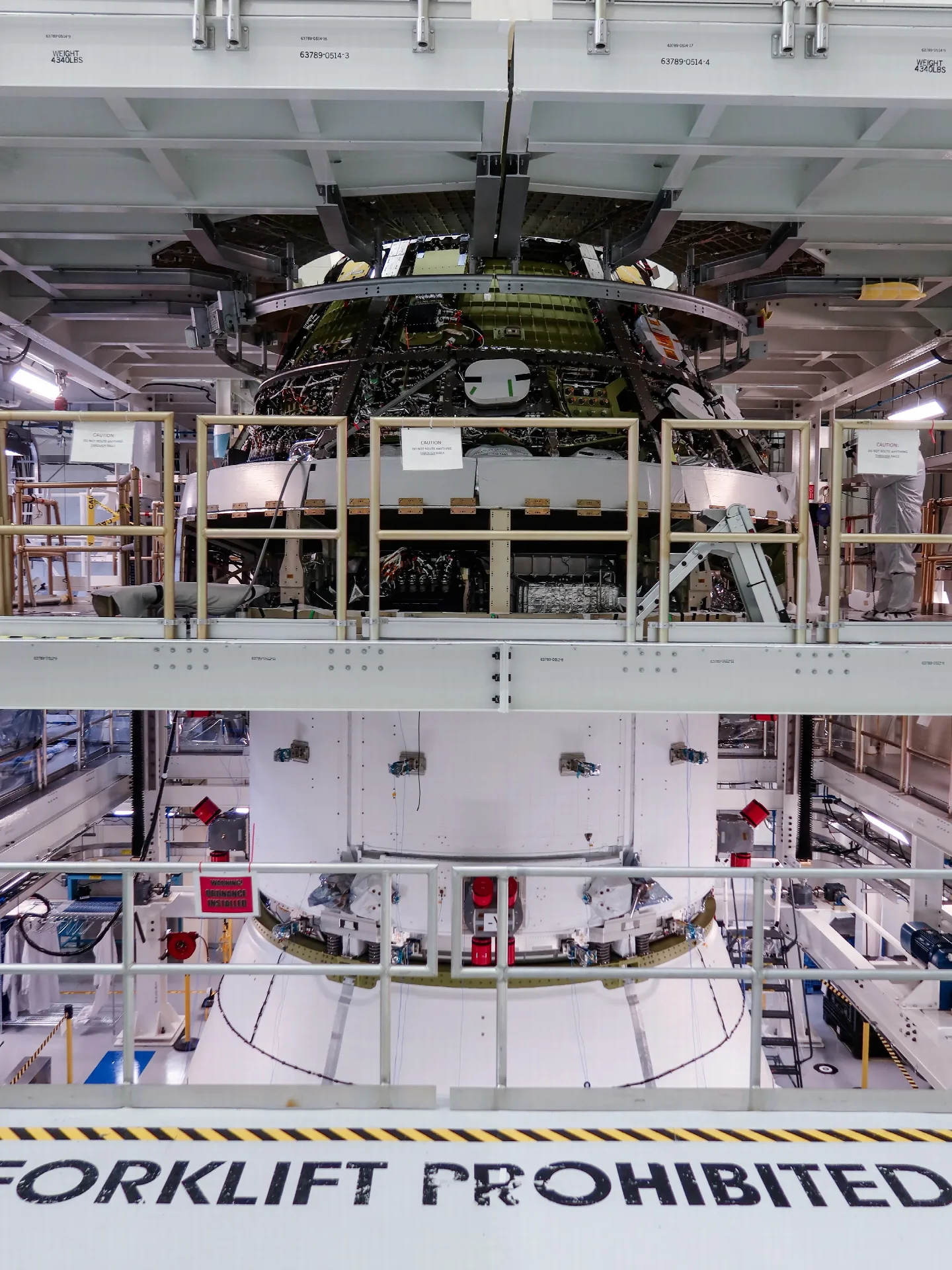
Orion is advancing on a separate but equally important track. Following the integration of its crew and service modules, technicians installed the umbilical connector carrying electrical power, data, and fluids between them. They then powered up the joined spacecraft for the first time to test electrical continuity and communications among subsystems across the new connection.
Those checks represent a shift from proving that individual components work to establishing that the assembled spacecraft behaves as a system. Integration testing can reveal timing conflicts, faulty connections, software responses, or interface problems that may not appear when equipment is examined separately. Finding such issues before Orion is enclosed and mated to the rocket reduces the cost and disruption of corrective work.
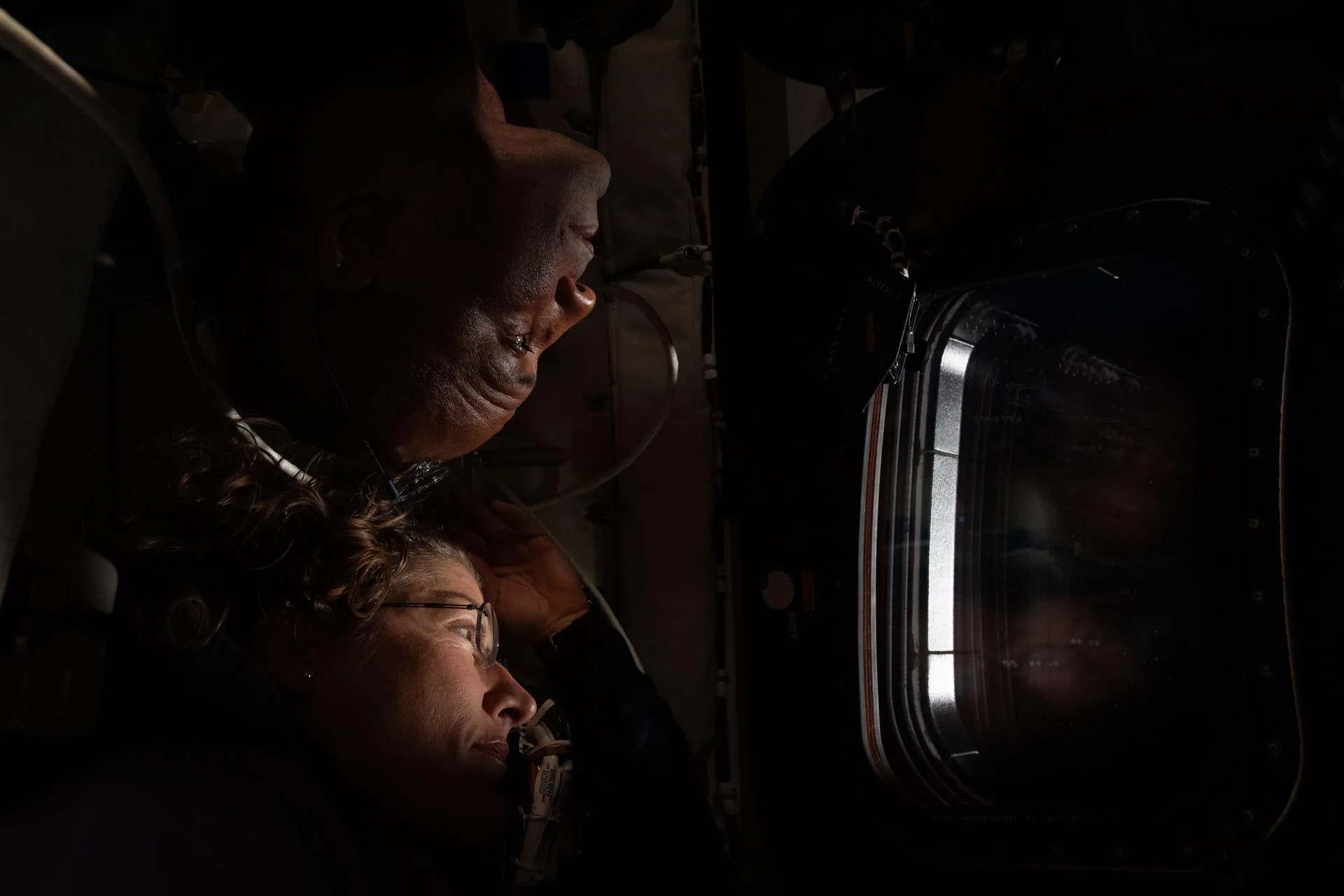
NASA astronauts Bresnik, Andre Douglas, and Frank Rubio, together with European Space Agency astronaut Luca Parmitano, were assigned to Artemis III on June 9. Their training covers Orion operations, scientific objectives, leadership, team development, and coordination with commercial providers involved in human landing systems. The syllabus is structured around ascent, orbital and rendezvous activity, entry, and readiness before and after landing.
Inside an Orion mock-up at Johnson Space Center in Houston, the crew practices both demanding procedures and ordinary routines. Lessons include using the food warmer and potable-water dispenser as well as handling cameras intended to document the mission in low Earth orbit. Rehearsing mundane tasks helps planners refine timelines, equipment placement, and workload assumptions before flight.
Emergency preparation is receiving comparable attention. The astronauts completed introductory water-survival instruction and training for an emergency exit after splashdown. In the Neutral Buoyancy Laboratory, they wore Orion Crew Survival System suits and practiced leaving an upright capsule while using survival equipment and a life raft under conditions meant to reproduce key aspects of recovery.
The four crew members have also begun integrated simulations with flight controllers, including their first full exercise together. These sessions force both sides to work through mission timelines and unexpected situations while refining communication and authority for time-critical decisions. Artemis III’s progress will ultimately depend on this convergence: engines, boosters, spacecraft, ground teams, and crew must mature on separate paths, yet be ready to operate as one system.