NASA Opens Artemis II’s Human-Centered Lunar Archive
The agency has released more than 800 gigabytes of lunar observations gathered during Artemis II. Images, crew narration and annotated records offer researchers a rare combination of instrument data and trained human judgment.
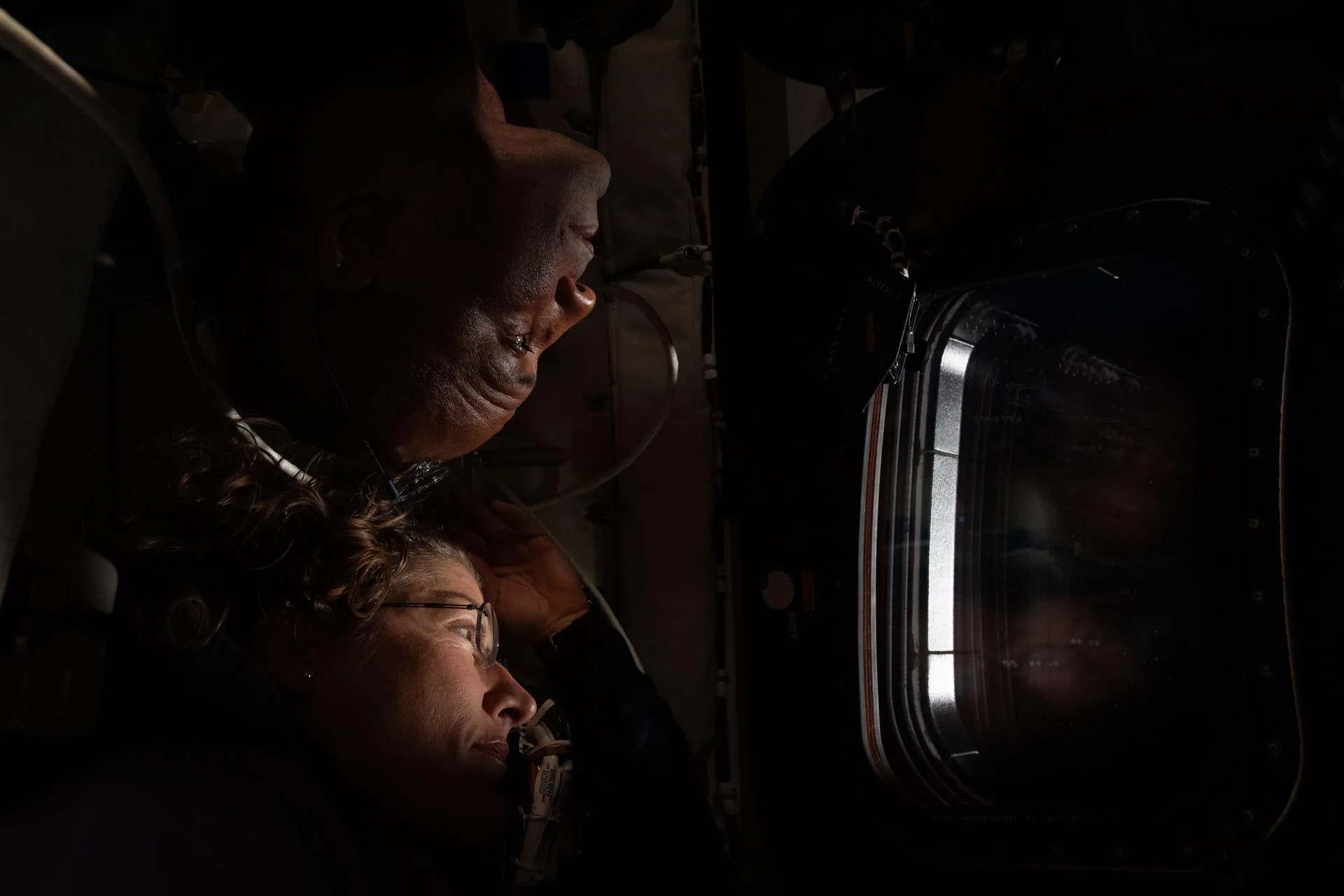
NASA has placed the full lunar science collection from Artemis II in the public domain, opening more than 800 gigabytes of mission material to scientists, educators and independent analysts. The release documents what the crew saw and recorded while traveling around the Moon and returning to Earth.
NASA Blogs reported the release on Wednesday, October 7. The files are hosted by NASA’s Planetary Data System, the long-term public archive used to preserve and distribute data from the agency’s planetary missions.
The collection contains more than 11,000 full-resolution images and video sequences. Some came from cameras operated by the astronauts, while others were captured by Orion’s onboard systems. That mix allows researchers to examine the same journey through two distinct modes: deliberate human framing and systematic spacecraft observation.
Another major component is 8.5 hours of recorded crew commentary about the lunar surface. Annotated images accompany those recordings, connecting spoken impressions with particular locations or features. Together, the files preserve not simply what the cameras detected, but how trained observers interpreted the scene while their viewing opportunity was unfolding.
That distinction matters because a flyby imposes tight operational limits. Illumination shifts, viewing angles change and useful targets can move through a camera’s field of view quickly. Astronauts must decide which formations deserve attention, whether an apparent color difference is significant and when an observation warrants a longer sequence or an immediate verbal description.
The archive is therefore unusual in planetary science. NASA characterizes it as the first dataset in more than half a century to have been gathered primarily by people rather than robotic explorers. It does not diminish the importance of automated missions; instead, it adds perception, discussion and rapid decision-making to decades of precisely calibrated robotic measurements.
The Artemis II crew consisted of NASA astronauts Reid Wiseman, Victor Glover and Christina Koch, along with Canadian Space Agency astronaut Jeremy Hansen. Their preparation included classroom instruction, simulations and field exercises designed to build familiarity with lunar geography, geology and disciplined observational methods.
Those exercises were intended to make scientific observation part of normal mission operations rather than an improvised activity. A useful photograph depends on more than pointing a camera: scale, orientation, lighting, sequence and accompanying notes can determine whether later researchers can place an image into a reliable geological context.
Scientists can now compare the crew’s records with Apollo-era observations and with maps produced by modern lunar orbiters. Potential lines of inquiry include the appearance of crater walls under changing light, subtle color contrasts, the identification of landmarks and the relationship between an astronaut’s real-time impression and subsequent image analysis.
NASA released three supporting publications with the files: a preliminary lunar science report, a lunar science operations report and a data user guide. They outline the development and execution of the observation plan and provide technical information needed to navigate the archive. Such documentation is essential because visually striking media are not automatically research-ready without timestamps, provenance and operational context.
Public availability also widens the pool of possible investigators. Teams that had no role in planning Artemis II can test fresh questions, combine the files with other lunar datasets or apply future image-processing tools. As analytical software improves, the original high-resolution records may yield findings that were not anticipated when the mission was designed.
The release also has an operational purpose. NASA says information from Artemis II is already informing planning for Artemis III and later missions, including how crews are trained and how observations are prioritized. The archive consequently serves both as a scientific record of one flight and as a working model for combining human expertise with spacecraft systems during a sustained return to lunar exploration.