
Final Solar Array Spacewalk Cleared for the ISS
Joshua Kutryk and Anil Menon are preparing for a seven-hour spacewalk to install the station’s eighth roll-out solar array. The operation is intended to conclude a power expansion begun in 2021.
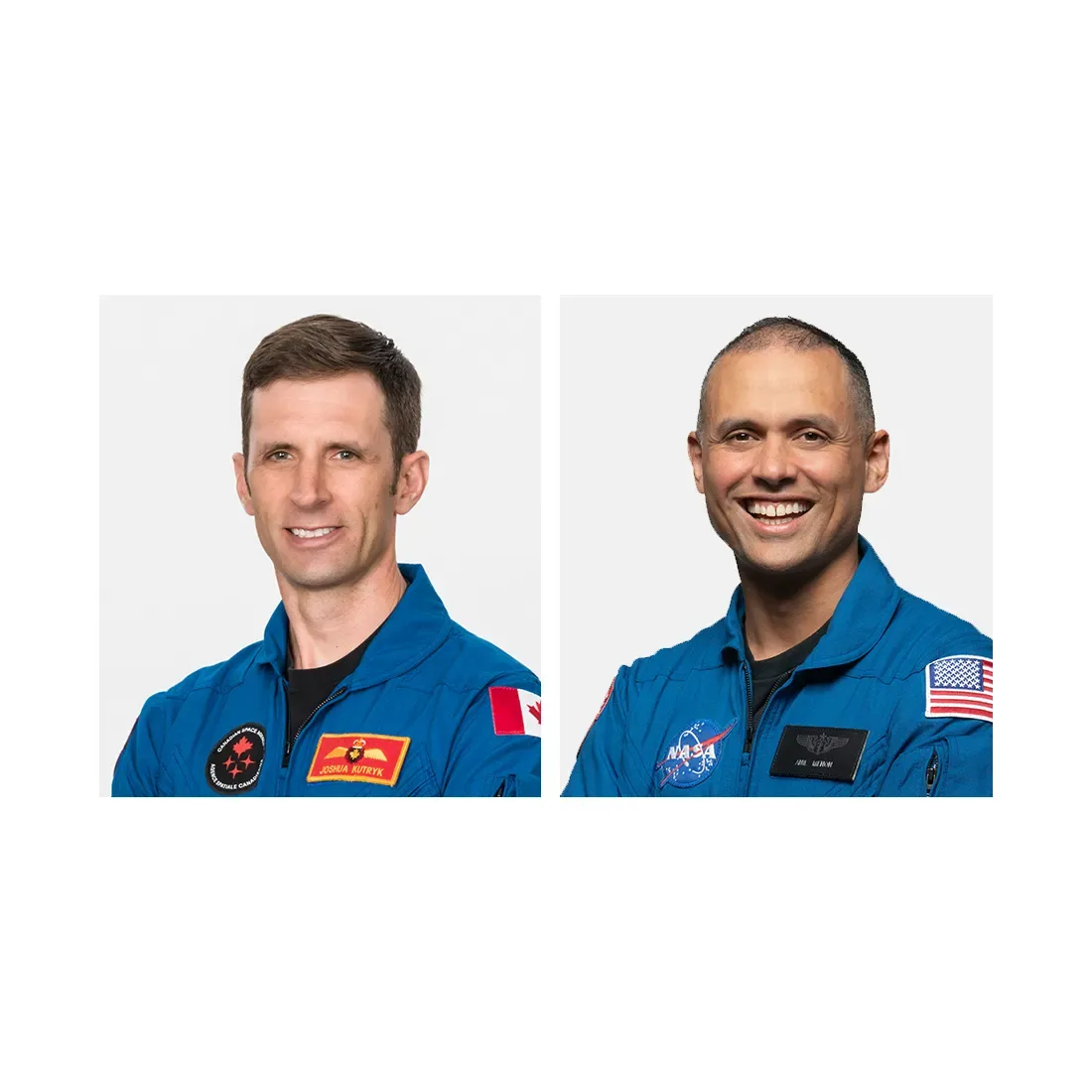
Mission managers have cleared Canadian Space Agency astronaut Joshua Kutryk and NASA astronaut Anil Menon to leave the International Space Station on November 5 for a roughly seven-hour installation job. Their objective is the eighth and final roll-out solar array in a multiyear effort to increase the orbiting laboratory’s electrical capacity.
NASA Blogs reported the decision on Wednesday, November 4. The spacewalk is scheduled to start at 8:30 a.m., with continuous coverage due to begin on NASA+ and other streaming services at 7 a.m.
The worksite lies near the far end of the station’s starboard truss, the external structure that supports major power-system hardware. Reaching it requires not only movement by the spacewalkers but also a carefully coordinated robotic transfer of the folded array.
Kutryk and Menon completed a similar installation on October 29. The new excursion is designed to repeat much of that task sequence on the opposite side of the truss, giving the astronauts a familiar division of responsibilities while placing them on a different route around the station’s exterior.
Under the plan, Kutryk will make his way along the starboard truss. Menon will travel with the solar array while attached to Canadarm2, using the station’s robotic arm to carry the large component toward the handoff point.
Menon is then expected to pass the array to Kutryk before detaching from the arm and moving to the installation site. Kutryk will bring the hardware forward and return it to Menon there, allowing the pair to secure and complete the assembly together.
If the planned tasks are completed, the excursion will close out an upgrade campaign that began in June 2021. NASA says the full set of roll-out arrays is intended to raise the station’s generating capacity from 160 kilowatts to approximately 215 kilowatts.
That 55-kilowatt increase represents a substantial addition to the power available aboard a laboratory where crew support, research equipment and station systems all rely on electricity. The agency’s November 4 update described the expected completion of the upgrade, not the outcome of the spacewalk, which had yet to take place.
Kutryk and Menon spent November 4 arranging their tools and staging their spacesuits inside the Quest airlock. They also conducted another review of the procedures that will govern their movements and the transfer of the array outside the complex.
NASA flight engineers Jessica Watkins and Luke Delaney joined the two spacewalkers for a study of the robotic maneuvers needed during the operation. All four astronauts subsequently took part in a standard readiness conference with mission controllers, providing a final formal checkpoint before the planned excursion.
Science continued alongside the preparations. Kutryk examined water samples for microbial growth and photographed the findings, while Menon swabbed station surfaces and stored the samples for incubation and analysis. Watkins collected bacterial material for studies of antibiotic resistance, and Delaney processed human lung cells to test how they grow in microgravity.
The station’s cosmonauts had a lighter schedule but still supported operations. Commander Pyotr Dubrov familiarized himself with the spacewalk plan, Anna Kikina checked payload-controller hardware, and Sergey Teteryatnikov prepared radiation detectors to be worn on the suits. Together, those activities show how a single external installation draws on spacesuit work, robotics, radiation monitoring and coordination across the full international crew.