Mike Lippert Makes His X-59 Flight Debut
NASA test pilot Mike Lippert flew the X-59 for the first time on October 21, reaching Mach 1.4 at 55,000 feet. The one-hour sortie combined a personal milestone with systems and handling checks after scheduled maintenance.
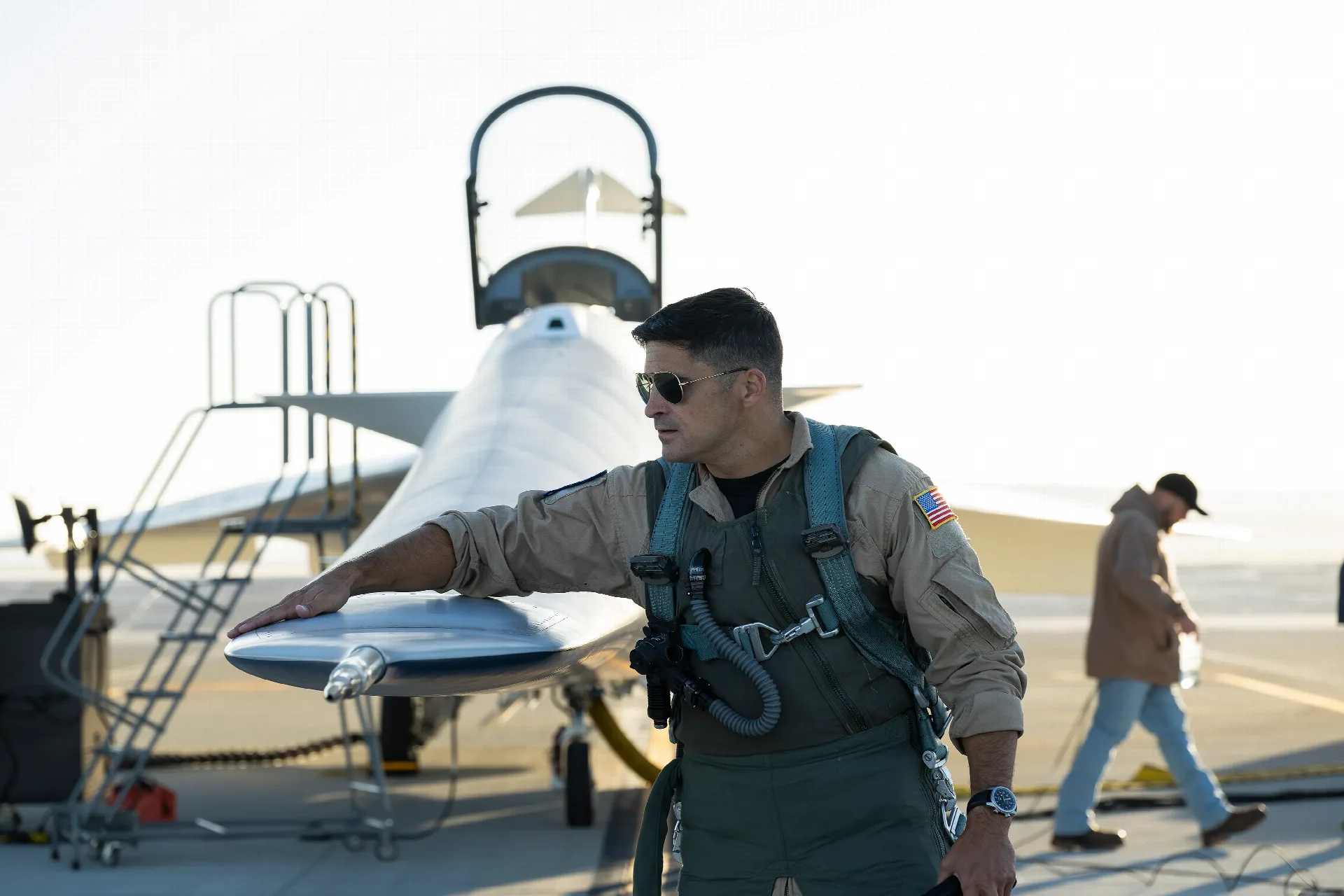
NASA test pilot Mike Lippert converted months of simulator sessions and ground preparation into his first flight at the controls of the X-59 quiet supersonic research aircraft on October 21. Departing from NASA’s Armstrong Flight Research Center at Edwards, California, he returned about an hour later after flying at high altitude and supersonic speed.
NASA Blogs reported the flight on Thursday, October 22. Lippert took the aircraft to a maximum of Mach 1.4 and 55,000 feet, placing the sortie well above normal airline cruising altitude and firmly within the supersonic test regime.
The milestone belonged primarily to the pilot rather than representing the X-59’s maiden flight. The research aircraft had already flown numerous times, but Lippert had never previously piloted an X-plane during nearly 11 years of flying high-performance aircraft.
That distinction matters in flight research, where familiarity with fast aircraft does not automatically substitute for experience in a unique experimental cockpit. Each test vehicle has its own procedures, handling characteristics, instrumentation and relationship with the control room, requiring pilots to prepare for the specific aircraft rather than speed alone.
Lippert completed assigned high-altitude test points before the X-59 descended and slowed. He recalled that the quieter interval gave him a brief chance to look outside and recognize the significance of flying an X-plane supersonically above the Mojave high desert.
The emotional moment came within a tightly managed engineering mission. Lippert performed several maneuvers intended to help assess the aircraft’s handling, while the test team monitored the condition and performance of its systems from the ground.
The sortie also marked the X-59’s return to flight following scheduled maintenance and a systems review. Those checks followed the busiest testing period the aircraft had experienced to that point: six flights conducted over three days in September.
A concentrated series of sorties can expose a vehicle to repeated operating cycles in a short period, making subsequent inspection and data review an important part of the campaign. NASA did not characterize the maintenance as a response to a specific failure; the source described it as scheduled work accompanied by a review of the aircraft’s systems.
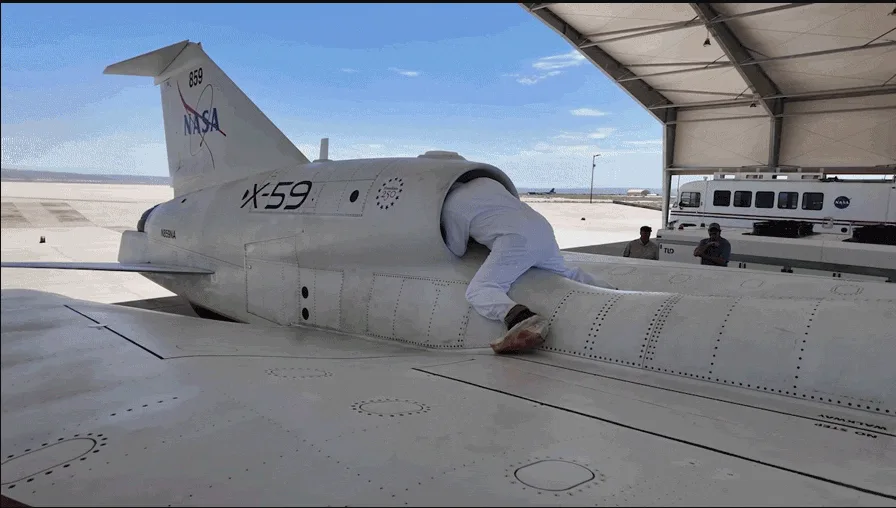
Lippert’s preparation extended beyond simulator hours. In August, he completed his first X-59 engine run, gaining direct experience inside the cockpit and practicing coordination with the mission control team while the aircraft remained on the ground.
He also trained with NASA test pilots Nils Larson and Jim “Clue” Less. Working alongside other pilots helps align cockpit procedures, terminology and responses with the expectations of engineers and controllers, reducing the gap between rehearsed scenarios and an actual research flight.
The X-59 is the centerpiece of NASA’s Quesst mission, which is concerned not simply with reaching supersonic speed but with studying an aircraft shaped to produce a quieter sound signature at ground level. That objective separates it from aircraft designed mainly around transport capacity, military performance or speed records.
Lippert’s one-hour flight did not, by itself, establish the broader outcome of the Quesst effort. It supplied another operational opportunity to evaluate the aircraft, verify its behavior after maintenance and bring an additional qualified test pilot into direct flight operations.
For Lippert, the assignment carried a significance that could not be reduced to altitude and Mach number. He said he had long dreamed of testing a genuinely unusual aircraft with an exceptional team, describing the flight as especially meaningful.
The October 21 sortie therefore joined two narratives that often run together in experimental aviation: the disciplined accumulation of engineering evidence and the rare personal experience of taking control of a new research aircraft. The hour in the air rested on months of rehearsal, cockpit familiarization and coordinated work across the flight-test organization.