
ISS Crew Links Laboratory Work With the Next Phase of Lunar Exploration
Expedition 75 closed its week with vascular bioprinting, containerless furnace research and preparations for an October 29 spacewalk. NASA also placed the station’s work within its broader effort to return astronauts to the lunar surface by 2028.
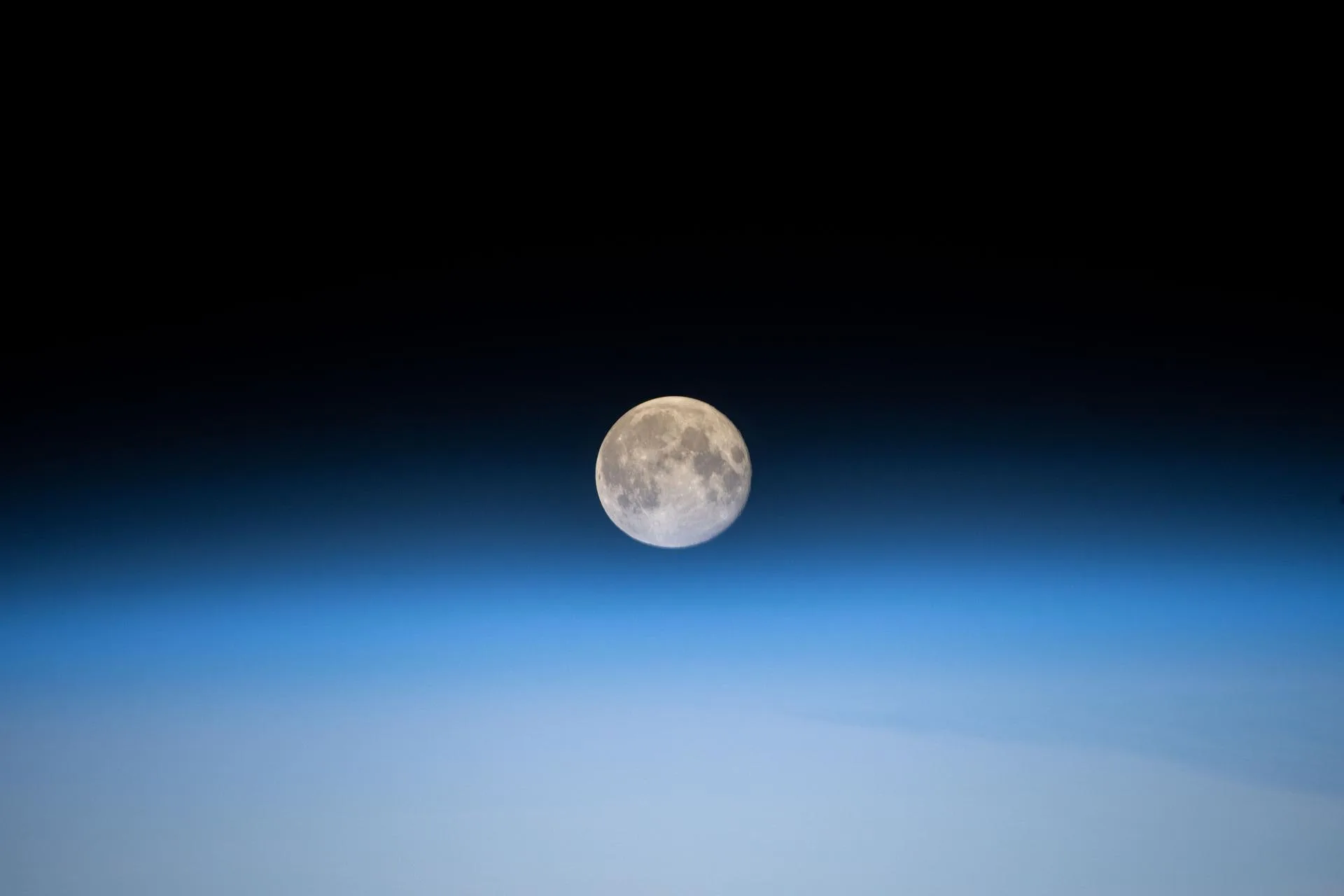
The International Space Station’s latest work schedule brought together two sides of human spaceflight that are often discussed separately: laboratory research in microgravity and the demanding operational preparation required to maintain a large orbital outpost. Expedition 75 crew members worked with engineered tissue and high-temperature samples while rehearsing for an exterior installation on the station’s truss.
NASA Blogs reported the activities on Friday, October 23. NASA had also scheduled a NASA+ update that day on the status of forthcoming crewed Moon missions, although the station post did not include the briefing’s conclusions or any subsequent changes to the Artemis schedule.
NASA flight engineers Luke Delaney and Anil Menon returned to the BioFabrication Facility, continuing an effort to turn vascular cell samples into printed blood vessels. Delaney configured the printer, while Menon handled the engineered human tissue so it could be nourished and cultivated after printing.
The work illustrates why bioprinting is more than the moment when a machine deposits biological material. Preparing the equipment, processing fragile samples and sustaining the resulting tissue are interconnected stages. In orbit, scientists can examine how three-dimensional biological structures form when their development is not influenced by gravity in the same way as it is on Earth.
Canadian Space Agency flight engineer Joshua Kutryk, meanwhile, changed sample hardware inside a specialized furnace. The device suspends material with an electric field and heats it with lasers, allowing researchers to investigate high-temperature behavior without placing the sample in direct contact with a conventional container.
Containerless processing is a significant feature of the experiment because a vessel can interact with a hot sample and complicate measurements. The source report did not identify the material being tested or provide findings, so the activity represented a hardware and sample operation rather than an announced scientific result.
Jessica Watkins of NASA spent part of the day on station infrastructure. She tested backup water-quality equipment and a gas-flow controller, two components associated with maintaining a controlled and habitable environment. Redundancy is especially relevant aboard an outpost where crews cannot rely on immediate access to replacement systems from the ground.
After lunch, Delaney, Menon, Kutryk and Watkins joined engineers on Earth for a spacewalk procedures conference. Menon and Kutryk are scheduled to leave the Quest airlock on Thursday, October 29, to install a roll-out solar array on the station’s truss structure.
The planned excursion also requires substantial work from inside the complex. Watkins and Delaney trained to operate Canadarm2 in support of the spacewalkers. Robotic-arm movements, the astronauts’ positions outside and instructions from mission control must follow a coordinated sequence around the station’s large structures.
NASA’s account did not specify the expected duration of the spacewalk, contingency arrangements or whether the date could change. As of October 25, the installation therefore remained a planned operation rather than a completed milestone, and no outcome could yet be inferred from the October 23 report.
On the Russian segment, Roscosmos cosmonauts Pyotr Dubrov, Anna Kikina and Sergey Teteryatnikov completed a plasma-crystal investigation. The research examined how highly charged gases interact with microscopic particles, using the orbital environment for a branch of physics in which small particles can organize into observable structures.
Their schedule also included servicing radiation-detection equipment, examining tools described in the NASA post as “super intelligence” systems and collecting blood-pressure measurements. The combination placed fundamental science alongside environmental monitoring and routine attention to crew health.
NASA emphasized that the station remains relevant to preparations for missions beyond low Earth orbit. Long-duration habitation, life-support checks, remote maintenance, robotics and human performance all provide operational experience that can inform lunar and eventual Mars missions, even though the ISS remains comparatively close to Earth.
The agency said it was accelerating efforts to return crews to the lunar surface by 2028. Its NASA+ status presentation had been set for 2 p.m. EDT on October 23, a time that had already passed by October 25, but the supplied account offered no details about what was ultimately announced. The firm points in the record are therefore the station research, the crew’s completed training activities and the spacewalk planned for October 29.