
NASA puts commercial space-relay networks to an orbital test
Two NASA-backed demonstrations reached low Earth orbit on SpaceX’s Bandwagon-5 rideshare. Viasat and SES are expected to test distinct combinations of high-rate, low-rate, and multi-orbit communications.
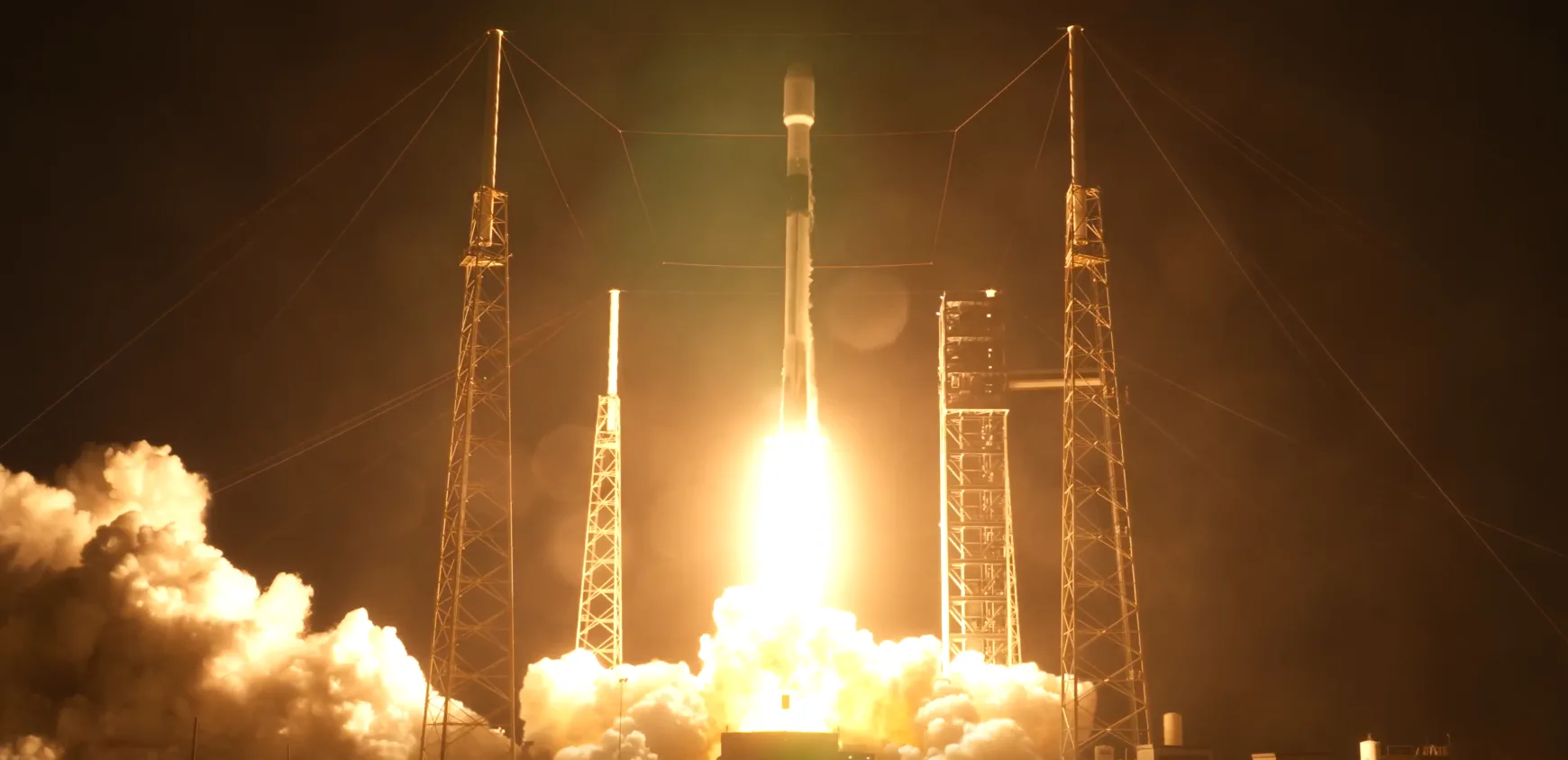
NASA has placed two commercial communications demonstrations in low Earth orbit, opening another phase in its effort to determine how privately operated satellite networks could support future science spacecraft. The payloads launched successfully on October 20 aboard SpaceX’s Bandwagon-5 rideshare mission.
NASA Blogs reported the launch on Tuesday, October 20. At that point, partners Viasat and SES Space and Defense were preparing for tests over the ensuing weeks, and the agency’s post did not yet provide operational results from either demonstration.
The experiments address a basic but demanding requirement of spaceflight: a spacecraft must remain reachable while also returning the products of its mission. Those two needs involve different volumes of information, network behavior, and communications equipment, even though both ultimately form part of the same link between an orbiting vehicle and controllers on Earth.
High-rate connections are intended for data-heavy products such as scientific observations and 4K imagery. Low-rate links carry smaller but indispensable exchanges, including tracking signals and basic commands. A mission may generate valuable measurements, but it still depends on a dependable command path for routine control and spacecraft operations.
Viasat’s demonstration will use Maxwell, a spacecraft built by Rocket Lab. The company plans to relay both high- and low-rate traffic through a network connecting Maxwell with Viasat satellites in geosynchronous orbit and with ground stations distributed around the world.
Autonomous routing is central to the Viasat concept. Intelligent network technology is expected to direct information among the demonstration spacecraft, orbiting relays, and terrestrial facilities rather than relying on a single fixed path. The test is designed to examine whether data can keep moving as network conditions and the spacecraft’s position change during flight.
SES Space and Defense will take a multi-orbit approach of its own. Its O3b mPOWER constellation in medium Earth orbit is assigned to the high-rate portion of the demonstration, while geosynchronous satellites are to handle lower-rate communications between the test spacecraft and SES ground stations.
That division illustrates why NASA is examining commercial architectures rather than one replacement satellite or one radio. Different orbital regimes can contribute different coverage and transmission characteristics. SES says its proposed relay service is designed to offer seamless, uninterrupted spacecraft connectivity, although the NASA account did not state that this objective had already been proven.
The launch sits within the Communications Services Project, an initiative run by NASA’s Space Communications and Navigation division. In 2022, SCaN awarded $278.5 million to industry to develop satellite-based services for space missions, bringing commercial providers into a field historically supported by major government-owned infrastructure.
NASA’s longer-term policy is to gradually retire its Tracking and Data Relay Satellite fleet and move future low Earth orbit missions toward commercial alternatives. The demonstrations therefore concern more than transmission speed: they are part of the evidence the agency needs before reshaping how essential communications services are supplied.
A commercial model could allow NASA missions to use networks that companies operate for a wider customer base, while NASA concentrates on defining mission requirements and evaluating service performance. Yet space communications must meet exacting expectations for availability and reliability, which is why high-rate delivery, command links, routing, orbital coverage, and ground connectivity are being considered together.
NASA’s Glenn Research Center in Cleveland manages the project and is scheduled to continue working with industry on advanced relay capabilities through 2027. The Viasat and SES flights add new orbital tests to work already completed by other commercial partners, with the broader aim of assessing ways to move mission-critical information through space in real time.