Three NASA-backed small spacecraft put propulsion, cosmic evolution and orbital inspection to the test
The Transporter-18 launch carried a trio of missions whose ambitions extend far beyond their compact hardware. Together, ASCENT, SPRITE and SSPICY will test dual-mode propulsion, probe ultraviolet processes in galaxies and rehearse autonomous inspections of defunct satellites.
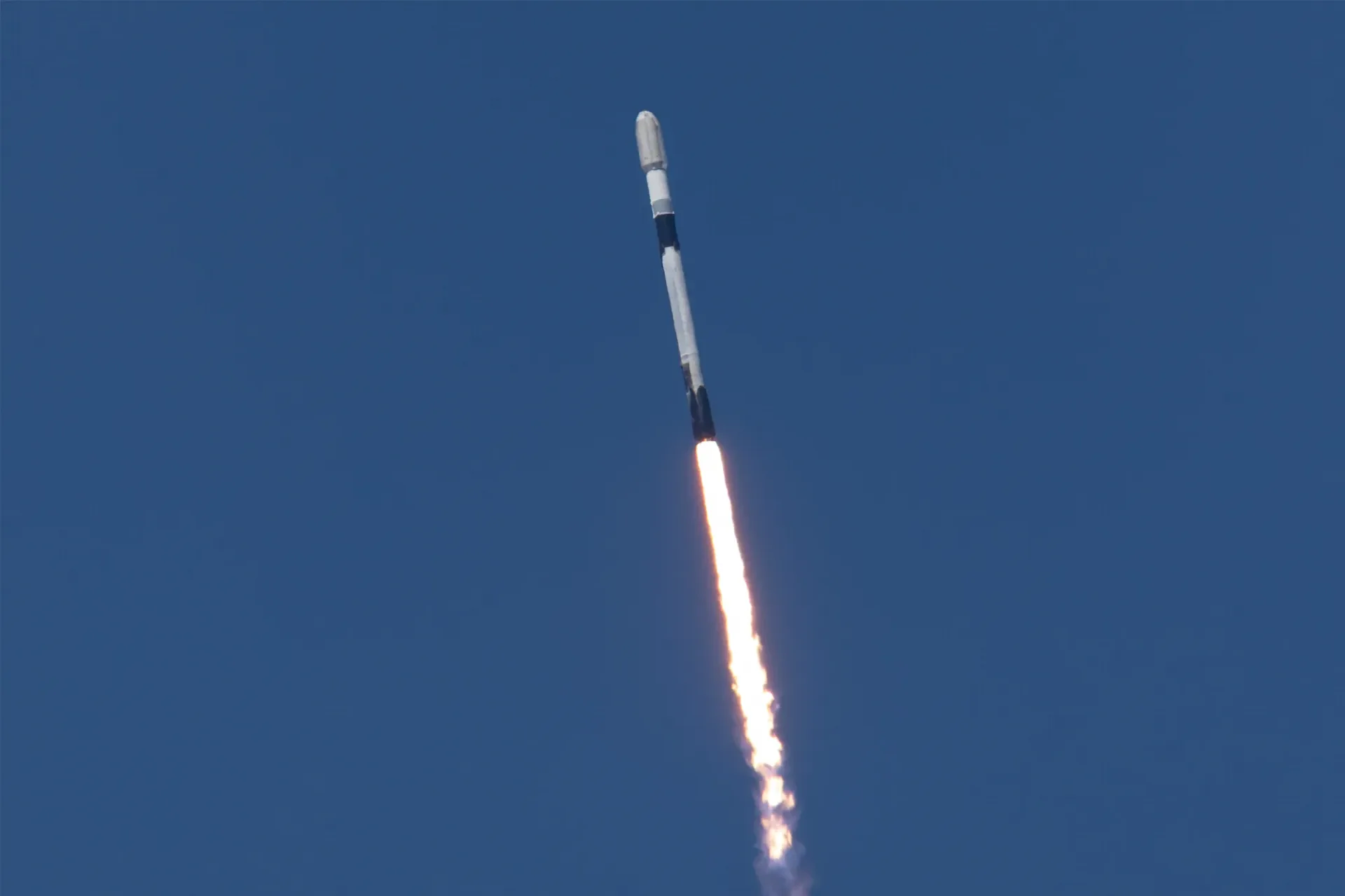
Three NASA-supported spacecraft lifted off at 11:32 a.m. PDT Thursday aboard a SpaceX Falcon 9 from Space Launch Complex 4 East at Vandenberg Space Force Base in California. Flying as part of the Transporter-18 commercial rideshare, the missions illustrate how a single launch can accommodate experiments in engineering, astrophysics and orbital operations.
NASA Blogs reported the launch on Thursday, October 1. The payloads are not components of one coordinated spacecraft system; each is an independent mission intended to answer a different question about how smaller satellites can perform tasks once associated with larger, more expensive platforms.
ASCENT Propulsion Dual Mode will test whether one CubeSat can effectively combine chemical and electrospray propulsion. Its chemical thruster is designed for maneuvers demanding relatively high thrust, while four electrospray thrusters will handle lower-power, precision operations. The arrangement seeks to give a compact vehicle both responsiveness and fine control.
Both propulsion modes draw from a common supply of Advanced Spacecraft Energetic Non-Toxic propellant, known as ASCENT. NASA describes the fuel as less hazardous to handle during spacecraft processing than conventional materials such as hydrazine, while offering 50% greater specific impulse density. Reduced toxicity could simplify some ground procedures and worker protections, though the orbital demonstration must still show that the shared architecture performs reliably in practice.
The appeal of dual-mode propulsion is particularly strong for CubeSats, whose limited internal volume makes duplicated tanks and feed lines costly. A spacecraft might use chemical thrust for a prompt orbit change and electrospray propulsion for station keeping, formation control or a carefully measured approach. Sharing propellant and plumbing could preserve space for instruments while increasing the range of maneuvers available to mission planners.
NASA's Marshall Space Flight Center leads ASCENT Propulsion Dual Mode with the Massachusetts Institute of Technology, the Georgia Institute of Technology and Rubicon Space Systems, a division of Plasma Processes. The partnership reflects a broader shift in technology development: government programs increasingly use small missions as relatively fast, affordable flight laboratories for university and commercial hardware.
SPRITE, short for Supernova Remnants and Proxies for ReIonization Testbed Experiment, turns the focus from spacecraft engineering to the history of the universe. Developed and operated by the University of Colorado Boulder's Laboratory for Atmospheric and Space Physics, it is intended to become NASA's first astrophysics CubeSat to detect a particular ultraviolet band that cannot be observed through Earth's atmosphere from the ground.
That ultraviolet window can reveal how energetic radiation, dust and gas circulate through galaxies and escape into the regions between them. Scientists are interested in the process partly because it offers nearby analogues for the era of reionization, when radiation from early luminous objects transformed the neutral gas that obscured the young universe and allowed light to travel more freely across the cosmos.
SPRITE is scheduled to spend about a year studying star-forming regions and supernova remnants in and near the Milky Way. Measuring roughly 13.5 inches long and 9 inches wide and high, it is comparable to a shoebox. Sensitive detectors, specialized mirror coatings and a compact telescope design are meant to deliver performance associated with some substantially larger instruments, while generating flight heritage for future ultraviolet observatories.
The third mission, Small Spacecraft Propulsion and Inspection Capability, or SSPICY, addresses the growing need to understand and eventually manage aging objects in low Earth orbit. Starfish Space will operate its Otter 24C vehicle to inspect as many as four inactive, U.S.-origin satellites, recording their surface condition, shape and orbital behavior without relying on the targets to cooperate.
Approaching a dead satellite is more difficult than rendezvousing with an active vehicle. The object may tumble, present unexpected geometry and provide no navigation signal or attitude information. Otter will test autonomous guidance, navigation and control, computer-vision software and an articulating robotic boom that directs thrust. Inspections are expected to begin in 2027 during a mission planned to last roughly two years.
SSPICY is an inspection demonstration rather than a promise of immediate repair or debris removal. Nevertheless, accurate close-range observations are a prerequisite for deciding whether an object can be serviced, stabilized or disposed of safely. Successful operations could inform commercial servicing standards, while also sharpening debate over authorization, liability and consent when future vehicles approach hardware belonging to other operators.
The launch also highlights the economic tradeoffs of rideshare missions. Sharing a rocket opens more frequent and affordable paths to orbit, but secondary payloads often have less control over launch timing and destination. Maverick Space Systems supported integration of the three spacecraft, while NASA's CubeSat Launch Initiative had selected SPRITE in 2021 and ASCENT in 2024. The outcome will be measured not only by the data returned, but by whether these compact demonstrations make propulsion, ultraviolet astronomy and orbital servicing mature enough for more ambitious missions.