
A Faster Warning Gives NASA Rockets a Better Shot at Solar Flares
A new alert system estimates where a solar flare is occurring and how long it may remain observable. The tool guided sounding-rocket launches in 2024 and 2026, helping scientists capture rapidly fading solar activity above Earth’s atmosphere.
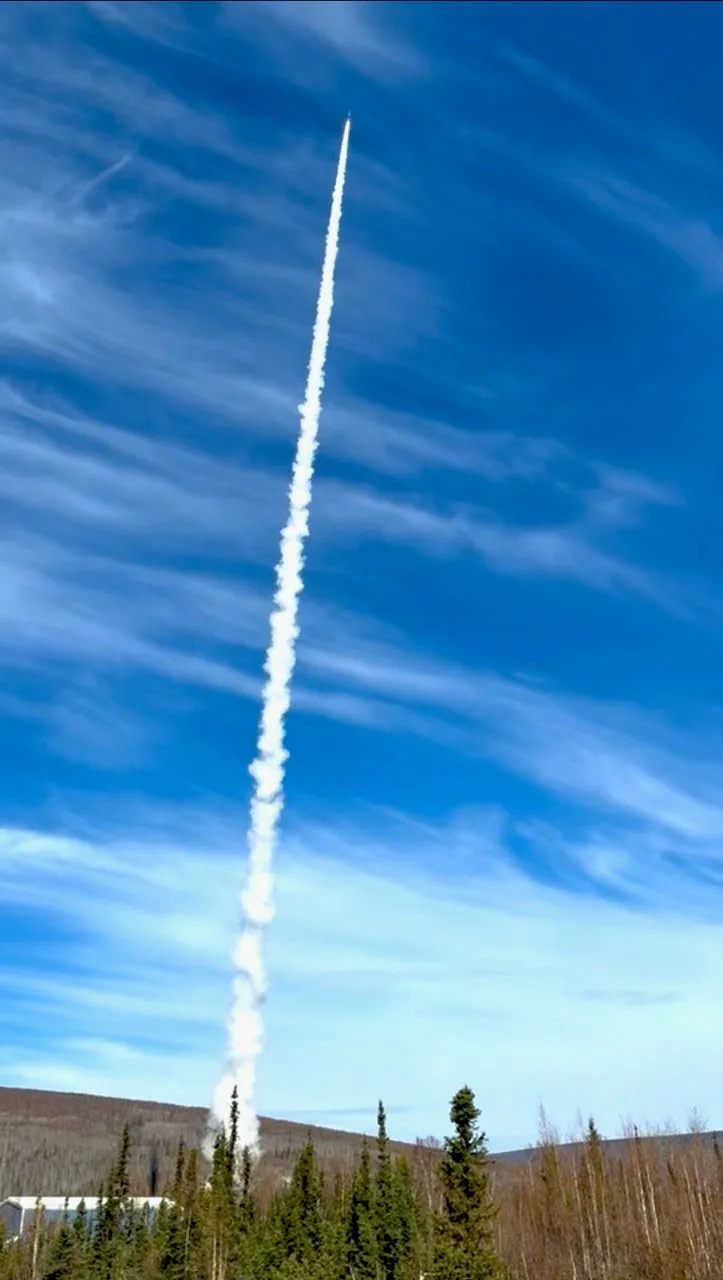
For scientists trying to catch a solar flare with a sounding rocket, detecting the eruption is only the beginning. They also need to know whether the event is likely to survive the countdown and ascent. A new rapid-alert system has now supplied that missing piece, enabling NASA rocket teams to observe flares while the activity was still underway.
NASA Blogs reported the development on Wednesday, November 4. A paper describing the alert system was published the same day in The Astrophysical Journal.
Solar flares are sudden releases of energy from magnetically complicated active regions on the Sun. They accelerate particles and send radiation into the wider solar system. Because solar activity can affect Earth and technological systems, understanding how flares emerge and evolve is relevant both to fundamental solar physics and to the broader study of space weather.
Some of the most useful radiation from these events does not reach instruments on the ground. Earth’s atmosphere absorbs portions of the flare’s light, including wavelengths that can reveal processes occurring in the hot, energetic solar environment. Researchers must therefore place suitable instruments above the atmosphere to obtain measurements unavailable from the surface.
Sounding rockets fill a niche between ground observatories and long-lived spacecraft. They can carry specialized instruments into space relatively quickly and at lower cost than many orbital missions. The trade-off is time: a rocket typically has only about five minutes for observations before it descends to Earth.
That narrow window is poorly matched to the unpredictable life of a flare. An eruption can weaken on a similarly short timescale, so a target that looks promising when an alert first arrives may be gone by the time a payload clears the atmosphere. Conventional alerts can indicate that a flare exists without determining whether it will last long enough to justify launching.
The operational problem is therefore more demanding than simply watching for a spike in solar activity. A team must identify the event, establish where it is located, assess its likely duration and decide whether to commit a limited launch opportunity. Every minute spent resolving uncertainty consumes part of the remaining scientific window.
The newly developed system addresses that problem by examining X-ray and ultraviolet emissions from solar active regions. It draws on observations from NASA’s Solar Dynamics Observatory, the National Oceanic and Atmospheric Administration’s Geostationary Operational Environmental Satellites, known as GOES, and observatories on the ground.
Within minutes of a spacecraft detection, the system pinpoints the flare and estimates how long it will persist. The resulting alert is designed to be operational rather than merely descriptive: it gives launch personnel information directly relevant to whether a rocket can reach space while the target remains bright enough to study.
The approach was put to use during an Alaska campaign in April 2024. It helped the developers’ team coordinate with another group for the launch of two rockets. Both missions reached their observing opportunity before the flare disappeared, producing the first study of an ongoing solar flare with NASA sounding rockets.
An enhanced version supported another launch in May 2026. On that flight, the rocket observed three flares. NASA’s account does not provide the detailed measurements or scientific interpretation of those observations, but the campaign showed how the updated alert process could guide a mission toward more than one rapidly developing event.
The distinction between prediction and rapid characterization is important. The system, as described, does not promise to forecast a specific eruption far in advance. Instead, once spacecraft identify activity, it quickly turns incoming observations into an estimate of location and longevity. That is precisely the interval in which a sounding-rocket team must decide whether to proceed.
Researchers are continuing to refine the system through a NASA Early Career Investigator Program grant. The source does not specify future performance thresholds, launch dates or additional campaign results, so its next capabilities remain part of the ongoing development effort rather than an established outcome.
The same type of early warning could ultimately serve more than sounding rockets. Future rocket campaigns could use it to reduce the gamble inherent in short flights, while solar observatories could use timely alerts to direct instruments toward active regions. Space-weather forecasting could also benefit from faster characterization of events that release energy and particles into the solar system.
The 2024 and 2026 campaigns illustrate how a modest change in timing information can alter the value of a short mission. A sounding rocket still has only minutes above the atmosphere, and the Sun remains unpredictable. But by estimating whether a newly detected flare will endure, the alert system gives teams a more informed basis for deciding when those few minutes are worth launching for.