
Dragon resupply plan linked station power upgrades with medical research
NASA prepared the 35th SpaceX commercial resupply mission with more than 6,300 pounds of cargo for the International Space Station. The manifest combined the final pair of roll-out solar arrays with biomedical and materials-science investigations.
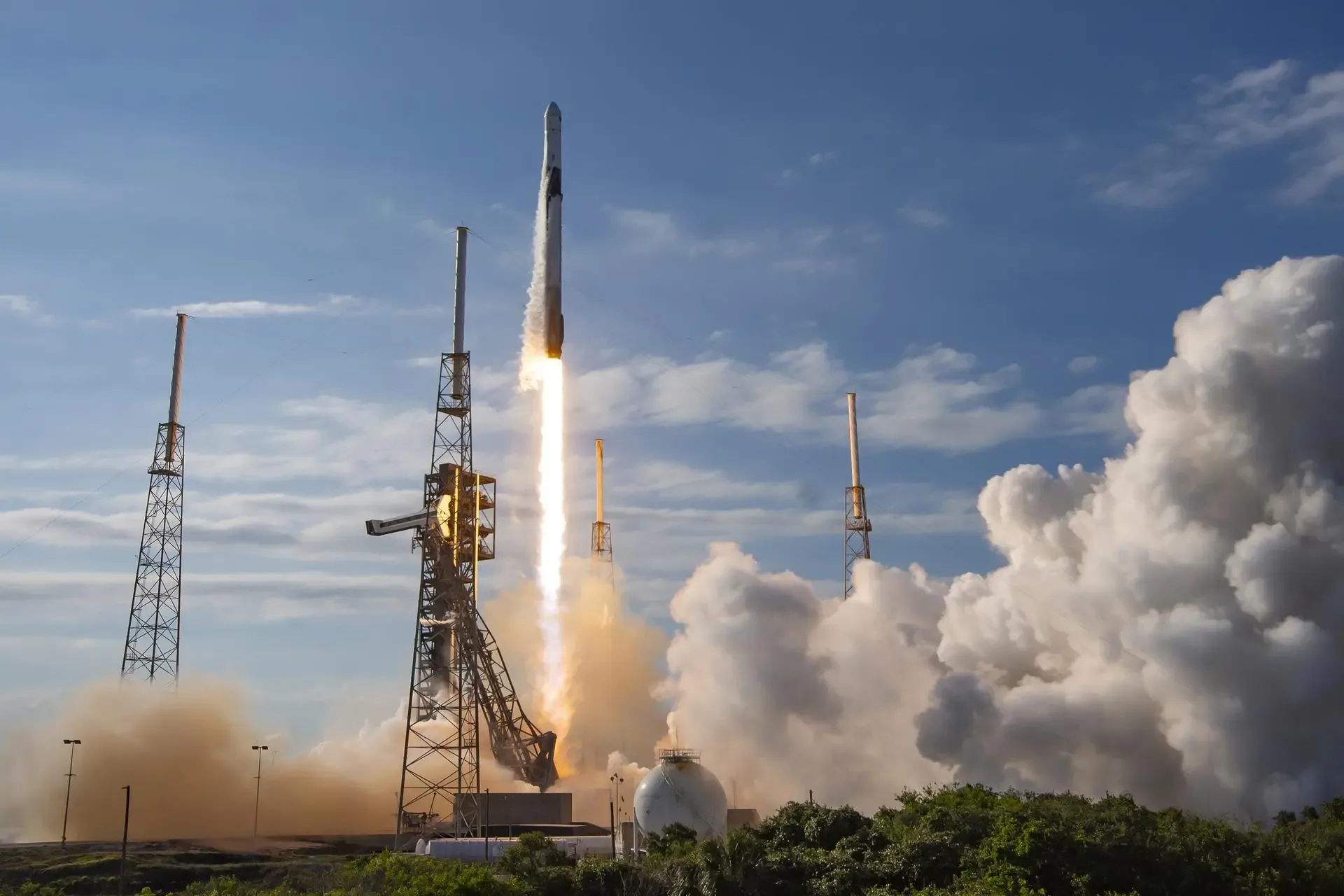
NASA was preparing its 35th SpaceX commercial resupply services mission to the International Space Station, a flight designed to carry more than 6,300 pounds of hardware, research materials and other supplies. The cargo amounted to roughly 2.9 metric tons and reflected both sides of the station’s role: maintaining a complex orbital facility and operating a laboratory beyond Earth.
NASA Blogs reported the preparations on Tuesday, October 13. NASA was also providing live coverage at the time, but the source account supplied here does not establish whether the launch or the later docking was completed successfully.
The mission plan called for a cargo Dragon to ride a Falcon 9 from Space Launch Complex 40 at Cape Canaveral Space Force Station in Florida. SpaceX’s rocket and automated freighter form a transportation system through which NASA moves equipment and experiments to low Earth orbit under its commercial resupply program.
Dragon was scheduled to dock at approximately 11 a.m. on Thursday, October 15, a time that had already passed by October 18. NASA planned to begin rendezvous and docking coverage at 9:15 a.m. The timing therefore describes the schedule published before the operation, not a future event or independent confirmation that the milestones occurred.
The spacecraft was expected to approach and attach autonomously to the space-facing port on the station’s Harmony module. Autonomous docking relies on onboard navigation, sensors and software to manage the closing distance and alignment, while flight controllers and the station crew retain oversight of the procedure and its safety constraints.
One of the most consequential payloads was the final pair of International Space Station Roll-Out Solar Arrays. These arrays were intended to augment the existing electrical system rather than replace it wholesale, adding generating capacity that could be allocated to science, station operations and other power demands.
NASA also connected the added electrical capability to the station’s eventual safe and controlled deorbit. That reference places the hardware in a wider operational context: electricity remains necessary not only for experiments and routine crew support, but also for maintaining essential systems as the orbital complex moves through later phases of its service life.
Astronauts were expected to install the arrays during a series of spacewalks planned for later in the fall. Installation outside the station requires extensive coordination, including crew preparation, equipment checks and support from teams on the ground. The October 13 account did not provide subsequent scheduling changes or the outcome of those planned excursions.
The research cargo included hardware aimed at manufacturing artificial retinas in microgravity. NASA said the work could ultimately contribute to efforts to restore sight for patients on Earth. That prospect is a research objective rather than a promise of an immediately available therapy, and further development would be required before an orbital manufacturing experiment could translate into clinical use.
Dragon was also due to deliver three-dimensional heart-tissue models. The models were intended to advance large-scale drug testing for future space missions, where investigators need to understand how biological tissues and candidate treatments behave beyond normal terrestrial gravity. Such models can offer a controlled platform for examining cellular responses without equating the experiment to a complete human organ.
Another investigation focused on how a new type of glass forms in microgravity. Reduced gravity can limit effects such as buoyancy-driven convection and sedimentation, allowing researchers to examine material formation under conditions unavailable in a standard laboratory on Earth. The source did not state the results, only that the necessary materials were part of the planned shipment.
Brain organoids rounded out the highlighted biomedical payload. These simplified three-dimensional cell systems were to be studied for clues to possible treatment targets associated with Alzheimer’s disease, Parkinson’s disease and multiple sclerosis. Organoids can model selected features of tissue, but they do not reproduce the full complexity of a human brain or by themselves demonstrate that a proposed treatment will work.
Taken together, the manifest showed why station resupply missions are more than logistical deliveries. The October plan paired infrastructure intended to strengthen electrical capacity with experiments spanning vision science, cardiac biology, neurodegeneration and advanced materials. What the cited source documented was the mission’s preparation and intended value; it did not provide a post-flight record of launch, rendezvous, docking or scientific results.