
Student CubeSats Head to Space Station for Open Communications Tests
PROVES-Maia and PROVES-Taygeta were launched aboard SpaceX’s 35th NASA resupply flight. The university missions combine hands-on spacecraft training with amateur radio, radiation sensing, and planned intersatellite networking experiments.
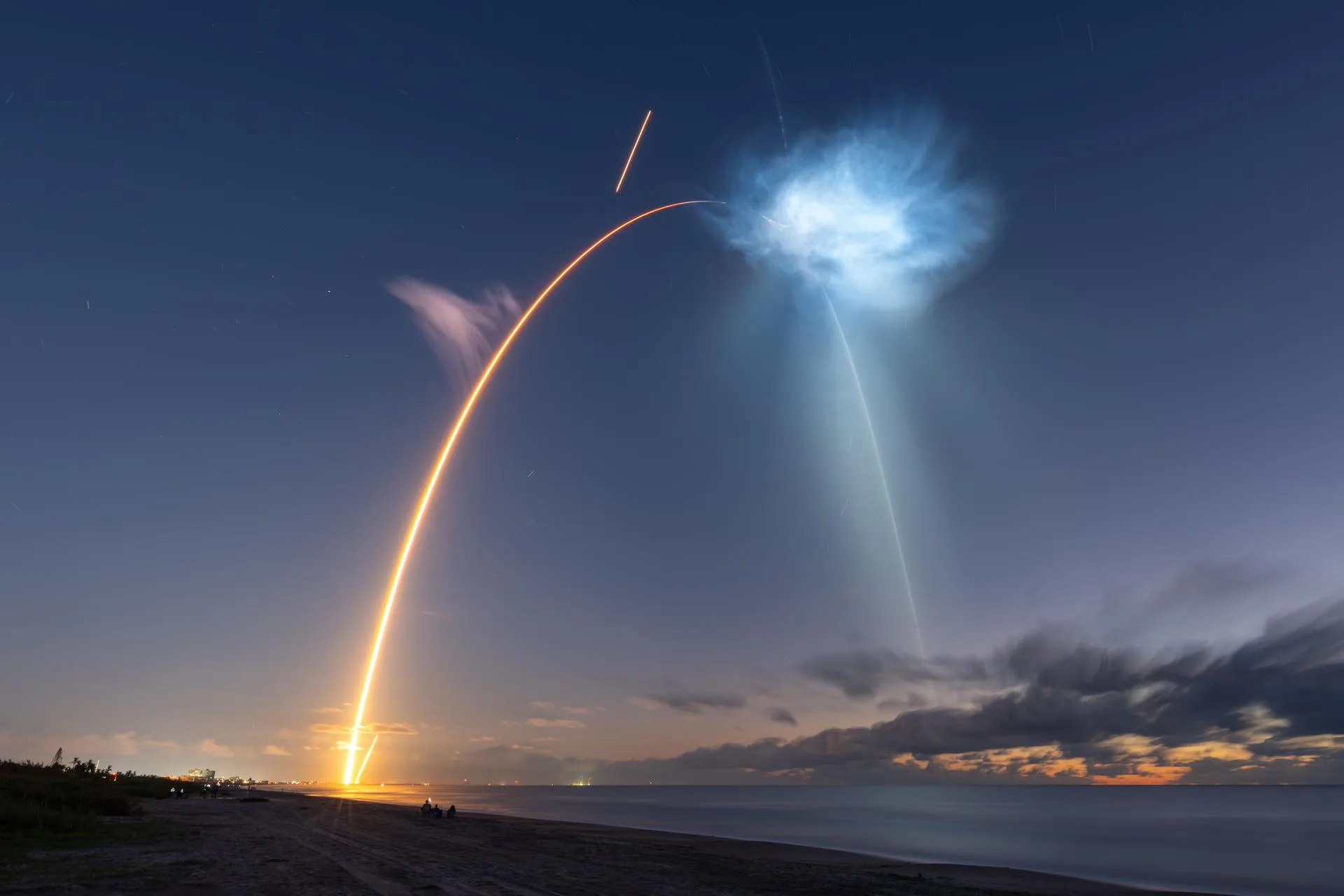
Two university-built CubeSats left Earth on October 13 aboard SpaceX’s 35th commercial resupply mission for NASA, carrying classroom engineering work toward an operational space environment. The satellites shared the flight with more than 6,300 pounds of cargo bound for the International Space Station.
NASA Blogs reported the launch on Tuesday, October 13. A Falcon 9 lifted off at 6:33 a.m. EDT from Space Launch Complex 40 at Cape Canaveral Space Force Station in Florida, beginning the cargo mission’s journey to the orbiting laboratory.
The small spacecraft, PROVES-Maia and PROVES-Taygeta, are components of a broader collaboration called Pleiades Five. That program is organized around five Pleiades Rapid Orbital Verification Experiment System satellites and is intended to give multiple universities a common framework for building, testing, and eventually operating space hardware.
Instead of asking every participating institution to design an entire satellite independently, PROVES supplies an openly documented spacecraft kit. Its design files and software can be examined, reused, and improved by other teams, turning the platform into both flight hardware and a shared educational resource.
This model addresses one of the central difficulties of university space projects: students have limited time to move from theory to a completed mission. A common platform allows them to concentrate on assembly, integration, payloads, communications, and operations while still learning how the subsystems of a spacecraft affect one another.
NASA selected the PROVES project through its CubeSat Launch Initiative in 2024. CSLI provides flight opportunities to eligible spacecraft developed by educational institutions and other organizations, with the wider objective of building practical experience among future scientists, engineers, and technologists. NASA’s Launch Services Program at Kennedy Space Center manages the initiative.
Texas State University developed PROVES-Maia using the common satellite platform created by California State Polytechnic University, Pomona. The arrangement gave the Texas State team direct experience with flight-hardware assembly and system integration without requiring it to establish a new spacecraft architecture from the beginning.
The university’s Space Lab completed Maia’s clean-room assembly in March. Students installed avionics, electrical power equipment, and payload systems before preparations for vibration testing at NASA’s Johnson Space Center in Houston, where the spacecraft was to be evaluated against the shaking associated with launch.
If PROVES-Maia is deployed from the station and begins operating as planned, it is intended to relay digital traffic for amateur radio users over UHF and S-band links. The mission plan also includes attempts, when orbital and communications conditions allow, to route messages between PROVES spacecraft.
PROVES-Taygeta was produced through a partnership between Cal Poly Pomona’s Bronco Space Lab and Mt. San Antonio College in Walnut, California. Its mission combines amateur radio services with two additional payload functions: an orbital camera and an experiment for detecting radiation in low Earth orbit.
Radio operators were expected to be able to download images taken by Taygeta. A separate onboard processor was designed to oversee approximate measurements of the energies of detected radiation, and the team planned to make those readings available in response to direct requests sent to the spacecraft.
The networking element could connect the individual educational missions into a larger experiment. The collaboration plans to test Dynamic Relay for Intersatellite Fault Tolerance, known as DRIFT, an open-source protocol designed to route information between satellites rather than treating each CubeSat solely as an isolated radio endpoint.
Participation is not meant to stop with the university laboratories. The team planned to publish a ground-station design so that amateur radio operators could engage with the spacecraft, request information, receive transmissions, and contribute to communications experiments from the ground.
Maia and Taygeta followed three other members of the collaboration. PROVES-Alcyone, PROVES-Atlas, and PROVES-Electra launched toward the station in April aboard NASA’s Northrop Grumman Commercial Resupply Services 24 mission. The October launch therefore expanded work already in progress, although the source did not establish that the two newer CubeSats had subsequently been deployed or that their planned orbital experiments had begun.