
Dragon cargo mission links ISS medicine with power-system upgrades
A SpaceX Dragon launched October 13 carrying more than 6,300 pounds of research materials, station supplies and roll-out solar arrays. The mission combines biomedical investigations with infrastructure intended to strengthen the orbital laboratory’s electricity generation.
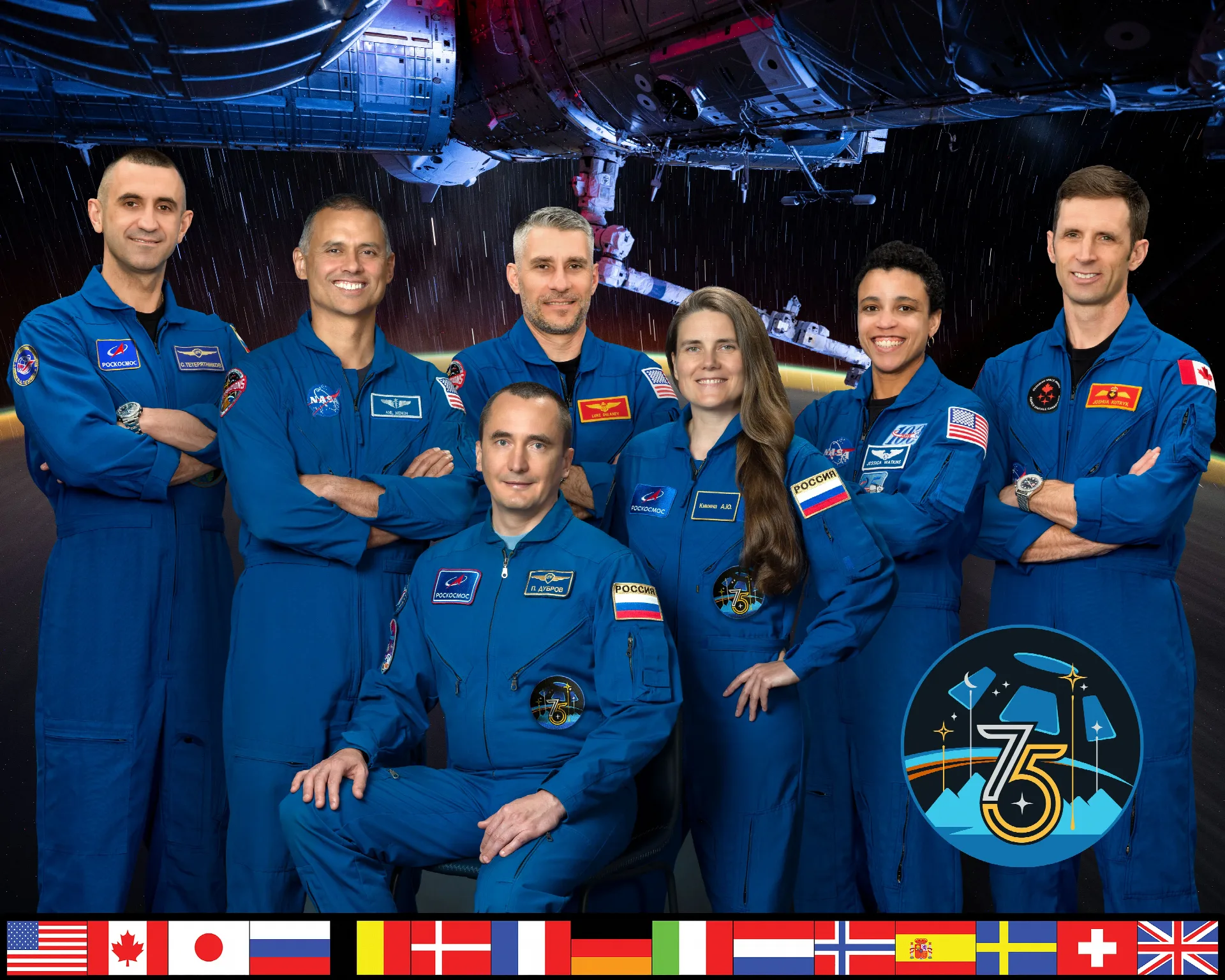
A Falcon 9 lifted an uncrewed SpaceX Dragon from Cape Canaveral Space Force Station in Florida at 6:33 a.m. EDT on October 13. The spacecraft carried more than 6,300 pounds of science hardware, supplies and station equipment toward the International Space Station, where the seven members of Expedition 75 were continuing a full schedule of research and maintenance.
NASA Blogs reported the launch and crew activities on Tuesday, October 13. At that point, Dragon was scheduled to reach the station at 11 a.m. EDT on Thursday, October 15. The source account did not provide a later update confirming whether arrival and rendezvous proceeded as planned.
The manifest illustrates how a single cargo flight supports several layers of station operations. Consumables and replacement hardware sustain the orbiting complex, while research payloads take advantage of microgravity and major components allow crews to update infrastructure that has been operating in space for years.
Among the newly delivered investigations were projects intended to examine the creation of artificial retinas and the growth of heart tissue in weightlessness. On Earth, gravity affects how cells settle, organize and form structures. The orbital environment offers a different setting in which researchers can observe those processes, although NASA’s October 13 post described the planned work rather than any experimental findings.
Dragon was also transporting the final pair of roll-out solar arrays for the station. The units were intended for installation during future spacewalks to augment the outpost’s power-generation system. Electricity is a central constraint aboard the ISS because life-support equipment, communications, computers and laboratory facilities all compete for the energy produced by the station’s solar hardware.
While Dragon traveled in orbit, NASA astronaut Anil Menon and Canadian Space Agency astronaut Joshua Kutryk inspected and cleaned a science freezer in the Japanese Kibo laboratory. Freezers form an important part of the research chain, preserving temperature-sensitive samples until they can be examined on board or eventually returned for analysis.
Menon later worked with NASA crewmates Jessica Watkins and Luke Delaney on medical imaging of the eyes. The checks were designed to help physicians investigate how microgravity affects the retina, cornea and lens. Understanding such changes is relevant not only to the health of astronauts already aboard the station but also to planning longer missions in which access to Earth-based medical care would be more limited.
Kutryk used the Bio-Monitor vest and headband during his shift. The wearable system records health information while allowing a crew member to continue normal work, offering an alternative to measurements that require astronauts to pause their schedules. NASA did not disclose individual readings from the session.
Watkins’ work bridged biology and robotics. She serviced three-dimensional cell-printing equipment in the Destiny laboratory before replacing batteries on an Astrobee free-flying assistant. Cell-printing hardware supports investigations into how biological structures can be assembled in microgravity, while Astrobee tests ways robots might take on selected tasks inside a spacecraft.
Delaney prepared the Echo tele-operated ultrasound scanner for remote maintenance by engineers on the ground. He also removed a battery adapter from an emergency propulsion backpack associated with a spacesuit. The assignments highlight the role of remote expertise: station crews handle hardware physically, but specialists on Earth can diagnose systems and guide complex servicing from mission-control facilities.
In the Russian segment, station commander Pyotr Dubrov and flight engineer Anna Kikina evaluated an exoskeleton designed to control robots remotely. One cosmonaut wore the suit and virtual-reality goggles while simulating tool handling and connector operations; the other observed the test on a computer and provided spoken guidance. The Teledroid experiment is aimed at technologies that may be useful in preparing crews for future long-duration exploration.
First-time space flyer Sergey Teteryatnikov spent most of his shift cleaning smoke detectors in the Nauka science module, then continued learning station systems and procedures. His work was less conspicuous than the incoming cargo or advanced experiments, but it represented an essential part of orbital operations: exploration technology depends on regular inspection, housekeeping and crew familiarity with emergency systems.
Taken together, the October 13 schedule showed the ISS functioning simultaneously as a biomedical laboratory, a robotics test site and a continuously maintained spacecraft. Dragon’s cargo was meant to extend each of those roles, bringing new investigations while supplying the hardware needed to preserve and expand the station’s research capacity.