
ISS Crew Loaded Dragon for Its Return to Earth
Expedition 75 prepared research samples and long-tested hardware for a Dragon return while servicing spacesuits and setting up a plant study. Careful cargo placement was central to the spacecraft’s planned reentry and Pacific splashdown.
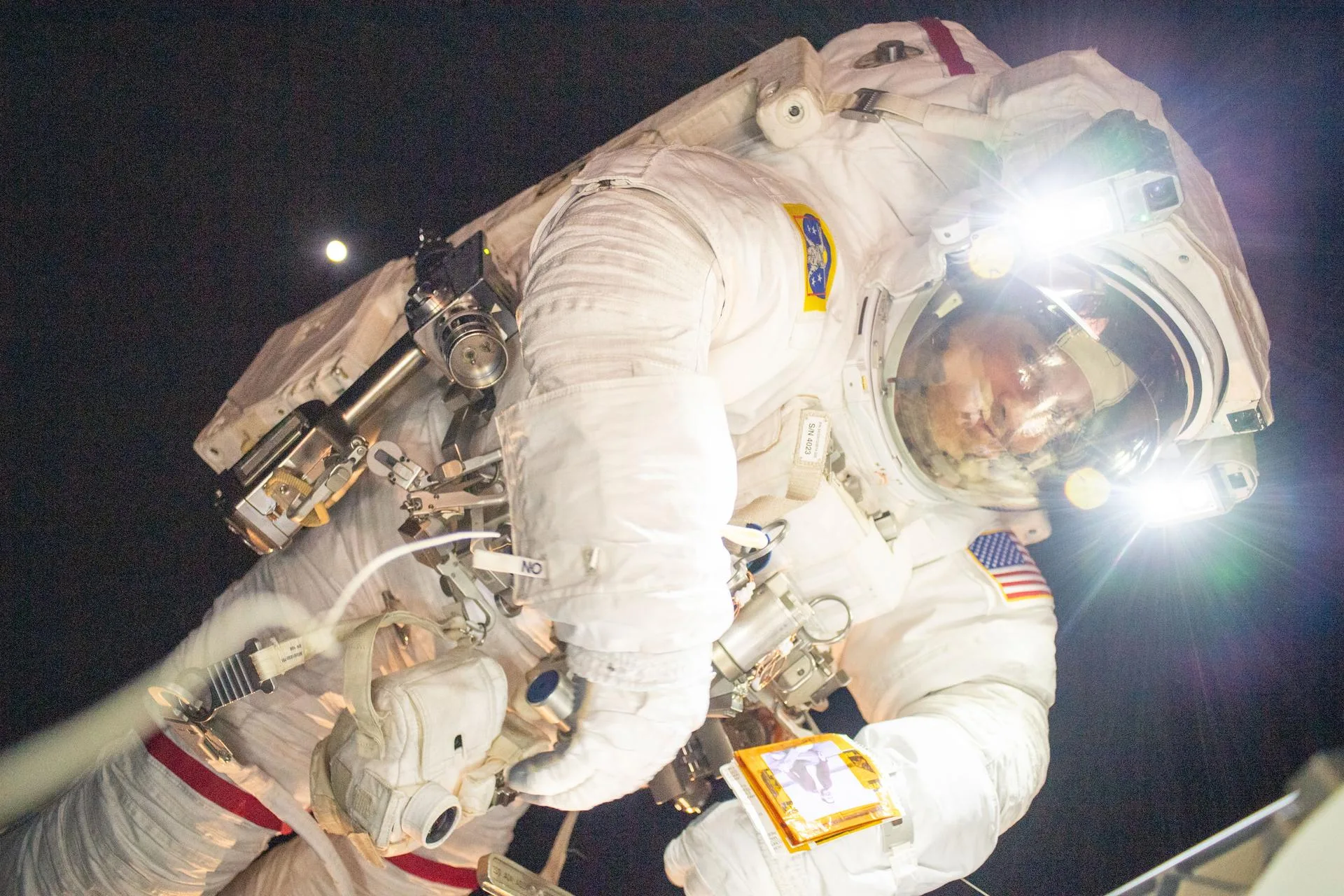
Expedition 75 devoted much of its November 12 shift aboard the International Space Station to a transition point in orbital research: turning an arriving cargo vehicle into a carefully configured return capsule. Crew members packed experiments into a SpaceX Dragon, maintained two spacesuits and prepared facilities for the station’s next round of biological work.
NASA Blogs reported the activities on Thursday, November 12. Dragon was described as nearing the end of its stay, although the update did not specify an undocking date or say that the spacecraft had already departed.
The cargo vehicle reached the station on October 15 with more than 6,300 pounds of science investigations, crew supplies and hardware. Its return capability makes it particularly useful for experiments whose full value depends on laboratory analysis after exposure to microgravity.
Among the materials being readied for the trip home were bacterial DNA samples and three-dimensionally printed blood vessels. Once returned, these specimens were expected to undergo analysis on Earth, where researchers have access to larger instruments and broader laboratory support than can be accommodated on the orbiting complex.
The handover from station experiment to Earthbound sample is a sensitive part of the research chain. Temperature, handling time and documentation can all matter when scientists compare material flown in space with control samples. For that reason, the most time-critical payloads were to remain in portable freezers and incubators until the final stage of loading.
NASA flight engineers Anil Menon and Jessica Watkins began placing a range of payloads inside Dragon during the Thursday shift. The crew planned to complete packing the day before departure, when preserved research would be transferred into the spacecraft for the ride through reentry and onward recovery.
Menon later worked with Canadian Space Agency flight engineer Joshua Kutryk to rearrange and secure the return cargo. Their task required more than fitting containers into available space. The items had to be distributed so that Dragon’s mass remained balanced and its center of gravity stayed within the limits required for a safe atmospheric entry and splashdown in the Pacific Ocean.
Another returning item had been in service far longer than the samples. Specialized lighting equipment designed to reproduce natural daylight patterns was being sent back after more than three years of testing. The hardware was intended to support crew sleep regulation in an environment where the station circles Earth roughly every 90 minutes and ordinary sunrise and sunset cues cannot define a terrestrial day.
While the return campaign proceeded, NASA flight engineer Luke Delaney started work in Japan’s Kibo laboratory module. He configured the Life Science Glovebox for MVP-Plant-02, an investigation intended to examine how plants respond to disease in microgravity.
Plant health is a practical concern for exploration beyond low Earth orbit. Future crews may need crops to supplement food supplies and contribute to closed or partially closed life-support systems. A disease outbreak in a limited growing area could therefore have consequences beyond a single experiment, making it important to learn whether microgravity alters plant defenses or interactions with pathogens. The NASA update described preparations, not findings from the study.
Delaney subsequently moved to the Quest airlock to clean cooling and ventilation components in two spacesuits. Menon and Kutryk had worn the suits during spacewalks on October 29 and November 5. Post-spacewalk servicing helps preserve airflow and thermal-control performance in equipment that must protect an astronaut from vacuum and substantial temperature changes.
Work in the station’s Roscosmos segment covered both materials science and operational support. Commander Pyotr Dubrov studied the production of high-purity semiconductor crystals in microgravity, where reduced buoyancy-driven convection and sedimentation can offer a different environment for crystal formation than laboratories on Earth.
Dubrov then joined flight engineer Anna Kikina to practice with what the source called “super intelligence” tools. The system was used to transcribe crew audio reports so mission controllers could review them on the ground. The brief description did not identify the underlying model or suggest that the technology was making command decisions; its stated role was to assist with converting spoken reports into text.
Flight engineer Sergey Teteryatnikov began his shift with orbital plumbing duties before documenting available storage space and updating the inventory management system. Such work is less visible than a returning science payload, but it underpins station operations: every container needs a known location, usable volume must be tracked, and consumable systems must continue functioning while research and visiting-vehicle traffic proceed.
Taken together, the shift illustrated the ISS as both a laboratory and a logistics hub. Biological specimens, human-factors hardware and other research were moving toward Earth, a new plant experiment was being prepared, spacesuits were being restored after external work, and the station’s multinational crew was maintaining the infrastructure required to keep all of those activities running safely.