
Ukraine’s Parliament Weighs Tougher Penalties for Pricing Violations
Bill No. 16098 would raise personal fines, strengthen sanctions on businesses and connect price-control findings with licensing oversight. Its sponsors cite a surge in violations detected in the pharmaceutical market.
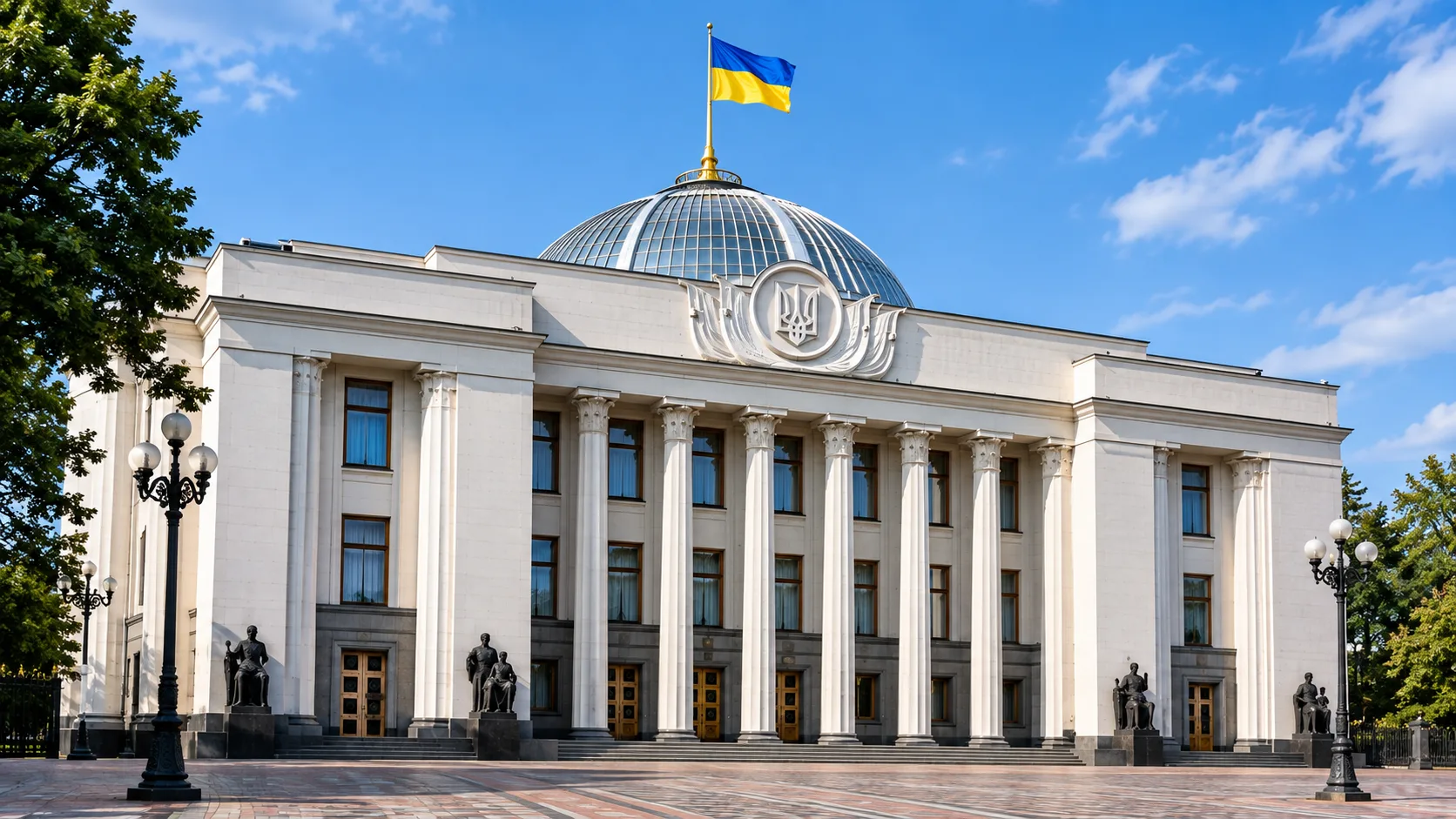
Ukrainian lawmakers have introduced legislation designed to make breaches of state pricing rules more costly for company officials, individual citizens and businesses. Bill No. 16098 reaches beyond ordinary administrative fines, combining personal liability with economic sanctions and a new route for price inspectors to involve licensing authorities.
The Verkhovna Rada of Ukraine reported the bill’s registration on Thursday, September 24. It was filed a day earlier by MPs Serhii Kuzminykh, Serhii Bunin, Oleksandr Lukashev, Oleksandr Horobets and Yurii Zdebskyi during the 16th session of the ninth parliamentary convocation.
The law-enforcement committee has been designated as the lead committee, while panels responsible for economic development, finance, budgets, energy, legal policy, anti-corruption safeguards, local government and European integration are also expected to review the text. That broad referral reflects the bill’s mixed character: although formally centred on administrative offences, it could affect regulatory practice, business costs, consumer protection and licensing.
The proposal is rooted primarily in enforcement data from the pharmaceutical sector. According to the explanatory note, the State Service of Ukraine on Food Safety and Consumer Protection conducted 634 unscheduled inspections between January and August 2026 involving regulated prices for medicines and medical devices. Inspectors identified violations in 412 cases, including 65 cases in which obstacles were allegedly created for the supervisory work.
The share of unscheduled inspections uncovering violations rose from 29% in 2025 to 65% in 2026. The most common problem was said to be the use of wholesale, supply or retail mark-ups above the permitted ceilings. Sponsors interpret the increase as evidence that existing deterrents are inadequate, although the figures describe targeted unscheduled inspections rather than a statistically representative survey of the entire pharmacy market.
Enforcement following those inspections produced 401 decisions imposing business-related sanctions worth a combined 3.67 million hryvnias. Regulators also issued 187 orders requiring corrective action, while 275 officials received administrative fines totalling 684,100 hryvnias. The distinction matters because Ukrainian law can penalise the enterprise for improperly earned revenue while separately holding an official responsible for conduct connected with the violation.
The bill would replace Article 165-2 of the Code of Administrative Offences. A breach of the rules for forming, setting or applying prices, tariffs, discounts, mark-ups or surcharges would carry a fine of 150 tax-free minimum incomes for citizens and 200 for officials. Using the standard 17-hryvnia unit commonly applied to such administrative calculations, the amounts would be 2,550 and 3,400 hryvnias.
A repeat offence within one year would trigger 200 units for a citizen and 250 for an official, equivalent on that basis to 3,400 and 4,250 hryvnias. The revised Article 188-3 would impose 300 units on citizens and 350 on officials for failing to obey lawful demands from price-control officers or for obstructing their duties—approximately 5,100 and 5,950 hryvnias respectively.
For businesses, the financial exposure could be much greater. Where a regulated price is improperly formed or applied, the proposed wording calls for the recovery of unjustified revenue—the positive difference between actual proceeds and proceeds calculated under the lawful pricing method—plus a fine equal to 100% of that revenue. Charging for goods that legislation requires to be supplied free of charge would lead to a penalty equal to the full value of the goods sold.
Two fixed corporate penalties are also included. Supplying inaccurate information to an authorised body would attract 3,000 tax-free minimum units, while disregarding an order or obstructing official functions would attract 6,000. At the 17-hryvnia calculation rate, those sums would be 51,000 and 102,000 hryvnias, potentially significant for a small pharmacy even if less consequential for a national chain.
Another provision would allow the authorised price-control body to ask licensing agencies to investigate and remedy breaches of licensing conditions. In the pharmaceutical sector, that could turn a pricing case into a broader regulatory matter rather than leaving it as a fine alone. The effectiveness and fairness of this mechanism would depend on separate fact-finding by the licensing authority, clear thresholds for referrals and safeguards against duplicate or automatic punishment.
The sponsors say implementation would not require additional expenditure from central or local budgets and predict that tougher accountability would support price stability and restrain inflationary pressure in consumer markets. Higher fines may strengthen deterrence, but they cannot by themselves guarantee lower prices: consistent inspections, clear mark-up rules, procedural rights and timely appeals are also central to credible enforcement.
Bill No. 16098 has only entered the legislative process and its provisions may be amended during committee scrutiny or parliamentary debate. If ultimately adopted in its present form, it would take effect on the day after publication. The Cabinet of Ministers would then have three months to align government regulations and ensure that ministries and other central executive agencies update their rules.