
ISS Crew Readies Final Roll-Out Solar Array
Expedition 75 is preparing for a roughly seven-hour spacewalk intended to complete a major solar-array upgrade while continuing biomedical and materials research aboard the station.
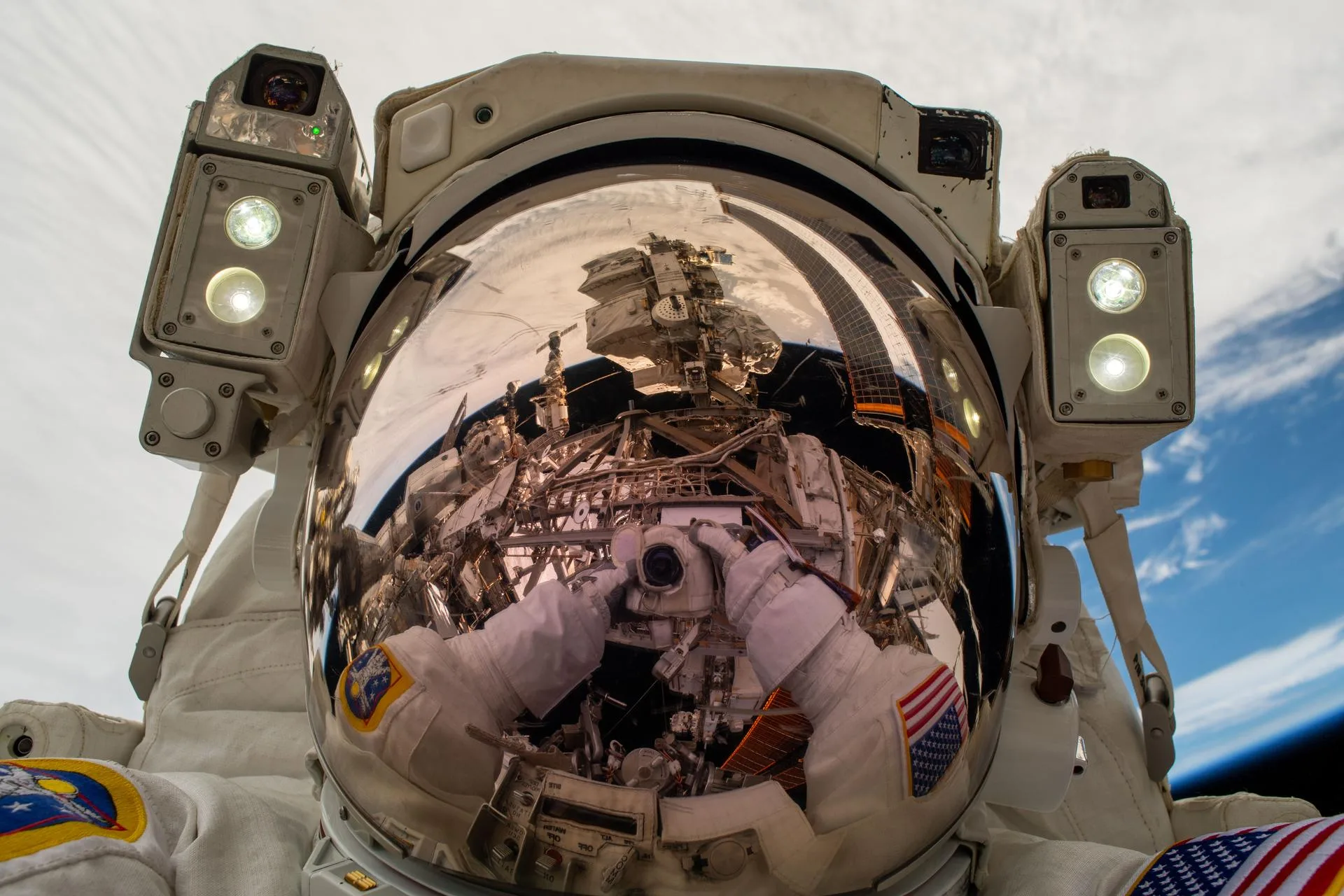
The International Space Station crew has entered the final phase of preparations for another power-system upgrade outside the orbital laboratory. Canadian Space Agency astronaut Joshua Kutryk and NASA astronaut Anil Menon are scheduled to conduct a spacewalk on Thursday to install the eighth and final roll-out solar array.
NASA Blogs reported the preparations on Monday, November 2. The excursion is planned to begin at 8:10 a.m. EST and is expected to last about seven hours, provided the crew, station systems and operational conditions are ready to proceed.
The astronauts will work on the station’s starboard truss, opposite the port-side structure where they installed another roll-out array on October 29. The short interval between the two operations gives the pair recent experience with the installation process, but each excursion still requires its own detailed review of procedures, equipment and robotic support.
If the final array is installed as planned, the station’s generating capacity is expected to rise by roughly 30%, from 160 kilowatts to approximately 215 kilowatts. That increase is significant for an outpost whose laboratories, environmental systems, communications equipment and routine crew operations all depend on a stable electrical supply.
Preparation is a broader crew effort rather than a task limited to the two spacewalkers. Kutryk and Menon joined NASA flight engineers Jessica Watkins and Luke Delaney on Monday to study the Canadarm2 procedures required to support the work. The robotic arm is therefore part of the coordinated operational plan surrounding the exterior installation.
The four astronauts also held two conferences with mission control. The first brought them together with spacewalk specialists to review mission readiness, while the second focused on robotics and any remaining concerns involving Canadarm2. Dividing those discussions allowed the teams to examine both the human spacewalk plan and its mechanical support in detail.
NASA+ is due to begin live coverage at 6:45 a.m. EST on Thursday, well before the scheduled start of the excursion. NASA said the broadcast would also be available through several other platforms, covering the lead-up to the operation as well as the astronauts’ work outside the station.
Even with the spacewalk approaching, Expedition 75 continued its microgravity research program. Kutryk began his shift wearing the Bio-Monitor system’s sensor-equipped vest and headband, then exercised on the cycle ergometer in the Destiny laboratory. The combination allows physiological data to be collected while the body is under controlled physical strain.
Researchers are using the investigation to examine how an astronaut’s cardiorespiratory system adjusts to weightlessness. The findings may inform health measures for crews assigned to future missions toward the Moon, Mars and more distant destinations, where long exposure to the space environment would make medical monitoring especially important.
Delaney worked with vascular tissue samples produced in the station’s BioFabrication Facility. He supplied nutrients to the growing samples, supporting an experiment that uses the microgravity environment to study biological structures manufactured away from the conditions found on Earth.
Watkins checked a portable DNA sequencer used to genetically analyze antibiotic-resistant bacteria in microgravity. Verifying the instrument’s operation is a practical step in maintaining the station’s ability to examine microorganisms in orbit rather than relying solely on samples returned for later analysis.
Research and maintenance also continued in the Roscosmos segment. Station commander Pyotr Dubrov pursued an experiment on producing high-purity semiconductor crystals in microgravity, with the goal of creating material superior to comparable crystals made on Earth. Sergey Teteryatnikov attached electrodes for a 24-hour session recording his heart activity and blood pressure.
Anna Kikina first serviced the ventilation system and then transferred cargo inside the Progress 96 spacecraft. Her work illustrates the logistical foundation behind the station’s research schedule: scientific experiments and high-profile spacewalks can proceed only alongside routine maintenance, environmental-system care and the continuous movement of supplies.
The week’s program brings those strands together. The solar-array work is designed to expand available power, life-science studies are examining the human and microbial response to weightlessness, and materials research is testing what microgravity may offer manufacturing. The outcome of the planned installation remained dependent on the Thursday operation, but its completion would mark the placement of the eighth and final roll-out array.