
Operation Veles links the Kupiansk battle to Ukraine’s wider air-defence challenge
President Volodymyr Zelensky described Operation Veles as a technologically planned action that turned an underground route against Russian forces. His address also connected battlefield resilience with delayed Patriot supplies and prospective diplomacy in November.
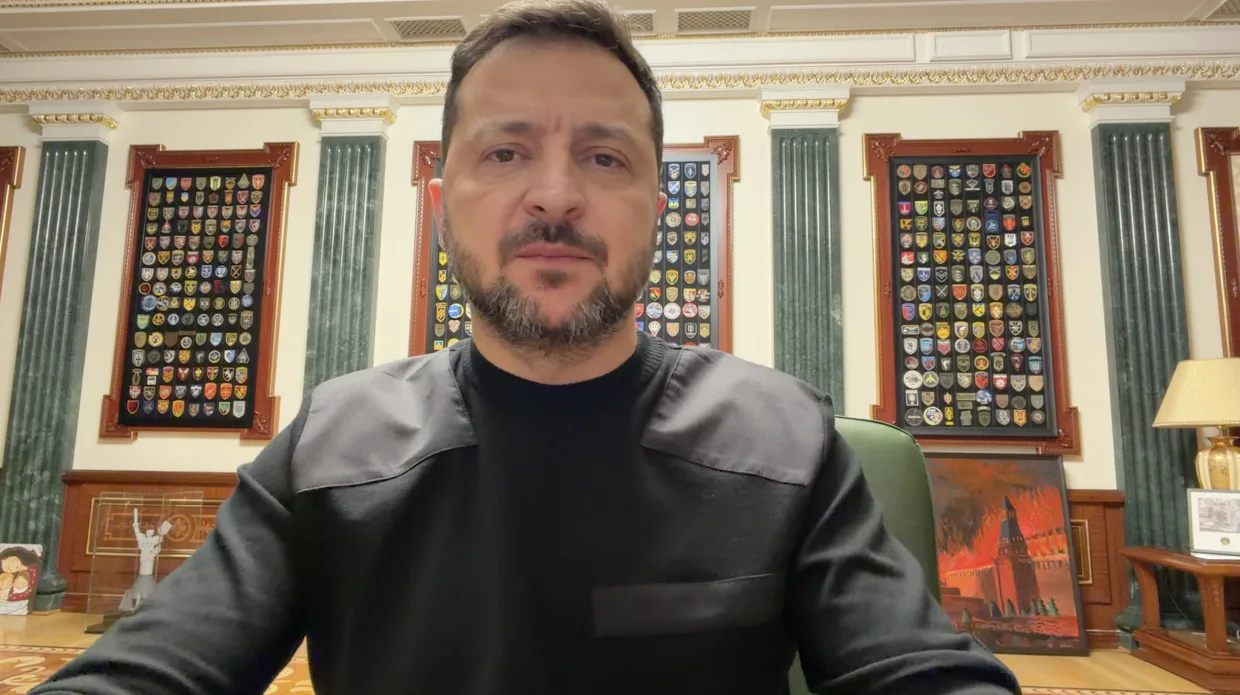
Ukraine’s Operation Veles on the Kupiansk axis combined an account of tactical adaptation with a broader political message: Russian forces had not achieved the result expected by their leadership, while Kyiv still needed stronger external support to protect its cities and infrastructure. President Volodymyr Zelensky presented the operation as the third major Ukrainian action of 2026.
The Office of the President of Ukraine reported the address on Tuesday, October 27. The operational details, territorial figures and assessments of Russian objectives cited in the speech reflected the Ukrainian government’s account and were not accompanied in the source text by independently verifiable battlefield documentation.
Zelensky said he had received reports from Mykhailo Drapatyi, Ihor Obolienskyi and Pavlo Palisa about the operation, which was carried out by the Khartiia formation. He called it strong, carefully conceived and technologically sophisticated, placing particular emphasis on how Ukrainian troops dealt with a concealed underground approach near their defensive positions.
According to the president, Russian troops had attempted to use underground gas pipes to move past Ukrainian lines. Ukrainian forces then turned that method against them and used the same communications network with what he described as exceptional success. The address offered no detailed timeline, map or casualty figures, but portrayed the episode as an example of intelligence, engineering expertise and tactical surprise.
The use of pipelines is significant because modern front lines are shaped by more than trenches and roads. Industrial networks, drainage systems, tunnels and abandoned facilities can provide protected movement routes if their access points and internal layout are known. They can also become traps when detected, making surveillance and control of subterranean infrastructure an important part of local defence.
Kupiansk carries operational weight because of its road and rail connections and its position within a sector where Russia has repeatedly sought to improve its battlefield posture. Zelensky argued that Veles strengthened Ukrainian positions and demonstrated that Moscow had failed to secure the result assigned by its political leadership. He did not specify how much territory was affected by this particular operation.
The president compared Veles with two earlier actions. He said an operation by Ukraine’s Air Assault Forces had liberated more than 800 square kilometres. He also cited Operation Vivaldi in the Donetsk region, where Russian forces had extensive plans and conducted numerous assaults, and said Ukrainian troops had liberated more than 200 kilometres there. The wording in the address did not provide further geographical detail.
Together, the three operations supported Zelensky’s claim that Ukraine’s battlefield positions in 2026 were stronger than they had been for a long period of the war. That assessment was framed cautiously by another reality in his speech: holding the front is only one dimension of national resilience. Air attacks on energy assets, transport links and urban areas can impose pressure far from the contact line.
Zelensky said delayed air-defence packages and a shortage of Patriot interceptors were leaving Ukraine in a difficult position against ballistic missiles. He claimed that Russia had launched more than 100 ballistic missiles against Kyiv and the surrounding region between October 14 and October 27. The statement did not provide a strike-by-strike breakdown of that figure.
The president referred specifically to Russian strikes on October 26 against the grounds of Kyiv National University of Trade and Economics, its campus and nearby Kyoto Park. He said buildings, a metro station and metro lines were damaged. He also reported a strike on Kyiv’s Southern Bridge, describing it as a vital logistics artery, and acknowledged casualties without stating a number.
In his account, those incidents were part of a sustained escalation against logistics and daily life in Ukrainian cities, including Kyiv, Dnipro, Zaporizhzhia, Odesa, Kharkiv, Sumy and Kherson. Protecting electricity supplies, transport and other infrastructure therefore remained a demanding task, especially when ballistic threats exceeded the available capacity of air-defence systems.
Zelensky directed much of his appeal toward Washington. He said the United States, and particularly Pentagon authorisations, were central to Patriot deliveries. While thanking countries that supplied assistance on time, he argued that delays weakened both physical protection and Ukraine’s diplomatic leverage. His message treated air defence not only as a military requirement but also as a condition for negotiating from a stronger position.
The address also looked toward a possible trilateral format in November involving Ukrainian, US and Russian representatives. As of November 1, the supplied account did not establish that such talks had already taken place, nor did it identify their venue, level or agenda. Zelensky insisted that Europe should participate in diplomatic decisions and that no European state should be excluded from processes affecting the continent’s security.
He also said he had spoken with the leaders of Norway and Finland following their conversation with Vladimir Putin and expected further communication with the American side and major European countries. The policy argument running through the address was that diplomacy must be reinforced by battlefield strength, air-defence support and sustained pressure capable of giving Russia an incentive to de-escalate.