
ISS crew cleared for solar array installation spacewalk
NASA’s Anil Menon and CSA astronaut Joshua Kutryk are scheduled to install a roll-out solar array on the station’s port truss. The nearly seven-hour operation will rely on close coordination with Canadarm2 operators and mission control.
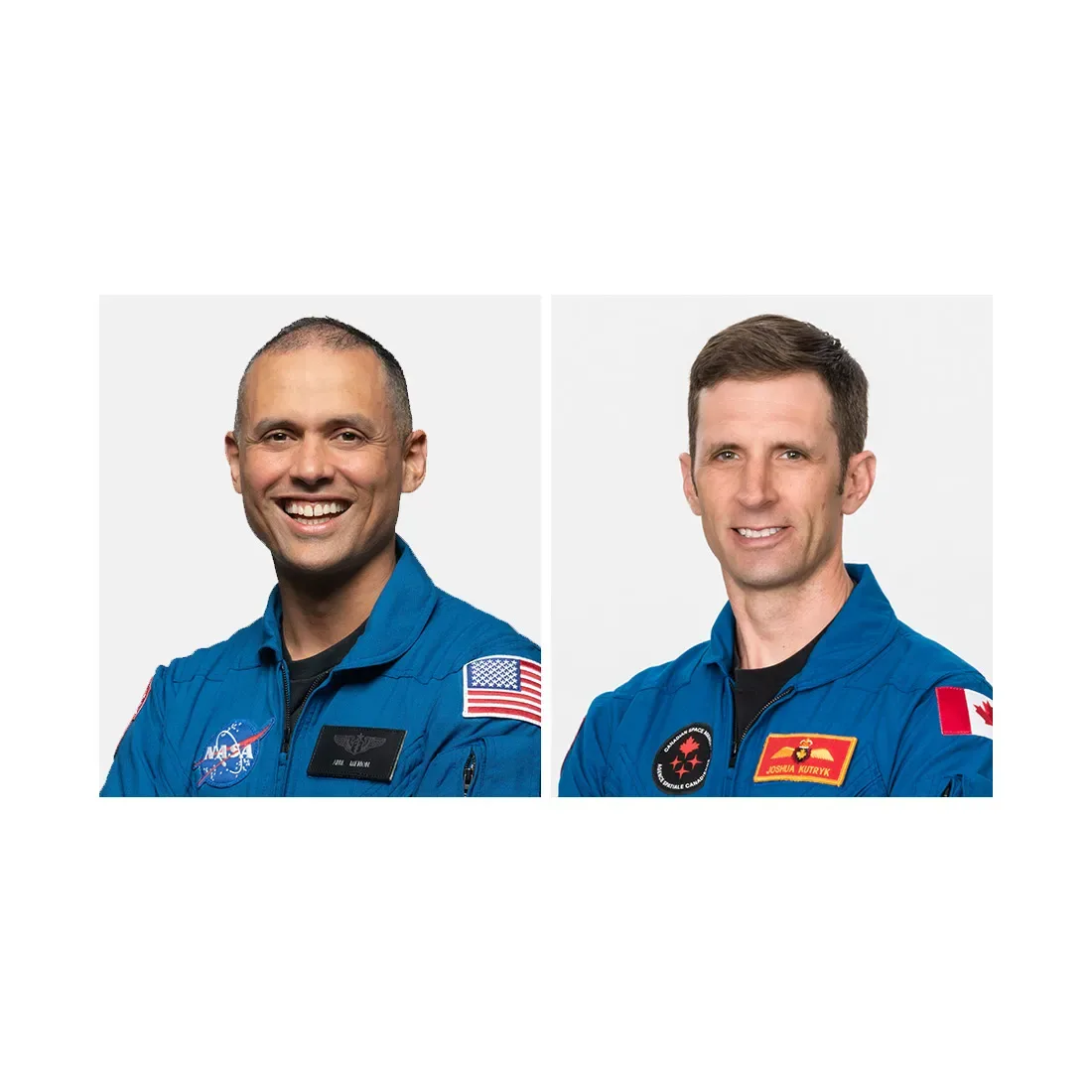
Mission managers have cleared a spacewalk on October 29 to add a new roll-out solar array to the port-side truss of the International Space Station. Expedition 75 flight engineers Anil Menon of NASA and Joshua Kutryk of the Canadian Space Agency are assigned to the excursion, which is expected to last about six hours and 45 minutes.
NASA Blogs reported the mission plan on Wednesday, October 28. The spacewalk will officially begin when Menon and Kutryk switch their suits to battery power at 8 a.m. EDT, while NASA+ is scheduled to start live coverage at 6:30 a.m. The earlier broadcast window will include activities leading up to the crew’s departure from the station.
The assignment centers on moving a large piece of power-generating equipment from temporary storage to its operating location. Menon and Kutryk will first remove the bolts securing the roll-out array to its stowage platform. Only after the hardware has been released can the crew proceed with the carefully choreographed transfer toward the port truss worksite.
Menon is scheduled to carry the array while riding on Canadarm2, the station’s robotic arm. That arrangement makes the robotic system an integral part of the spacewalk rather than merely an observation tool. Kutryk will move separately along the exterior of the orbiting laboratory, remaining tethered as he makes his way to the same installation area.
Once both astronauts are positioned at the worksite, they will work together to complete the attachment. Ground controllers are then expected to activate the array remotely so it can begin producing power. NASA’s account describes this sequence as the final phase of the planned task but does not report an outcome because the excursion had not yet taken place when the update was published.
Menon and Kutryk used their Wednesday shift to complete a final review of the spacewalk procedures. They subsequently inspected the life-support systems built into their spacesuits, checked communications equipment and examined other components needed outside the station. The review was intended to confirm both their familiarity with the timeline and the readiness of the equipment on which they will depend.
The two spacewalkers are only part of the team supporting the work. After lunch, they joined NASA flight engineers Jessica Watkins and Luke Delaney for a final conference with specialists on the ground. The meeting provided another opportunity to align the actions of the astronauts outside the station with those of the crew members and controllers assisting from elsewhere.
Watkins and Delaney also reviewed exterior lighting conditions and camera positions. During the excursion, they are expected to monitor Menon and Kutryk and operate Canadarm2. Their preparation reflects the need to maintain visual awareness while the robotic arm transports an astronaut and the solar array across the station’s exterior structure.
All four astronauts ended their shift with a separate conference involving robotics engineers. That discussion focused on Canadarm2 operations planned for the spacewalk. The sequence of briefings shows that the installation is being treated as a combined extravehicular and robotics task, with timing and communication linking each participant’s role.
The station’s three Roscosmos cosmonauts had a lighter-duty Wednesday while continuing scientific work and becoming familiar with the spacewalk plan. Commander Pyotr Dubrov removed multi-wavelength Earth-imaging equipment that had operated autonomously during the crew’s sleep period, capturing landmarks associated with the Pacific and Atlantic oceans.
Flight engineer Sergey Teteryatnikov installed a different Earth-observation package for another overnight photography session. Its targets were listed as Pacific islands and glaciers in South America. Flight engineer Anna Kikina, meanwhile, ran on the treadmill in the Zvezda service module as part of a test of her physical fitness in microgravity.
The planned excursion brings together several distinct station capabilities: suited astronauts working outside, an internally operated robotic arm, exterior cameras and ground teams responsible for remote activation. Mission managers had authorized the attempt by October 28, but NASA had not yet established whether the installation would be completed as planned or whether the array would begin generating electricity. Those results could only be assessed after the scheduled work.