
Ukrainian MP seeks minimum-wage cap for interim ARMA chiefs
Draft law No. 16175 would reserve statutory executive salaries at Ukraine’s asset recovery agency for leadership appointed after an open competition. Its supporting note relies on sharply critical claims about the agency’s interim management that have not been presented as judicial findings.
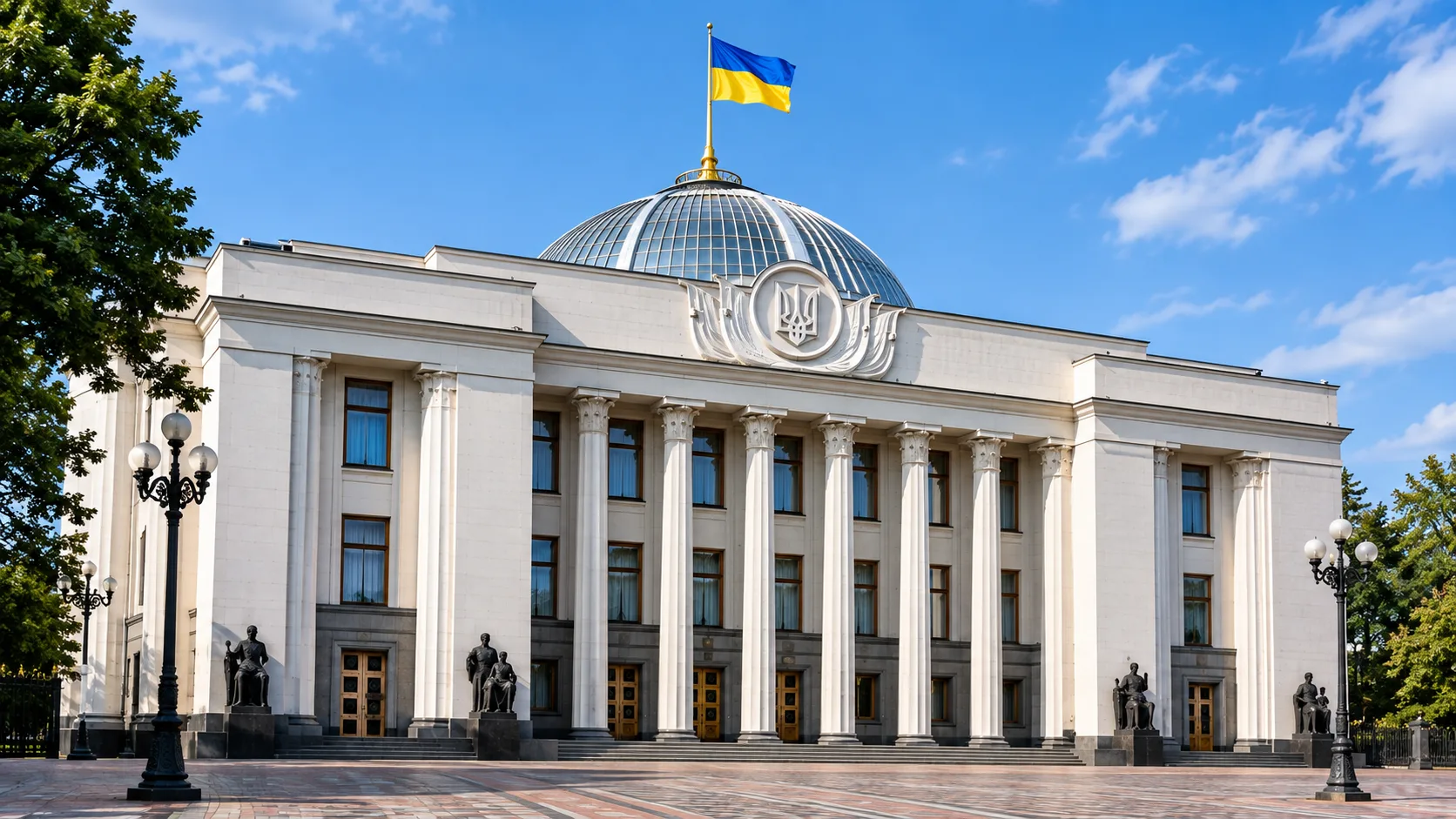
A bill filed in Ukraine’s parliament proposes paying the interim head of the Asset Recovery and Management Agency, known as ARMA, and the head’s deputies no more than one statutory minimum wage. The restriction would remain until a permanent agency chief is selected and appointed through the procedure prescribed by law. The Verkhovna Rada of Ukraine reported the filing on Thursday, October 22.
Draft law No. 16175 was introduced by lawmaker Oleksandr Tkachenko during the 16th session of the ninth parliamentary convocation. The Anti-Corruption Policy Committee was designated as the lead committee. Parliamentary panels responsible for state organization, social policy, the budget and European integration were also assigned to examine the proposal within their respective mandates.
Rather than rewriting ARMA’s broad powers, the measure targets a transitional clause in legislation adopted to strengthen the agency and improve the management of assets linked to corruption and other crimes. It would postpone access to the salary levels established for ARMA’s permanent leadership. Those rates would become applicable only after the chair is appointed under Articles 5 and 6 of the agency law following an open selection process.
Until that appointment, the base salaries of acting leadership would be fixed at the minimum wage legally in force on January 1 of the relevant calendar year. The draft text refers both to the acting chair and the deputies. It would take effect on the day after publication if it completes parliamentary consideration, is enacted and is officially published.
The explanatory memorandum frames the salary proposal as a response to developments since August 2025, when the Cabinet of Ministers assigned the chair’s duties to Yarosлава Maksymenko, then a deputy chair responsible for European integration. Its author argues that temporary leadership, intended to ensure continuity pending a lawful competition, instead became associated with a serious management and staffing crisis. The memorandum cites a September 15, 2026 decision by parliament’s anti-corruption committee in support of that assessment.
Financial comparisons are a major part of the sponsor’s case. According to figures the memorandum attributes to the Finance Ministry and ARMA, the agency’s activities generated about 6.8 billion hryvnias for the state budget from January through August 2025, compared with 520.9 million hryvnias in the same months of 2026. The sponsor calculates the decline at roughly 92.3%, equivalent to about 6.28 billion hryvnias.
That headline comparison requires context because confiscations and sanctions-related recoveries can be large, irregular events. The memorandum itself acknowledges this issue and separately states that recurring monthly proceeds from asset management fell from approximately 40 million to 31 million hryvnias. It also alleges that only one management agreement was concluded over the relevant year and that this contract did not produce revenue.
The filing also draws on what it describes as a draft independent international audit. It says interim management received five points out of 100 under a competent-leadership criterion. The sponsor alleges that senior appointments were made without adequate integrity and professional checks, that the temporary nature of the leadership mandate was disregarded, and that one legal-department appointment created a direct conflict of interest.
Asset records form another strand of the criticism. The memorandum contends that about 20 asset announcements were issued without proper valuations, approved management plans or adequate publication through the Prozorro procurement system. Citing audit material, it further claims that information on more than 42,000 seized assets was not consolidated sufficiently to establish their legal status, physical condition and other essential characteristics.
The supporting note refers to criminal investigations by the National Anti-Corruption Bureau and the State Bureau of Investigation into circumstances connected with the acting chair’s work. It also mentions administrative reports concerning alleged failures to comply with lawmakers’ lawful requests. These references do not establish criminal responsibility, and the materials supplied with the bill identify neither a conviction nor a final judicial finding; the accusations therefore remain the sponsor’s stated rationale for legislation.
The proposal raises policy questions extending beyond one officeholder. Supporters may see it as a way to prevent acting arrangements from continuing indefinitely and to encourage the authorities to complete an open selection rapidly. Critics could question whether reducing compensation for highly responsible positions to the minimum wage would undermine recruitment, professional incentives or operational stability, and whether salary rules should be used to respond to disputed assessments of individual performance.
The memorandum says implementation would require no additional state spending and would instead save money in ARMA’s payroll fund. It suggests that savings could be redirected to urgent security and defense needs, but provides no detailed fiscal estimate, baseline payroll figure or projected total. Consequently, the actual budgetary effect cannot be quantified from the submitted explanation alone.
As of October 23, the initiative remained a registered bill rather than binding law. It still required committee scrutiny and the subsequent stages of Ukraine’s legislative process, during which its wording could be amended or it could fail to advance. The parliamentary material supplied with the filing records the proposal and its justification but does not establish that the pay restriction has been adopted.