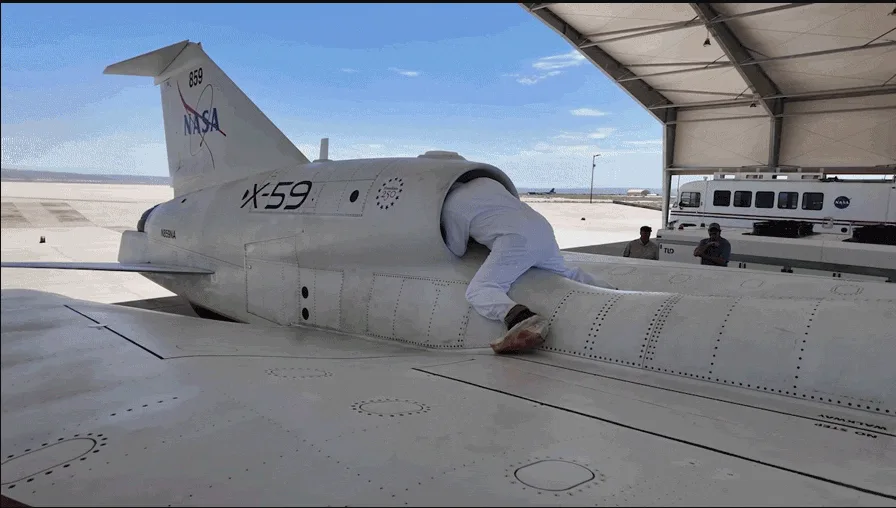
Inside Mike Lippert’s First Powered Session in the X-59
NASA test pilot Mike Lippert operated the X-59’s powered cockpit and ran its engine on the ground as part of his preparation for flight. The exercise highlighted the mentoring, simulation work and cross-team coordination behind the Quesst test program.
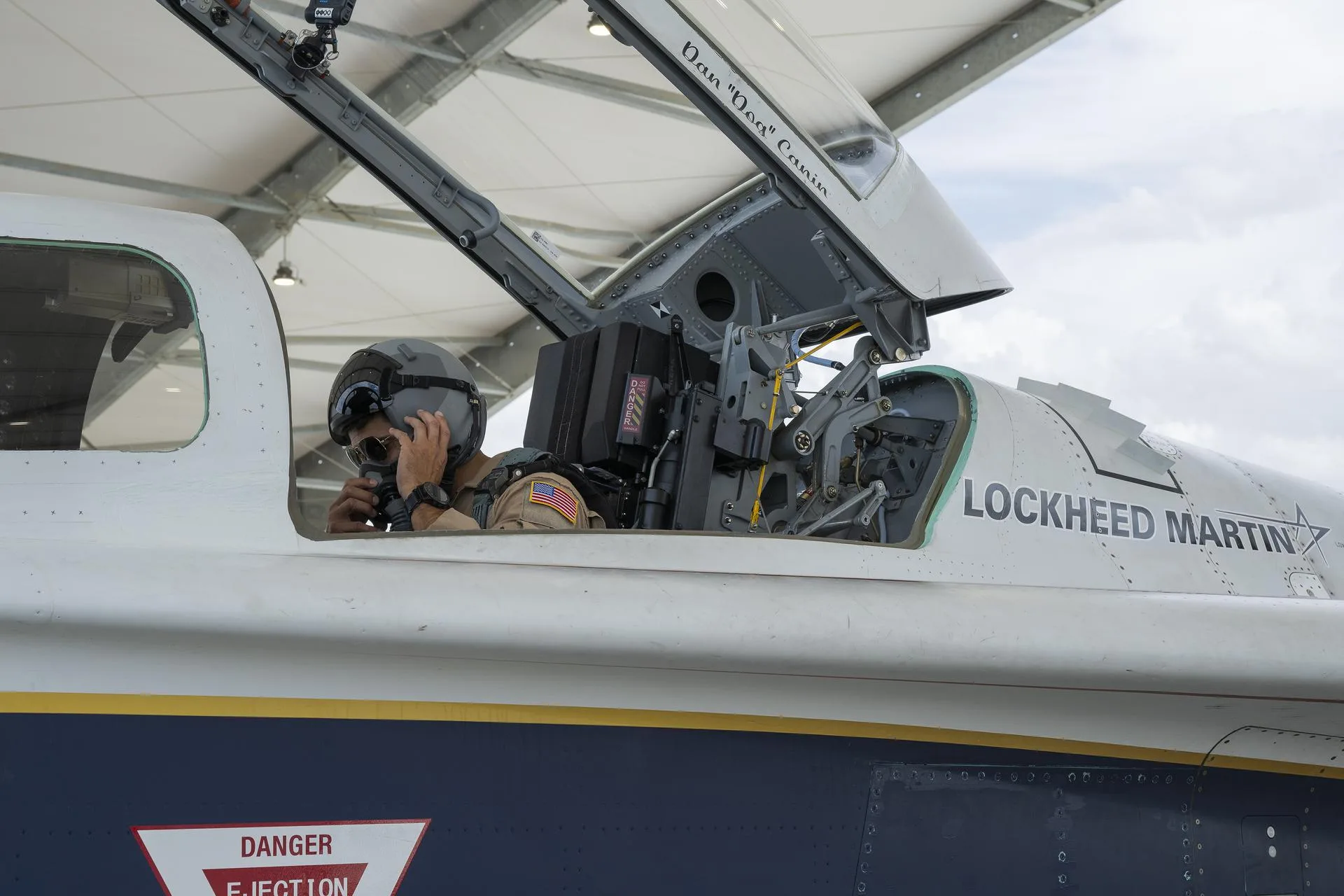
NASA test pilot Mike Lippert reached an important training milestone in the summer of 2026 when he powered up the X-59 cockpit and ran the experimental aircraft’s engine while it remained on the ground. The session gave him his first direct experience of operating the active aircraft rather than a simulator, but it was conducted as a preparatory test rather than a flight.
NASA Blogs reported the exercise on Tuesday, September 15. Lippert, the newest pilot assigned to the X-59 element of the Quesst mission, said the cockpit felt comfortable and credited the broader team with ensuring that he had been trained for the task.
The event was significant because a powered ground run brings together several demands that cannot be encountered in exactly the same way in a classroom. The pilot must follow the startup sequence, interpret the aircraft’s indications and maintain disciplined communication with the control room while technicians and engineers monitor the machine from outside.
Two established X-59 pilots, Nils Larson and Jim “Clue” Less, accompanied Lippert through the process. Larson paid particular attention to Lippert’s coordination with the control room. Less provided coaching and answered questions as they arose, allowing the new pilot to connect written procedures and simulator practice with the behavior of the actual aircraft.
Their involvement illustrated the role of mentorship in experimental flight testing. Formal checklists establish what must be done, but experienced pilots can also explain the timing, priorities and operating habits that make a complex sequence manageable. Feedback offered during and after the run turned a routine technical progression into a detailed training exercise.
Engineers added another layer of expertise. Their observations helped Lippert deepen his understanding of the X-59’s systems and of the pace at which a test team works. The ground run was therefore not simply an opportunity to start an engine; it was also a rehearsal of how information moves between the cockpit and the specialists responsible for assessing each stage.
Lippert also worked directly with the aircraft’s maintenance personnel. That contact exposed him to the real-time rhythm linking the cockpit, control room and ground crew during critical operations. He said watching those groups align their work gave him a clearer picture of how NASA’s flight-test organization pursues safety and precision.
Much of his earlier preparation had taken place in a high-fidelity simulator designed to reproduce the X-59 cockpit. He used it for aircraft familiarization, procedural training and mission rehearsal. Lippert described the simulation specialists as experts on the aircraft and emphasized that their contribution supported both his own readiness and the wider program.
The aircraft itself was built around an unusual acoustic objective. When traveling faster than sound, the X-59 is intended to produce a quieter sonic thump instead of the conventional sonic boom associated with supersonic flight. Its distinctive shape is central to that objective, making aircraft handling and accurate execution by the test pilots essential parts of evaluating the design.
NASA’s plan at the time called for the X-59 to continue through envelope expansion, gradually examining its performance under different flight conditions. Acoustic validation flights were also described as a later step intended to study the sonic thumps generated by the aircraft. The September account did not provide results from those future phases or state that they had already been completed.
The longer-range Quesst concept included flying the X-59 over communities in the United States and gathering information about how residents perceived its sound. That would connect engineering measurements with human responses, since the mission’s central question concerns not only what instruments record but also how the noise is experienced on the ground.
Lippert said the powered session left him energized and feeling prepared for upcoming test flights. Even so, the episode showed that qualification for an experimental aircraft is cumulative: simulator sessions, technical instruction, mentoring, maintenance coordination and hands-on cockpit work all contribute to readiness. NASA’s account did not specify the date of Lippert’s first X-59 flight or describe the eventual outcome of the subsequent test stages.