
Dragon Nears ISS With Final Roll-Out Solar Array Pair
SpaceX’s 35th commercial resupply mission for NASA is carrying more than 6,300 pounds of cargo. Its autonomous docking at the Harmony module was targeted for about 10:30 a.m. EDT on October 15.
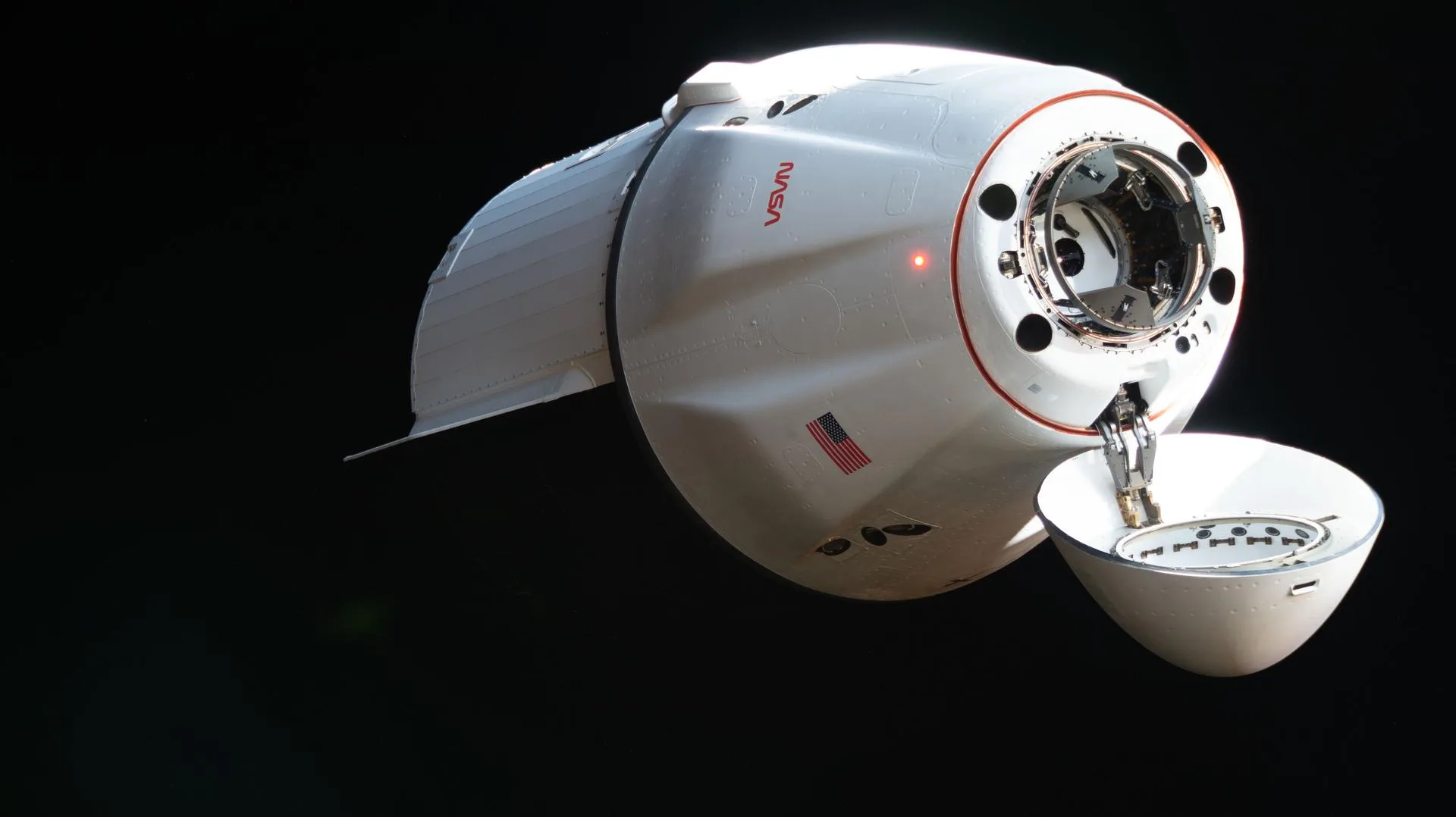
A SpaceX Dragon cargo vehicle is closing in on the International Space Station with more than 6,300 pounds of supplies and hardware, including the final pair of International Space Station Roll-Out Solar Arrays. The flight is SpaceX’s 35th commercial resupply services mission for NASA.
NASA Blogs reported the approaching spacecraft and the agency’s live coverage on Thursday, October 15. Docking was targeted for approximately 10:30 a.m. EDT, with video available through NASA’s live-streaming service.
The spacecraft is expected to connect autonomously to the space-facing port of the station’s Harmony module. That destination is an important detail because visiting-vehicle traffic must be coordinated with the broader configuration of the orbiting complex, including the ports occupied by other spacecraft and the work planned around the station.
Autonomous docking does not make the arrival a routine formality. Dragon must navigate through a carefully managed approach corridor, pass designated checkpoints and maintain acceptable relative motion before making contact. Flight controllers and the station’s crew monitor the process even as the vehicle’s onboard systems handle the final approach.
At more than 6,300 pounds, the manifest amounts to roughly 2.86 metric tons. NASA’s short update did not provide a complete itemized inventory, focusing instead on the final pair of roll-out solar arrays as the mission’s most prominent cargo.
The word “final” gives this delivery broader significance within the station’s power-upgrade effort. Arrival, however, is only one stage in moving large external hardware from Earth to operational use: the source did not say that installation or activation would occur as part of the docking itself.
Electrical power underpins virtually every category of activity aboard the ISS, from laboratory operations and communications to computing and life-support functions. Solar hardware therefore forms part of the station’s basic operating infrastructure rather than merely serving as an additional scientific payload.
Dragon began its trip at 6:33 a.m. on October 13 aboard a Falcon 9 rocket. The launch took place from Space Launch Complex 40 at Cape Canaveral Space Force Station in Florida, starting a multiday orbital journey before the planned October 15 rendezvous.
The elapsed time between liftoff and arrival reflects how orbital rendezvous works. A cargo ship cannot simply aim at the station’s current position; it must enter an appropriate orbit and conduct maneuvers that align its path, speed and timing with a laboratory continuously circling Earth.
The mission number also points to the maturity of NASA’s commercial cargo system. By identifying this as SpaceX’s 35th commercial resupply services flight for the agency, NASA placed the arrival within a long-running sequence rather than treating it as a one-off demonstration.
For NASA, commercial resupply missions provide a recurring transportation link between ground infrastructure and an inhabited outpost in low Earth orbit. This flight is notable not only for the mass aboard Dragon but also for the shape and operational importance of the highlighted solar-array hardware.
The stated docking time remained approximate in the agency’s notice. Rendezvous schedules can be adjusted when teams assess spacecraft performance, navigation and readiness, so the live broadcast serves both as public coverage and as a real-time view of a tightly controlled operation.
NASA directed readers to the space station blog and the ISS accounts on X, Facebook and Instagram for additional activity updates. The initial post did not confirm a completed docking, leaving autonomous contact with Harmony as the next stated milestone for Dragon and its cargo.