
Ukraine proposes spinning power generation out of its gas grid operator
Draft law No. 16146 would move gas-fired generation assets and related contracts from Ukraine’s gas transmission operator into a separate, wholly state-owned company. The proposal seeks to reconcile wartime energy-security measures with unbundling rules before a temporary exemption expires on January 1, 2027.
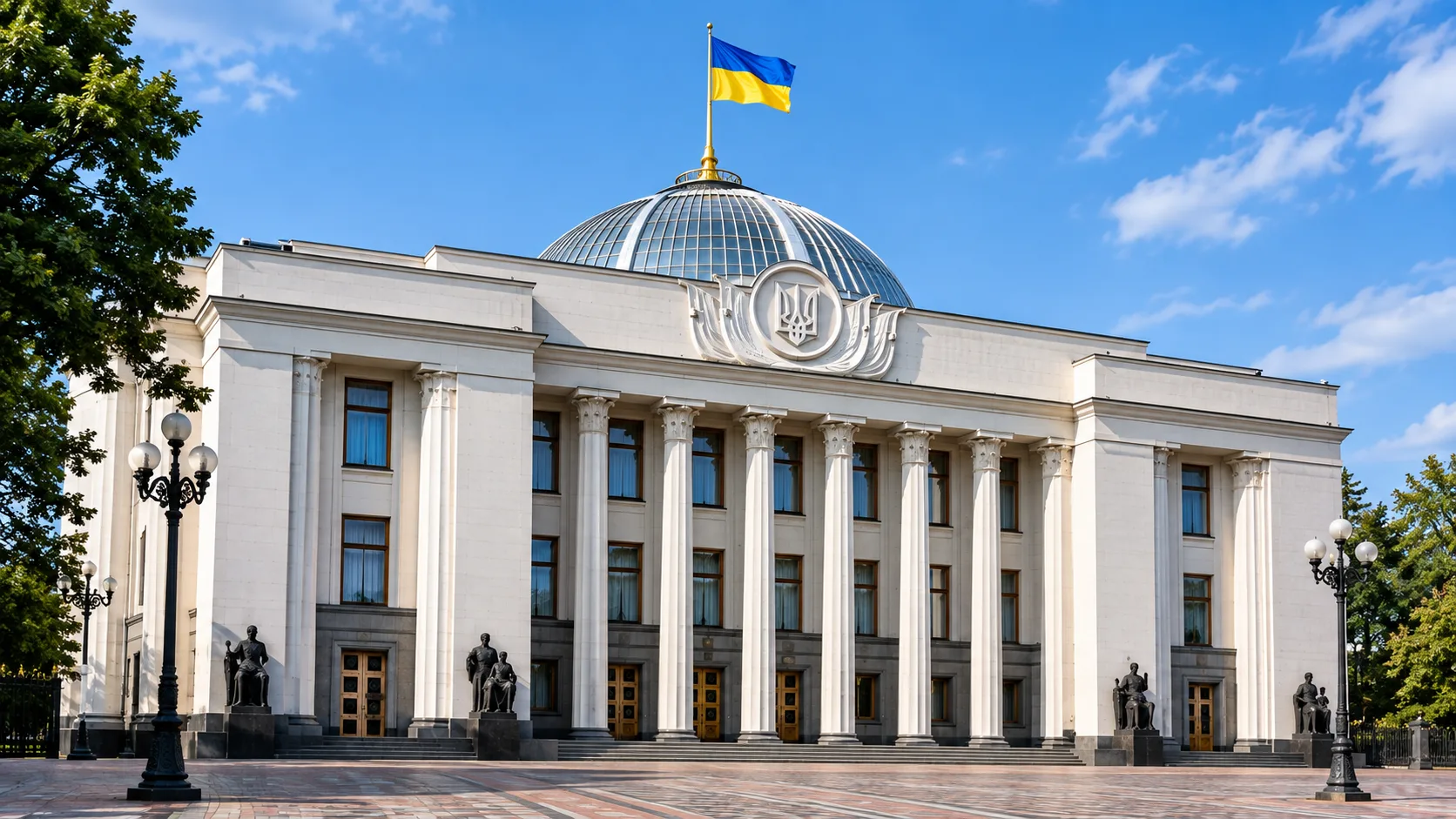
Ukraine’s government has submitted legislation to separate electricity production from the country’s gas transmission system operator, addressing an unusual overlap created by wartime energy needs. Bill No. 16146 proposes a corporate spin-off rather than the closure of the distributed gas-turbine units assembled under the operator’s control.
The bill was registered on Wednesday, October 14, the Verkhovna Rada of Ukraine reports. The Cabinet of Ministers is listed as the legislative sponsor, with Serhii Koretskyi named as the initiator, while the parliamentary committee responsible for energy and housing services was designated as the lead committee.
The measure responds to a deadline already embedded in Ukraine’s electricity-market legislation. Gas TSO of Ukraine, or GTSOU, was granted a temporary right to generate electricity from natural gas because of Russia’s armed aggression and the resulting need to reinforce the power system. That authority remains exceptional and is due to end on January 1, 2027, leaving the state to determine where the generating assets and associated obligations should be placed.
GTSOU became involved because it possessed the technical capacity and organizational structure needed to deploy decentralized, flexible generation. According to the explanatory memorandum, the operator received gas turbines and related equipment under Japanese government assistance delivered through JICA. Other units arrived as grants through the Ukraine Energy Support Fund, while additional equipment, installation and grid connections were financed from a portion of GTSOU’s net profit under government and Energy Ministry decisions adopted in 2024.
Although this arrangement served an energy-security function, it sits uneasily with the legal model under which the gas operator is certified. EU Directive 2009/73/EC restricts common control over an electricity producer or supplier and a transmission network operator. Ukraine’s gas-market law reflects the same unbundling principle, requiring the gas TSO to remain independent from electricity generation and from gas production or supply interests.
GTSOU was certified by the national energy regulator in December 2019 under the independent system operator model. The government’s memorandum argues that continued electricity production inside the operator after the temporary exemption ends could conflict with both domestic law and Ukraine’s international commitments. The proposed spin-off is therefore designed to preserve the generating capacity while removing it from the TSO’s organizational perimeter.
Under the draft, a new private-law legal entity would be created by separation from GTSOU. A distribution balance sheet would identify the assets, book values, rights and liabilities transferred to it. The list could include procurement contracts for goods, works and services connected to power production, regardless of when the relevant obligations arose, but assets used for transporting natural gas would be excluded.
The state would retain 100% ownership of the separated company. Its shares could not be sold or used in transactions leading to their disposal, although the bill specifically provides for the state’s corporate rights to be contributed to the charter capital of Naftogaz of Ukraine. At the same time, the public authority exercising ongoing control over the new generator could not be the same authority that manages GTSOU’s corporate rights or the state property employed in gas transmission.
This governance distinction is central to the proposal. Immediately after registration, temporary management by the authority responsible for GTSOU would be permitted only until the Cabinet reallocates those powers and no later than January 1, 2027. The bill states that this transitional period would not itself count as a breach of the operator’s independence requirements.
State-owned generation equipment would not simply be privatized or transferred outright. The draft provides for its allocation to the new company under a state-property usufruct, preserving state ownership while granting possession and use. The assets would be legally protected from privatization, and their transfer would not be classified as a subsidy, grant, donation or state aid under the terms of the bill.
The government has also proposed exceptional procedural shortcuts to complete the restructuring within the limited window. The separation would not require an additional Cabinet clearance of the type normally applicable, nor merger-control authorization or other approvals from the Antimonopoly Committee. Outstanding creditor claims would not halt the spin-off or prevent registration, although the new company would assume responsibility for liabilities assigned to it.
Contractual continuity is addressed in detail. Once the separation is completed, the new entity would become the successor to rights and obligations listed in the distribution balance sheet and would be treated as a party to generation-related procurement contracts. GTSOU and the new company would still have to formalize substitutions under civil-law procedures, but the mechanism is intended to reduce the risk that equipment, construction or service arrangements are interrupted by the corporate change.
The proposal recognizes that generation facilities may remain physically close to gas infrastructure. Earlier government or state-ownership decisions allowing turbines, gas and electricity networks, metering points and associated equipment to be placed in protected pipeline zones would remain valid for the separated company. If it uses GTSOU buildings or structures for its assets and personnel, it would reimburse maintenance costs in proportion to actual use under a contract with the operator.
Changes to the Land Code form another technical part of the package. They would allow the state-owned spin-off to hold land in permanent use and set procedures for transferring or obtaining land-use rights when rights to state real estate or unfinished facilities change hands. The bill also proposes a limited amendment to pipeline-transport legislation to accommodate arrangements expressly authorized by law.
The explanatory note says the restructuring would require no additional funding from national or local budgets because property would move through the distribution balance sheet. The government presents the expected benefits as preserving GTSOU’s certification, honoring commitments associated with donor-funded equipment, limiting downtime of distributed generation and avoiding competitive distortions. Those outcomes had not yet been secured as of October 15: the proposal had only been registered and still required committee scrutiny and parliamentary approval.