
Crew-13 boards the ISS and joins Expedition 75
Four Crew-13 members entered the International Space Station after the Dragon hatch opened at 9:19 p.m. EDT. Their arrival brought together an 11-person, multinational Expedition 75 team.
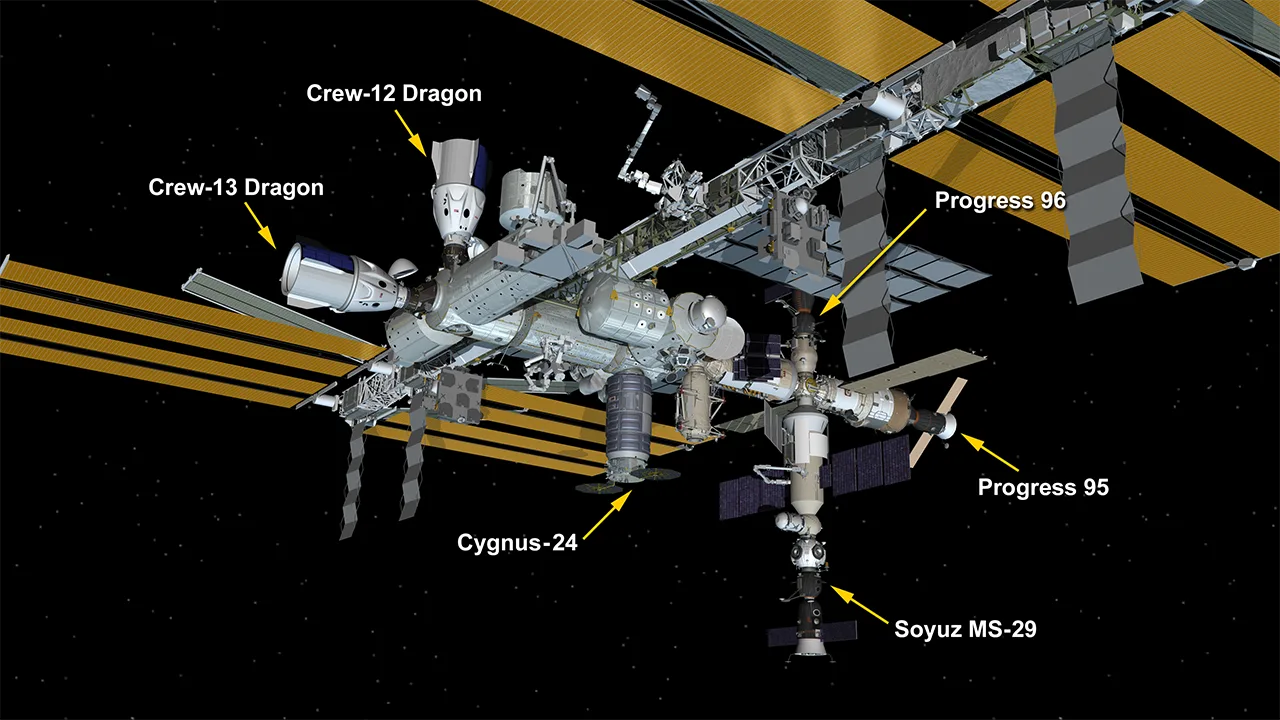
NASA astronauts Jessica Watkins and Luke Delaney, Canadian Space Agency astronaut Joshua Kutryk, and Roscosmos cosmonaut Sergey Teteryatnikov entered the International Space Station on October 1, 2026. Their transfer from Dragon followed the opening of the spacecraft’s hatch at 9:19 p.m. Eastern Daylight Time.
NASA Blogs reported the crew’s entry on Thursday, October 1. The update marked the point at which the four travelers moved beyond the transport phase of their mission and joined the station’s resident Expedition 75 complement.
Seven people were already aboard the orbiting laboratory: NASA astronauts Jessica Meir, Jack Hathaway, and Anil Menon; European Space Agency astronaut Sophie Adenot; and Roscosmos cosmonauts Pyotr Dubrov, Anna Kikina, and Andrey Fedyaev. With Crew-13 inside, the combined group numbered 11.
The roster illustrated the international structure that underpins daily operations on the ISS. Four organizations were represented across the expanded crew: NASA, the Canadian Space Agency, the European Space Agency, and Roscosmos.
A hatch opening is a brief event in public mission updates, but it is an important operational boundary. Until that moment, the arriving crew remains inside its transport vehicle; afterward, the astronauts and cosmonaut can move into the station’s interconnected modules and begin integrating with the expedition already in progress.
The source did not provide launch or docking times, nor did it describe the approach to the station. Its focus was narrower: the Dragon hatch had opened, all four Crew-13 members had entered, and they had become part of Expedition 75.
For the newcomers, arrival involved more than reaching a destination. Joining a resident expedition means entering an environment that is continuously occupied and operated, where technical maintenance, research support, exercise, communications, and routine housekeeping must be coordinated around a shared schedule.
Periods with a larger combined crew can also provide an opportunity for direct handover between spacefarers. Experienced station residents can brief arrivals on current equipment conditions and ongoing procedures. NASA’s post, however, did not say how long all 11 people would remain together or identify any later crew movements.
Crew-13’s composition also reflected cross-agency transportation arrangements. Dragon carried two NASA astronauts alongside a CSA astronaut and a Roscosmos cosmonaut, while the station population already included personnel from the United States, Europe, and Russia.
That cooperation has a practical dimension aboard the ISS. The complex is both a laboratory and a crewed spacecraft, and its occupants rely on common emergency procedures and coordinated use of limited space and resources, regardless of the agency named on an individual’s flight suit.
The October 1 notice did not list experiments, spacewalks, maintenance campaigns, or other assignments awaiting Crew-13. It therefore served as an operational milestone report rather than a detailed preview of the crew’s work or an assessment of the broader mission.
NASA directed readers to the space station blog and the ISS accounts on X, Facebook, and Instagram for continuing updates. Beyond confirming entry and the expanded Expedition 75 roster, the source offered no information about mission duration or eventual departure, leaving those later stages outside the scope of the announcement.