
NASA Sets a New Artemis Path to the Moon
NASA has outlined a staged approach aimed at returning US astronauts to the lunar surface in 2028. Artemis III is assigned a crewed test in low Earth orbit, while Artemis IV is designated as the program’s first surface mission.
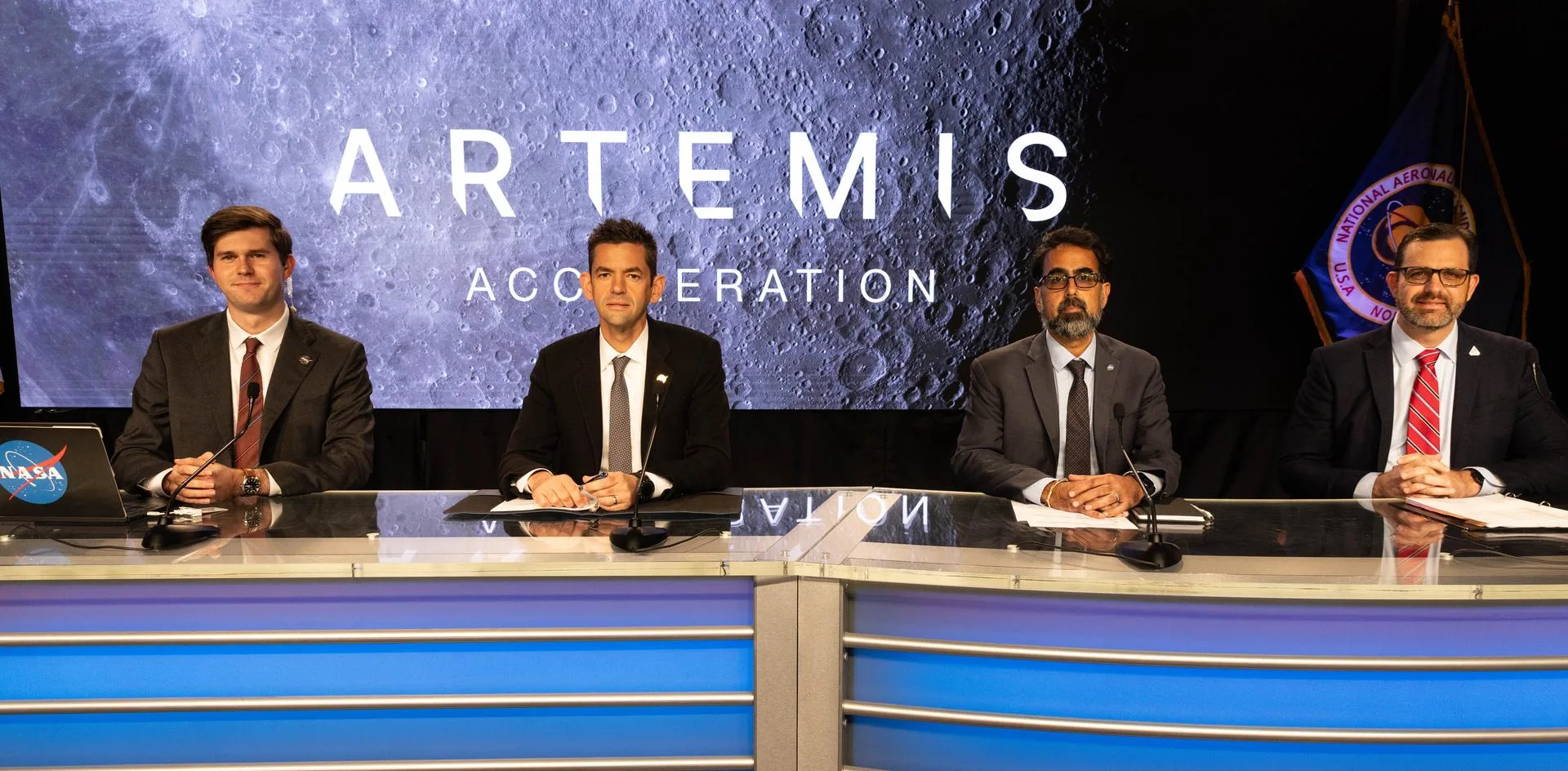
NASA has set out a revised sequence for its Artemis campaign, placing a crewed systems test near Earth ahead of the next attempt to reach the lunar surface. The agency’s stated destination and target remain a return of American astronauts to the Moon in 2028, but the route now described gives Artemis III and Artemis IV distinctly different purposes.
NASA Blogs reported the plan on Friday, October 23, following an update led by Administrator Jared Isaacman and other senior agency officials. NASA published a recording of the briefing as well as links to the graphics used to explain the mission sequence.
Under the outline, Artemis III is expected to carry four astronauts into low Earth orbit in 2027. Its central purpose will be to test critical systems required for later lunar landings, making the flight a human-rated proving mission rather than the first Artemis expedition to touch down on the Moon.
Low Earth orbit offers a setting in which a crew can operate hardware and procedures in space while remaining much closer to Earth than a lunar mission would permit. That distinction is central to the plan: NASA can collect operational evidence from a crewed flight before committing the relevant capabilities to a surface expedition. The short agency post did not identify every system to be tested or describe the individual test objectives.
Artemis IV, in turn, is identified as the first Artemis mission on the lunar surface. NASA said acceleration efforts are intended to help ensure that mission’s success, tying those efforts to the broader objective of returning Americans to the Moon in 2028. The update did not provide a precise Artemis IV launch date or a detailed milestone schedule.
The division of work creates a two-step progression. Artemis III is meant to demonstrate essential capabilities in low Earth orbit; Artemis IV is meant to use the resulting readiness for the more demanding task of operating at the Moon. In programmatic terms, the 2027 flight therefore becomes a gateway rather than an endpoint.
Calling the initiative an acceleration plan does not mean that NASA is removing an intermediate test. The architecture described in the briefing retains a substantial crewed verification stage and places it before the surface mission. This suggests that schedule ambition and risk-reduction activities are being pursued together, although the agency’s brief account does not explain how it will balance them in practice.
The four-person crew is one of the few operational details included for Artemis III. NASA did not announce the astronauts’ names, the expected duration of their mission or the exact portion of 2027 in which they would launch. It also did not state in the blog item what would constitute completion of each critical systems test.
Those omissions matter because a low Earth orbit mission and a lunar landing require different layers of preparation. A successful test flight can provide information about equipment, crew operations and procedures, but the post does not say what findings would trigger changes to Artemis IV. Nor does it claim that the accelerated path eliminates technical or scheduling uncertainty.
The 2028 objective now serves as the organizing date for the sequence presented by Isaacman and the other agency leaders. By explicitly assigning the first surface role to Artemis IV, NASA has given the public a clearer description of what each of the next two named missions is intended to accomplish. The announcement nevertheless remains a high-level roadmap rather than a full mission plan.
NASA’s decision to release the recorded briefing and accompanying graphics broadens the update beyond a few written paragraphs. Those materials preserve the leadership presentation and the visual explanation offered during it. They do not, however, amount to a report on completed tests; the key flights and their principal objectives remain ahead as of October 24.
The next major measure of the strategy will be whether Artemis III can produce the evidence NASA needs for a lunar surface attempt. Until those tests take place, Artemis IV’s role is a declared objective rather than an accomplished result. The agency’s update establishes the intended order—Earth-orbit verification in 2027 followed by a planned lunar return in 2028—without predicting how the missions will ultimately conclude.