
Ukraine’s Legislative Agenda Puts Resilience and European Payments in Focus
New parliamentary initiatives target emergency fuel stocks, wartime criminal proceedings and closer alignment with the EU financial system. Draft law No. 15503 is positioned as an important legal step toward Ukraine’s prospective participation in SEPA.
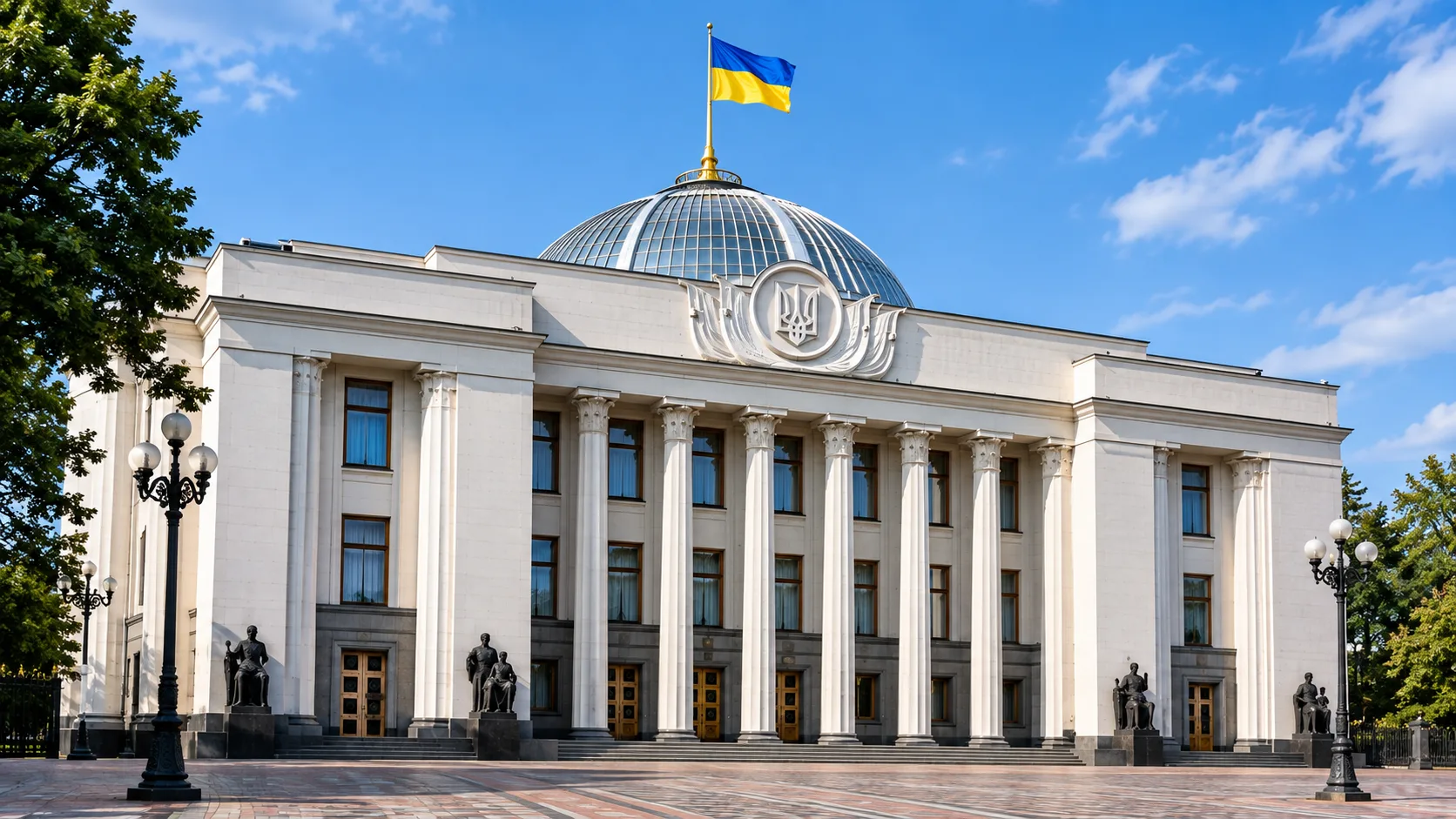
Ukraine’s parliament received a broad package of legislative initiatives between September 7 and September 14, 2026, with national resilience and European integration emerging as the dominant themes. The proposals range from strategic fuel storage and criminal cases affected by occupation to euro payments, private pensions and parliamentary safety procedures.
Draft laws No. 16062 and No. 16063 would amend Ukraine’s tax and customs rules to support a minimum-stock system for oil and petroleum products. The measures are intended to establish the accounting, customs clearance and storage framework for emergency fuel reserves. If approved and implemented, the system could provide an additional safeguard against supply disruptions while aligning Ukrainian energy-security practices more closely with European requirements.
The consequences of Russia’s war are also reflected in the justice-related package. Bill No. 16060 addresses criminal proceedings that cannot be investigated or administered through ordinary procedures because relevant territories are under temporary occupation. A separate initiative, No. 16061, seeks to revise selected criminal-law provisions and clarify penalties for certain offences.
Financial integration with the European Union forms another major part of the week’s agenda. Parliamentary resolutions linked to draft laws No. 15503 and No. 15175 recommend advancing measures concerning euro-payment integration, securitisation and covered bonds. Lawmakers also registered alternative bill No. 15570-1 on the further development of Ukraine’s voluntary private pension system.
Draft law No. 15503 is particularly significant because it seeks to align Ukraine’s Civil Code with European payment-service principles and the criteria relevant to the Single Euro Payments Area. Its provisions concern execution deadlines, payment-service provider liability, transaction cancellation and correction procedures, and safeguards for both payers and recipients. Resolution No. 15503/P recommends adopting the bill at first reading, meaning it would still require further parliamentary consideration before becoming law.
SEPA participation could eventually make euro transfers between Ukrainian and European accounts faster, more predictable and less expensive. Individuals receiving income from abroad could face fewer intermediary charges, while small and medium-sized companies could benefit from standardised settlement procedures when dealing with EU customers and suppliers. Broader access to European payment infrastructure could also support investment and cross-border trade.
The initiative should not, however, be interpreted as the introduction of the euro in Ukraine. SEPA concerns euro-denominated payment standards rather than a country’s domestic currency. Nor would participation automatically remove anti-money-laundering checks, source-of-funds controls or wartime foreign-exchange restrictions imposed by the National Bank of Ukraine. Legislative alignment is only one stage in a wider institutional and technical process.
Other proposals cover the continuity and accountability of public institutions. Draft resolution No. 16059 sets out procedures for the Verkhovna Rada during air-raid alerts or heightened security threats. Bill No. 16058 addresses social insurance provisions for judges, while bill No. 16057 proposes stronger liability for officials working in state supervision and inspection bodies.
Taken together, the initiatives illustrate Kyiv’s effort to pursue long-term European convergence without losing sight of immediate wartime risks. Their practical impact will depend on committee scrutiny, parliamentary votes, implementation rules and the capacity of state institutions and market participants to comply with the new frameworks.