
Beyond the Front: Why Yamal Now Matters to Ukraine’s Deep-Strike Strategy
A reported Ukrainian operation more than 3,000 kilometres from the battlefield has challenged Russia’s assumption that its Arctic energy heartland is protected by distance. The larger question is whether occasional drone raids can develop into sustained strategic pressure on a resilient and widely dispersed gas system.
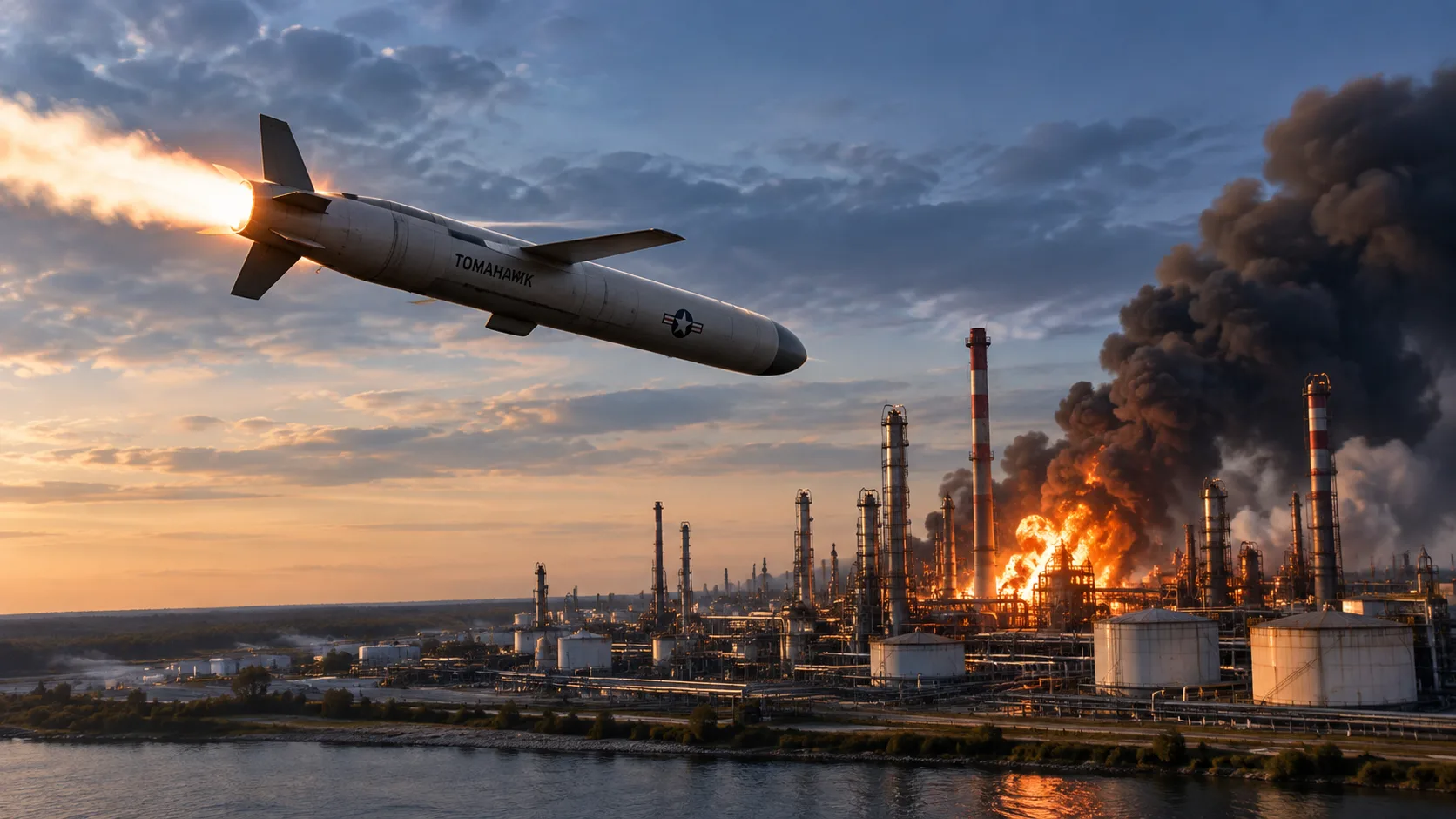
The reported strikes on gas-processing facilities around Novy Urengoy and in the Purovsky district represent a potentially important expansion of Ukraine’s long-range campaign. Ukrainian accounts said the aircraft travelled more than 3,000 kilometres, which, if confirmed, would place infrastructure deep inside Russia’s Arctic regions within reach. Publicly available information has not yet established the full extent of the damage, and official claims from wartime actors require independent scrutiny.
Distance nevertheless has strategic value even when the physical effects of an individual raid are modest. Russia’s vast territory has traditionally provided industrial centres east of the Urals with a degree of protection that installations near the Ukrainian border do not enjoy. A weapon able to cross several thousand kilometres weakens that geographic advantage and forces planners to consider threats that previously appeared remote.
Yamal is not merely another distant region on the Russian map. It is one of the foundations of the country’s gas industry, containing major fields, processing plants and transportation infrastructure developed over decades. Production there supports domestic consumption and industrial activity as well as revenues from energy sales, although the composition of Russian exports has changed sharply since the full-scale invasion of Ukraine.
The reported choice of processing plants is therefore more consequential than an attack selected solely for its symbolic value. Raw gas and condensate must pass through multiple stages before they can be moved efficiently through the wider network. Facilities remove water and impurities, separate valuable liquids and prepare output to meet pipeline specifications. Disrupting one stage can create complications elsewhere even if wells, pipelines and storage sites remain intact.
Ukrainian aviation analyst Kostiantyn Kryvolap has argued that plants preparing gas for transport may be more relevant targets than the prominent junction popularly called the “Yamal Cross.” His observation reflects a broader concept of pressure on industrial chains: a network can be affected not only by hitting its most famous node, but also by interfering with the facilities that feed it.
That does not mean two damaged plants would shut down the Yamal energy complex. Large operators build redundancy into critical systems, maintain emergency procedures and may shift some operations to alternative units. The duration and economic weight of any disruption depend on which equipment was affected, whether specialised components are available and how quickly production can be reorganised.
The “Yamal Cross” itself has acquired an almost mythical place in wartime commentary. The term is commonly used for a concentration of trunk pipelines and related installations in the region. Claims that 17 major lines intersect there, or that it handles as much as 85 percent of Russian gas, circulate frequently, but such figures can be misleading without definitions, dates and flow data. A transportation network is dynamic, and nominal capacity is not the same as actual throughput.
It would therefore be inaccurate to describe the junction as a single switch capable of turning off the Russian economy. The national gas grid spans multiple producing regions and includes storage, compressor stations and alternative routes. Since Europe sharply reduced its dependence on Russian pipeline gas, Moscow has also altered flows, cut some production and sought new outlets, although replacing the scale and profitability of its former European business remains difficult.
The more immediate strategic effect may come from defence rather than lost output. A credible threat to facilities in Yamal could require additional air-defence units, electronic-warfare systems, sensors, guards and emergency teams. Russia cannot provide equally dense protection to every refinery, airfield, factory, pipeline station and power facility across its enormous territory, so every new area considered vulnerable complicates the allocation of limited assets.
This is one reason long-range weapons can generate pressure even when only a fraction reach their objectives. The defender must account for the possibility of future attacks, not just the damage already recorded. False alarms, temporary shutdowns and repeated inspections can impose costs, while dispersing protection into the interior may reduce flexibility in other regions or near active military operations.

Arctic infrastructure brings additional challenges. Repairs can be affected by weather, distance and reliance on specialised equipment, and replacing imported technology may be harder under sanctions. Russia, however, has extensive experience operating energy installations in severe northern conditions and retains substantial engineering capacity. Predictions that a limited strike will produce an immediate systemic breakdown should consequently be treated with caution.
The domestic role of gas also distinguishes Yamal from targets whose importance is primarily export-related. Gas fuels power generation, heating and energy-intensive industry across Russia. A severe, prolonged interruption could have consequences beyond company balance sheets, but the network contains buffers between an incident at one plant and shortages for households. Storage, reserve capacity and administrative prioritisation can all soften the initial impact.
These connections raise legal and humanitarian questions. Under international humanitarian law, infrastructure is not targetable merely because it has economic importance. An object must meet the criteria for a military objective, and any attack remains subject to distinction, proportionality and feasible precautions. Potential effects on civilian heating and electricity become especially significant in northern regions and during cold weather.
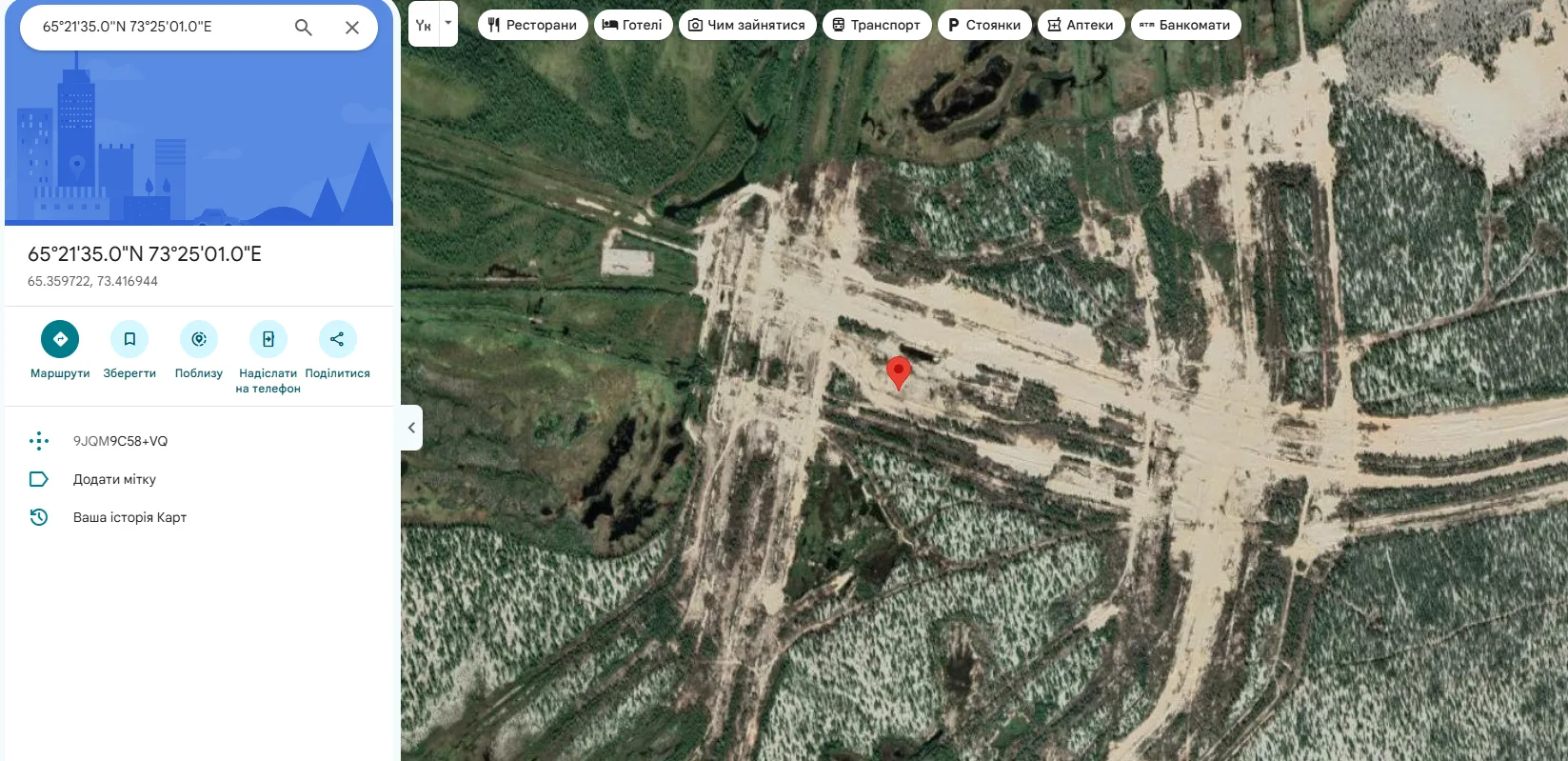
For Kyiv, the strongest argument for deep strikes is that Russia’s energy and industrial base helps sustain its war effort. The strategic challenge is to translate that general connection into operations producing a concrete military advantage while limiting foreseeable civilian harm. The political costs of an attack can rise sharply if the effects are seen as indiscriminate or primarily directed at the civilian population.
There are operational and political limits as well. Very long-range missions demand reliable navigation, intelligence, production volume and the ability to penetrate an evolving detection network. Russia can adapt by relocating equipment, building protective structures, improving electronic defences and changing procedures. Moscow may also respond militarily or use the incidents to reinforce its domestic narrative that the country is under a broad external attack.
For these reasons, Yamal is better understood as a potential source of leverage than as a decisive trump card. A single raid is unlikely to cripple Russia’s gas industry, while a sustained campaign could impose cumulative repair, security and opportunity costs. Its strategic value would come from forcing Moscow to defend a growing list of distant assets and from demonstrating that industrial depth no longer guarantees sanctuary.
The central consequence of the reported operation is thus psychological and organisational as much as physical. Russia must now consider whether installations built thousands of kilometres from Ukraine require wartime protection. If Kyiv can repeatedly combine range with accuracy and carefully chosen objectives, the Kremlin may face an increasingly expensive dilemma: accept risk to critical infrastructure in the interior or divert more resources to a rear area that once seemed safely beyond the war.