
Ukraine Builds a Unified Force for Drone Warfare
Established in 2024, Ukraine’s Unmanned Systems Forces bring aerial, ground and maritime platforms into a dedicated military branch. The initiative is designed to accelerate battlefield innovation while reducing soldiers’ exposure to danger.
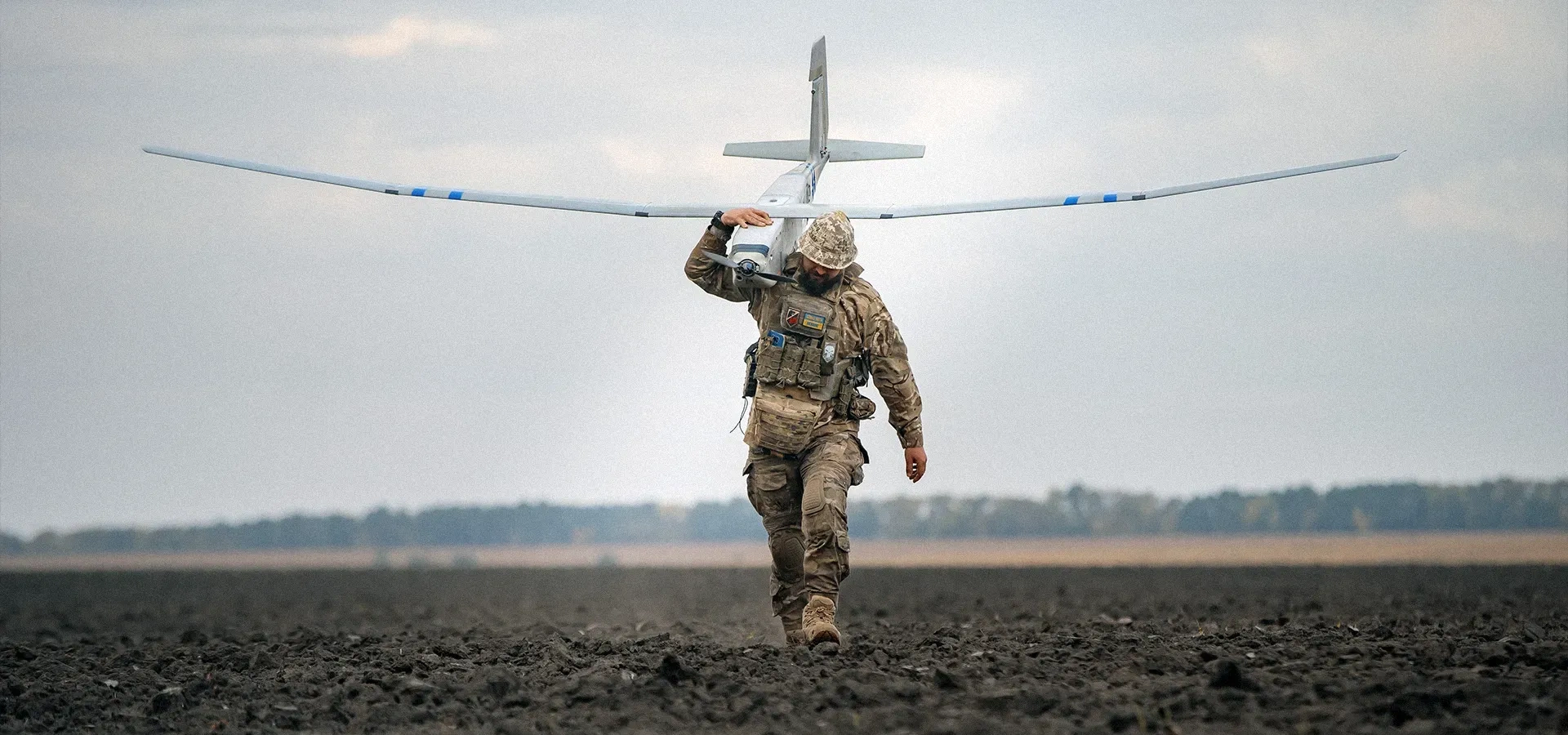
Ukraine’s Armed Forces created the Unmanned Systems Forces in 2024 as a specialized branch responsible for integrating robotic capabilities across multiple domains. Kyiv describes the structure as the first of its kind, bringing air, land and sea systems under a common framework rather than treating drones solely as supporting equipment for conventional units.
In the air, unmanned aircraft provide reconnaissance, identify targets and adjust artillery fire. Small first-person-view drones and platforms carrying dropped munitions deliver short-range strikes, while longer-range systems can reach military and strategic facilities far behind enemy lines.
Ground robots are intended to take over missions that place troops at exceptional risk. Their roles include laying and clearing mines, carrying ammunition and medical supplies to forward positions, evacuating wounded personnel and providing fire support. Wider deployment could ease logistical pressure in areas exposed to artillery, snipers and drone attacks.
Uncrewed maritime craft add another layer to Ukraine’s operations. These platforms can patrol waters, support mine warfare and strike surface vessels or coastal infrastructure. Their comparatively low cost and ability to operate without crews make them useful in contested areas where traditional naval assets face significant threats.
The new branch is also meant to turn battlefield lessons into shared standards. Centralized operator training and a faster exchange of tactics can help successful methods spread across units, while direct cooperation with domestic manufacturers shortens the cycle between prototype development, combat testing and production.
Electronic warfare remains a central challenge because jamming and signal disruption can sharply reduce a drone’s effectiveness. The force is therefore expected to combine technical countermeasures with data analysis and artificial intelligence tools, improving navigation, target recognition and the processing of information collected by large numbers of platforms.
The emergence of a dedicated unmanned branch underscores a broader shift in warfare. Combat effectiveness increasingly depends not only on the number of weapons available, but also on how quickly armed forces can modify software, frequencies, tactics and hardware in response to changing battlefield conditions. For Ukraine, that adaptation is closely tied to both operational reach and the effort to preserve soldiers’ lives.
You can view statistics for the USF at this link.